


Natal Luz in Gramado has grown into one of South America’s most influential seasonal events, concentrating demand for show tickets, hotel rooms, family travel and restaurant reservations into a tightly defined period. The 41st edition runs from 22 October 2026 through 17 January 2027, according to the official Gramado events calendar, and this guide is written as an annually updated reference so travelers can plan smarter each season.
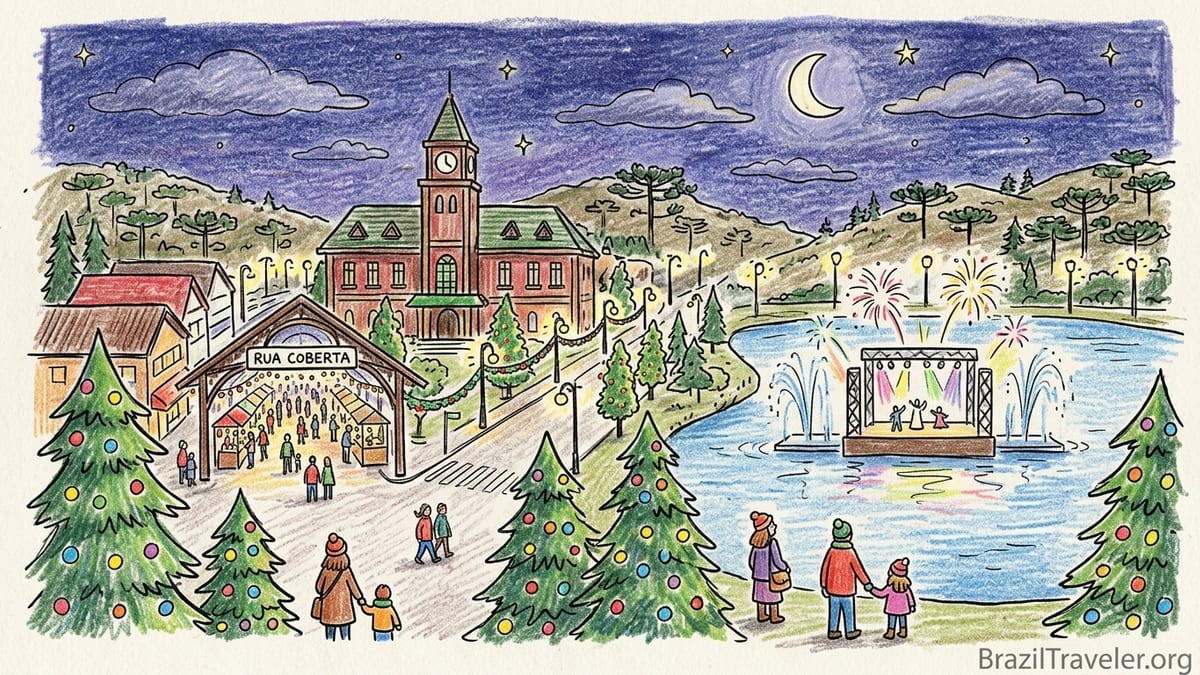
Key Dates, Atmosphere and How Natal Luz Works
Natal Luz transforms the mountain town of Gramado into a long Christmas season that stretches from late October to mid-January. For 2026–2027, the 41st Natal Luz is scheduled from 22 October 2026 to 17 January 2027, confirmed in the city’s official event calendar. Across those 88 days, decorations, music and special programming take over the historic center, the lakeside areas and major avenues, while crowds vary considerably between late November weekends, Christmas and New Year’s week.
The event combines free open-air attractions along the central streets with a set of big-ticket evening shows operated under the Natal Luz brand. In recent editions, the main paid productions have been the Nativitaten show on Lago Joaquina Rita Bier, the Grande Desfile de Natal (the large nighttime parade), and indoor musical productions such as “Natal Luz In Concert” and “Brilho de Natal by LightWire” at venues like Serra Park and Palácio dos Festivais. Programming names and scripts change slightly each year, but the basic structure of one lakeside show, one or two parades and one or two theater-style musical shows has remained stable.
Visitors should think of Natal Luz as a layered experience. The Christmas spirit in Gramado is already intense simply by walking around the illuminated streets and attending free events at Rua Coberta and Praça das Etnias. Families can then add one or two ticketed productions if budget allows. Planning ahead is essential because some nights, particularly around 24–25 December and 31 December, see hotels near full occupancy and the best show seats sold out weeks in advance.
Free Christmas Attractions: Vila de Natal, Show de Acendimento, Parada de Natal and Rua Coberta
Several core attractions of Natal Luz are free of charge and should form the backbone of any itinerary, especially for families working with a limited budget. The Vila de Natal usually operates at Praça das Etnias, close to the city center. In recent seasons it has offered themed huts, local crafts, small plays and appearances by Santa Claus. The atmosphere is deliberately focused on children, with opportunities for photos, letters to Santa and occasional musical numbers.
The Show de Acendimento, the daily “switch-on” of the city lights, has become one of the most beloved free experiences. In past years it has taken place in front of the Prefeitura (City Hall) and along the principal avenue, with actors, narration and a countdown that culminates in the simultaneous lighting of building facades and street decorations across the center. The show usually starts in the early evening, around 8 p.m., and lasts less than an hour, making it easy to combine with dinner reservations.
The Parada de Natal is a daytime or early evening parade that runs along the central streets, with costumed characters, small floats and music. Unlike the paid Grande Desfile de Natal, this parade is designed as a lighter, more informal attraction that anyone on the sidewalks can watch. It is particularly good for very young children who might not stay alert for a full-scale evening production. Schedules can change year to year, but in recent editions parades have been more frequent on weekends and near holidays.
Rua Coberta, the covered street opposite Palácio dos Festivais, is another hub of free programming. During Natal Luz it hosts dozens of smaller concerts and performances, such as local choirs, chamber orchestras and dance groups. Official figures for recent editions mention more than a hundred free presentations across Rua Coberta and Vila de Natal throughout the season. Because it is covered, Rua Coberta is valuable on rainy evenings when open-air options become less comfortable.
Paid Evening Shows: What They Are and Who They Suit Best
The signature paid shows are where Natal Luz deploys its largest budgets, technical effects and orchestras. In recent editions, Nativitaten has been staged over the waters of Lago Joaquina Rita Bier, with floating stages, fountains, fireworks, choirs and soloists. Visitors consistently describe it as the most visually impressive production, combining pyrotechnics, projected images and live music. For travelers who want a single “wow” factor show, Nativitaten is usually the top recommendation.
The Grande Desfile de Natal, presented at a large arena structure historically installed at locations such as Expogramado or Serra Park, is best understood as an immersive Christmas parade. It mixes floats, dancers, acrobats and live songs, with strong audience interaction. This show tends to delight children more than the solemn moments of Nativitaten, and it is a good choice for families who want a high-energy, story-driven spectacle that still feels light and playful.
Indoor theater-style productions, such as “Natal Luz In Concert” and “Brilho de Natal by LightWire” at Palácio dos Festivais, target visitors most interested in music or visual arts. “Natal Luz In Concert” focuses on orchestral arrangements of Christmas pieces and Brazilian songs, while “Brilho de Natal by LightWire” combines dance with illuminated costumes and special lighting technology. For adults and older teens who care most about musical quality and stagecraft rather than fireworks, these shows can be more satisfying than the outdoor spectacles.
Families do not need to attend every paid event. In 2025, for example, published prices for prime categories of major shows ranged roughly from 275 to 350 reais per person, with lounge or premium areas costing more. Current-season prices for 2026–2027 will be defined closer to opening, but they are unlikely to be inexpensive. For a family of four, attending just two big shows can easily become one of the highest trip expenses, which is why it is important to choose based on interests. As a rule of thumb, prioritize Nativitaten for visual impact, the Grande Desfile for younger children and an indoor concert for those focused on music.
Seat Location, Covered vs Uncovered Venues, Weather and Cancellation Rules
Seat selection significantly shapes the experience at Natal Luz. At Nativitaten, which takes place outdoors by the lake, different sectors and categories have varying views of the water stage and fireworks. In previous editions, categories have been labeled bronze, silver, gold and lounge, with higher categories closer to the central axis of the action and often including more comfortable chairs. Side sectors can still offer strong views but may miss some symmetry of the choreography and fountain effects.
The distinction between covered and uncovered seating is crucial during the rainy and cool periods of the Serra Gaúcha spring and summer. Nativitaten and the Grande Desfile take place largely in open or partially covered structures, and performances proceed in light or moderate rain. Spectators sit with plastic ponchos and warmer layers. For families with small children or elderly travelers, it is wise to bring waterproof jackets, small blankets and, when possible, select sectors with some overhead covering or wind protection. Indoor shows at Palácio dos Festivais and similar venues are fully covered and air-conditioned, which becomes valuable on nights of heavy rain.
Weather and cancellation policies for Natal Luz are strict. Official guidelines in recent years have stated that shows only cancel in case of strong storms, lightning risk or other conditions that threaten safety. When a cancellation does occur, operators usually offer rescheduling options or refunds according to the type of ticket purchased and the agency involved. Travelers should read the terms on their voucher or agency invoice, which often detail time limits for voluntary cancellations, penalties and what constitutes force majeure. Group travel contracts, especially packages sold in neighboring countries, sometimes include stricter nonrefundable clauses.
Parking and shuttle arrangements also affect comfort. Traffic around show venues can become dense, especially on holiday evenings. Gramado has encouraged the use of paid parking lots near the arenas and organized transfers from central hotels. Some agencies bundle shuttle service into their ticket price, picking guests up at hotels along Avenida Borges de Medeiros or Avenida das Hortênsias and returning them after the show. For visitors driving their own car, arriving at least one hour before showtime makes it easier to find spaces and avoid long queues at entry gates.
Christmas Markets, Illuminated Streets and Food Experiences
Beyond the stage shows, one of the great pleasures of Natal Luz is simply strolling through the illuminated streets and small Christmas markets. Gramado decorates its main avenues with arches, stars, garlands and large ornaments that create a cinematic backdrop for evening walks. Avenida Borges de Medeiros, Praça Major Nicoletti and the stretch around Palácio dos Festivais form a connected circuit of lights where visitors can linger without spending on tickets.
The Christmas market atmosphere is strongest in and around the Vila de Natal at Praça das Etnias. Small chalets sell regional products such as colonial sweets, chocolate from local factories, knitwear and wooden toys. Artisans from communities of Italian and German heritage in the Serra Gaúcha participate, and food stalls may offer caldo de cana, hot chocolate, mulled wine and simple snacks. These markets are not as large as European Christmas fairs but provide a cozy place to buy gifts and sample local flavors.
The city’s food scene also adjusts to Natal Luz. Fondue sequences, galeto (roast chicken meals) and churrascarias are in high demand. Popular restaurants on Avenida Borges de Medeiros and Rua Coberta often operate with waiting lists on Friday and Saturday nights in December. Many places accept advance reservations via phone or booking platforms, which is strongly recommended near Christmas and New Year’s Eve. Travelers exploring side streets can find less formal options such as buffets by weight and cafes that remain open later during the season, which helps control costs.
For a festive yet budget-conscious evening, an effective combination is to book a mid-range dinner, then walk through the illuminated center, pass by Rua Coberta for a free concert and finish at the Vila de Natal for photos. Families can repeat this pattern on multiple nights with different restaurants, such as one evening at a traditional fondue house and another at a simple pizzeria, keeping at least one night free of paid shows.
Where to Stay: Central Gramado, Avenida das Hortênsias and Nearby Canela
Accommodation choices shape how much time and money you spend moving around the event. Central Gramado, especially the area within a few blocks of Rua Coberta and Palácio dos Festivais, delivers the most convenience. Guests staying here can walk to nearly all free attractions, many restaurants and some show shuttles. Boutique hotels and pousadas close to the covered street allow families to return quickly if children become tired late at night. However, central properties often command the highest rates during Natal Luz.
Avenida das Hortênsias stretches from the edge of Gramado toward Canela and is lined with a mixture of mid-range hotels, inns and some attractions. Staying along this avenue usually means a short drive or taxi ride of 5 to 10 minutes into the historic center. Room rates along Avenida das Hortênsias can be more competitive than those in the absolute core, especially when booked outside peak dates. Parking is more commonly included, which helps visitors who plan to drive to lakeside shows or out-of-town attractions during the day.
Canela, a neighboring town approximately 8 kilometers from central Gramado, has become an important value alternative. Many hotels and apartments there keep slightly lower prices during the Natal Luz period, particularly on weekdays or in November and early January. The trade-off is commute time. Depending on traffic, the drive between downtown Canela and Gramado can take 20 to 40 minutes in high season evenings. Travelers need to budget for fuel or rideshare costs and consider that returning late at night after a show with children can be more tiring.
When comparing offers, families should calculate total trip cost rather than just nightly rates. For example, a couple with two children might find a hotel in central Gramado for a higher nightly price but avoid spending on multiple taxis each day. Another family booking a more affordable suite in Canela could save on accommodation but spend extra on transportation, especially if attending several shows and dinners in Gramado. A rough comparison often shows that savings are most significant for longer stays or during non-peak weeks, while around Christmas and New Year’s the price gap narrows.
When to Visit: November, Christmas / New Year’s and Early January
Although Natal Luz technically runs from late October to mid-January, the experience changes by period. Visiting in November generally offers milder crowd levels and more hotel availability, especially in the first half of the month. Many Brazilian families have not yet begun their school holidays, and international visitors from neighboring countries tend to concentrate closer to Christmas. Show schedules are already active, decorations are lit and free attractions are operating, making November attractive for travelers who prioritize comfort and price over being in town on Christmas Eve.
Christmas week and New Year’s Eve represent the peak of demand. Media reports from recent years have cited visitor projections above two million people for the whole season, with hotel occupancy highest around these holidays. Ticket agencies often report that prime categories for Nativitaten and the Grande Desfile on 24 and 25 December sell out weeks in advance. Restaurant reservations on 24 December and 31 December commonly involve fixed-price menus that are more expensive than regular evenings. Travelers set on these dates should book hotels, major show tickets and festive dinners several months ahead and expect premium pricing.
Early January offers an interesting middle ground. The decorations remain in place, Natal Luz programming continues and the summer holidays are still active, but demand begins to soften after the first week. Between 6 and 15 January, it is often easier to find last-minute rooms, and some agencies may offer promotions on less busy show dates. Weather can be warmer than in November but still changeable, with occasional rain showers in the mountain region.
The worst strategy is to wait until arrival to decide which nights to attend shows, particularly if traveling in December. While it is sometimes possible to find tickets for less popular sectors or midweek dates, visitors who plan ahead lock in better seat locations and can organize restaurant reservations and daytime excursions around confirmed evening schedules.
Transport Between Venues and Around Town
Gramado’s compact size is both an advantage and a challenge during Natal Luz. The central zone is walkable, but heavy traffic develops on main avenues before and after evening performances. Travelers arriving by air usually land in Porto Alegre or Caxias do Sul and then continue by road transfer organized by agencies or rental car. Once in Gramado, most visitors either walk, use rideshare services, join show shuttles or drive themselves.
For those staying in central Gramado, walking is usually the best solution for free attractions. The distance between Rua Coberta, Praça das Etnias, the Prefeitura and many restaurants is measured in minutes on foot. Shuttles provided by ticket agencies often depart from central meeting points or pick up directly at selected hotels, especially along Avenida Borges de Medeiros and Avenida das Hortênsias. Choosing accommodation that is part of these shuttle routes reduces logistical stress.
Visitors based in Canela or farther from the center must factor in evening transfers. Rideshare prices tend to climb on rainy nights or immediately after popular show times, and availability can be strained when several thousand people exit a venue simultaneously. Many group packages sold by tour operators in Brazil and neighboring countries include nightly transportation to one or two shows, but independent travelers should consider booking transfers with local receptive agencies if they prefer not to drive mountain roads late at night.
Parking is widely available but may be charged per event or per hour, depending on location. Some venues such as Serra Park and the areas traditionally used for parades set up large lots that can handle bus and car flows. Drivers should pay attention to traffic signs and temporary restrictions near central streets to avoid fines. On busy nights, leaving the car slightly farther and walking 10 to 15 minutes can be faster than attempting to park right by the venue entrance.
Two-Night and Four-Night Sample Plans with Realistic Budgets
To illustrate how a trip might look in practice, consider a family of four visiting in mid-November and staying in a mid-range hotel in central Gramado. For a two-night stay, they might pay a combined rate that, in recent seasons, has often fallen within the mid-hundreds of reais per night for a family room, though Christmas and New Year’s dates run higher. Adding show tickets, meals and local transport, a total budget in the lower thousands of reais for the stay is realistic for mid-season dates, and somewhat higher in late December.
On Day 1 of a two-night plan, the family arrives by midday, checks into a hotel near Rua Coberta and has a simple lunch in a buffet-by-weight restaurant. The afternoon is dedicated to a relaxed walk through the center, visiting chocolate shops and taking first photos of the decorations. In the early evening they secure a table at a pizzeria or galeto house, then attend the free Show de Acendimento and catch a concert at Rua Coberta. This first day has minimal paid components beyond meals and lodging.
On Day 2, after breakfast, they might visit an attraction outside the Natal Luz program, such as a themed park or a scenic overlook, then rest in the afternoon. In the evening they attend one major paid show, such as Nativitaten, using either a shuttle or taxi. After the show they return to the hotel and enjoy a late-night walk through the illuminated center. Their main discretionary costs on this day are the show tickets, a slightly more premium dinner and transportation to the venue.
For a four-night plan around early January, a couple with one child could choose to stay in Canela to reduce hotel costs, then invest more in shows and special meals. Night 1 might mirror the previous example: arrival, check-in and a relaxed evening in Gramado with the Show de Acendimento and a free presentation at Rua Coberta. Night 2 could include the Grande Desfile de Natal, with afternoon rest to ensure the child remains alert for the full parade.
On Night 3, the family might book an indoor concert such as “Natal Luz In Concert,” followed by dessert at a chocolate café downtown. On Night 4, they could leave the evening free of paid events, focusing instead on last-minute shopping at the Vila de Natal and a farewell dinner in a fondue restaurant. Over four nights, this family will likely spend more on transport between Canela and Gramado and on three separate show nights, but they will also benefit from potentially lower hotel bills and more flexibility in scheduling daytime excursions in both towns.
The Takeaway
Natal Luz in Gramado is not a single show but a complete seasonal ecosystem that shapes travel decisions across South Brazil. From 22 October 2026 to 17 January 2027, visitors will find a dense calendar of free attractions, high-production nighttime spectacles, markets, concerts and a restaurant scene adapted to peak demand. The key to enjoying it without overspending is to separate what is essential for your travel style from what is merely optional.
First-time visitors should prioritize staying within or close to the central area, especially if traveling with children or older relatives. This reduces dependence on cars and allows for spontaneous evening walks among the lights. At least one major show, such as Nativitaten or the Grande Desfile de Natal, is worth including to understand why the event has such an impact on Brazil’s tourism map, but the essence of the experience can still be captured through the Show de Acendimento, Rua Coberta performances and the Vila de Natal.
Families benefit from mixing one or two ticketed productions with abundant free programming. Couples may prefer indoor concerts, more elaborate dinners and quieter November or early January dates, when crowds are a bit lighter. Travelers who mainly want the Christmas atmosphere can focus on inexpensive or free evenings, choosing lodging in Gramado or Canela according to their budget and tolerance for commuting.
Because this guide is updated annually, readers should always confirm the current season’s official schedule, ticket prices and show names on reputable sources and through licensed agencies when finalizing their plans. What does not change is the basic structure: Natal Luz compresses demand into a few festive months, and those who plan early, choose strategically and respect their own pace will find the event as enchanting as its reputation suggests.
FAQ
Q1. What are the dates of Natal Luz Gramado 2026–2027?
For the 41st edition, Gramado’s official events calendar lists Natal Luz from 22 October 2026 through 17 January 2027, with shows and free attractions spread across that period.
Q2. Do I need to buy tickets for everything at Natal Luz?
No. Many core experiences are free, including the Vila de Natal, the Show de Acendimento, the Parada de Natal and concerts at Rua Coberta. Tickets are required only for the big evening productions such as Nativitaten, the Grande Desfile de Natal and the main indoor shows.
Q3. Which paid show is the most visually impressive?
Nativitaten, staged over the waters of Lago Joaquina Rita Bier with fountains, fireworks and large-scale projections, is usually considered the most visually spectacular production and is a strong choice if you plan to see just one major show.
Q4. What is the best show for younger children?
The Grande Desfile de Natal tends to appeal most to smaller children because of its colorful floats, music, dancers and interaction with the audience. Free parades and the Vila de Natal are also excellent for very young kids who may not sit through a long nighttime performance.
Q5. How early should I book tickets and hotels for Christmas and New Year’s?
For stays around 24–25 December and 31 December, it is wise to secure accommodation and tickets several months in advance, since central hotels and prime show sectors often sell out and restaurant dinners on those nights may require prepaid reservations.
Q6. Is it cheaper to stay in Canela instead of central Gramado?
Often yes, particularly in November and early January. Hotels and apartments in Canela can be more affordable, but you must factor in 20 to 40 minutes of commuting each way plus transport costs for evenings in Gramado, which may reduce part of the savings.
Q7. What happens if it rains on the night of an outdoor show?
Outdoor shows such as Nativitaten and the Grande Desfile usually proceed in light or moderate rain, so audiences are advised to bring ponchos and warm clothing. Cancellations or postponements are considered only in cases of severe weather that could affect safety, in which case ticket agencies provide guidance on rescheduling or refunds.
Q8. Is November a good month to visit compared with late December?
Yes. November generally brings full decorations and programming but slightly lower crowd levels and more hotel availability than the Christmas and New Year’s period, making it attractive for travelers who prefer fewer crowds and more moderate prices.
Q9. Can I enjoy Natal Luz without attending any paid shows?
Absolutely. By focusing on the Show de Acendimento, Vila de Natal, Parada de Natal, Rua Coberta concerts and illuminated evening walks, you can experience much of the atmosphere at little more than the cost of meals and accommodation.
Q10. How important is seat location when buying show tickets?
Seat location strongly influences visibility and comfort, especially at Nativitaten and the Grande Desfile. Central or higher-category sectors usually offer better views and, in some cases, partial covering. When budgets allow, choosing a well-positioned sector for the one or two shows you most care about can significantly improve the experience.