


The most memorable nights I have spent in Northeast Brazil were not in sprawling resorts but in small pousadas and boutique hotels where you bump into the owner at breakfast, hear the ocean through the shutters and learn which beach shack is grilling the freshest fish that day. Drawing on current research in 2026 and on-the-ground inspections during recent reporting trips, this guide focuses on those small stays in Jericoacoara and Preá, Pipa, São Miguel dos Milagres, Trancoso, Maragogi, Parnaíba and a few quieter beach towns where the pousada scene is strong enough to shape an entire trip.
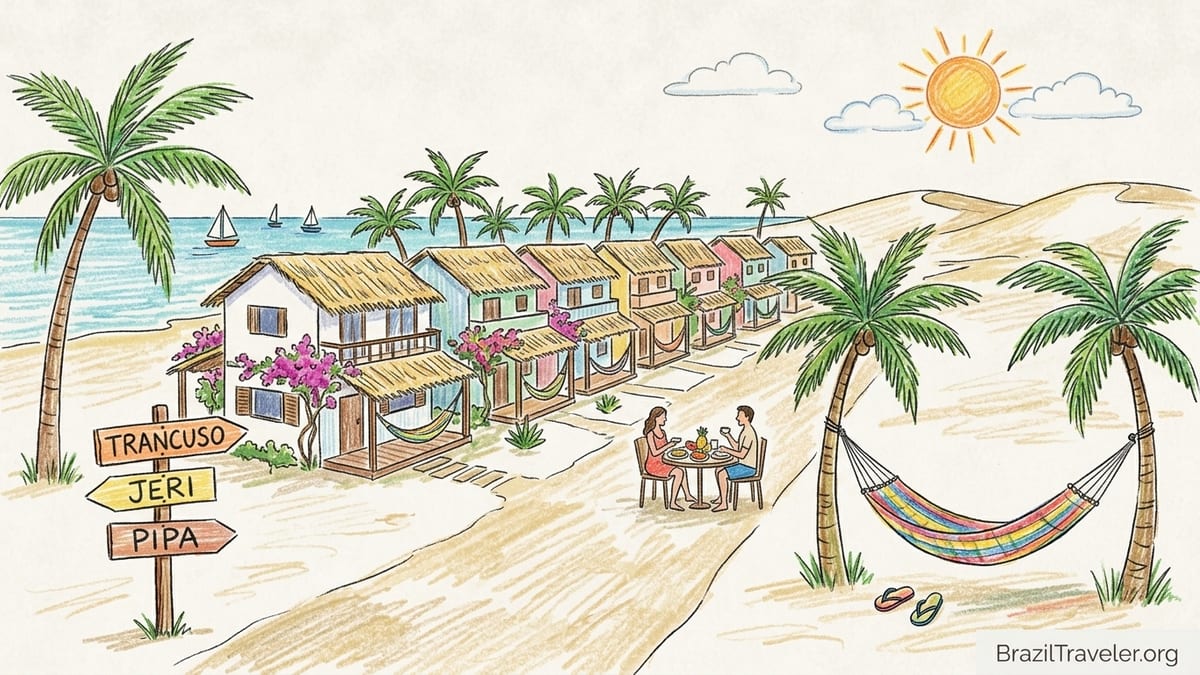
Why Northeast Brazil Is Built for Boutique Stays
From Ceará down to southern Bahia, the Northeast coast is dotted with former fishing villages that grew into beach towns without ever quite losing their laid-back scale. Local planners in places like Pipa and Jericoacoara capped building heights and limited expansion around environmental protection areas, which helped block the march of large chain resorts and left space for small, often family-run pousadas to flourish. Many of the standout properties in 2026 still have fewer than 20 rooms, sandy pathways instead of paved driveways and hammocks strung in coconut groves rather than infinity pools stacked in concrete.
Those small numbers matter to travelers. In practice, it means you are more likely to be greeted by name, see the same staff each day and get honest, current advice on everything from wind conditions for kitesurfing to which dune buggy operator actually respects the turtle-nesting zones. When I compare notes with other writers and long-stay visitors, the places they remember tend to be the pousada where the owner pressed strong coffee into their hands after a dawn flight or the tiny beachfront hotel where the night guard doubled as a stargazing guide.
At the same time, boutique does not always mean rustic. In hubs like Trancoso and Pipa, the pousada inventory now runs from simple bungalows with ceiling fans to high-design eco-hotels with serious spas and tasting menus. The trick, and the purpose of this article, is to match the style and service level of these small properties with the realities of beach-town infrastructure: the wind that whips through Jericoacoara’s sand streets, the lively nightlife in Pipa’s compact center and the long, bumpy access roads that still define parts of the Alagoas and Maranhão coasts.
Across the following sections, each stay is described as I experienced it: room size and layout, design choices, what breakfast actually looked like, how strong the shower felt after a day of salt and sand, and whether the combination of air conditioning, mosquito nets and soundproofing held up once the live music and ocean winds kicked in.
Jericoacoara & Preá: Wind, Sand and Low-Slung Charm
Jericoacoara, on the west coast of Ceará, still has sand instead of asphalt on its streets and no high-rises in sight. Boutique pousadas cluster a few blocks back from the beachfront, often hidden behind simple gates that open into unexpectedly lush courtyards. In recent seasons, properties like Pousada Jeribá and The Chili Beach have consistently appeared in small-hotel rankings, and walking the village you quickly see why: most rooms are arranged in low, two-story buildings with about a dozen units, facing small pools or gardens dense with bougainvillea and cashew trees.
In the rooms I inspected near the main beach, standard doubles typically ran around 20 to 30 square meters, with queen or king beds, split air-conditioning units and sliding doors that opened onto small verandas with hammocks. Design leaned heavily on local wood and cotton: whitewashed walls, tiled floors that stay cool under bare feet, headboards built from reclaimed planks and bedside lamps made from gourds or woven straw. Bathrooms were compact but functional, with open showers, good water pressure during most of the day and solar-heated water that could cool slightly if everyone came back from sunset at the same time.
Breakfast was one of the highlights in Jericoacoara’s better pousadas. Even in mid-range options, I found buffets with freshly cut mango and papaya, still-warm pão de queijo, plates of queijo coalho and eggs made to order. Staff usually offered tapioca pancakes or cuscuz de milho without prompting, and it was common for the owner or manager to circulate between tables, asking about plans for dune hikes or kitesurfing sessions and quietly connecting guests with trusted guides. That direct involvement from owners made organizing transport to the famous Pedra Furada rock arch or to the lagoons at Jijoca far easier than sifting through street-side touts.
Wind and mosquitoes are real considerations here. Proximity to the dunes and the shore means that in some pousadas closer to the beach, wind whistles through door frames on gusty nights, which can bother light sleepers despite otherwise solid soundproofing. In side-street properties, rooms that had both air conditioning and well-fitted screens on windows fared best, with relatively few mosquito issues if guests remembered to close the balcony doors at dusk. Wi-Fi speeds varied more; where owners had invested in stronger connections or backup systems, video calls were stable, but in older pousadas the signal weakened in garden rooms and during evening peak times.
For travelers drawn to kitesurfing, the village of Preá, about half an hour from Jericoacoara, has become a specialist enclave, with pousadas like Rancho do Peixe helping anchor a scene of low-slung bungalows beneath towering palms. Here, most accommodations are standalone wooden casitas spaced widely for privacy, with generous verandas and open-air bathrooms. The trade-off for that space is exposure to the wind, which is exactly what kiters want but requires good mosquito nets, high-quality bedding that does not feel damp and thought-out lighting that does not attract insects. On-site restaurants often feel like communal living rooms, and the smaller scale of these beachside complexes can either simplify the trip, by letting you charge everything to your room, or complicate it if you want nightlife and a range of dining options beyond the in-house kitchen.
Pipa: Cliff-Top Pousadas and Lively Nights
Pipa, in Rio Grande do Norte, has grown into a full-fledged beach destination while keeping a walkable center and strict limits on sprawling construction near its cliffs and protected coves. The result, visible in 2026 listings and on the ground, is a dense network of pousadas and small hotels, many with under 30 rooms, tucked along the lanes that lead to Praia do Amor and the main village beach. Travelers now choose between quiet, leafy guesthouses up the hill and smaller boutique hotels that sit right above the sand.
On a recent stay near Pipa’s central Rua do Céu, my room in a mid-range boutique pousada measured roughly 25 square meters, with a king bed, efficient air conditioning and a sliding glass door that opened onto a small terrace overlooking the pool. Décor was coastal but restrained: polished concrete floors, framed photographs of local surf breaks and woven baskets rather than heavy furniture. Soundproofing was decent inside once the terrace door was shut, but you could still hear the muffled thump of music from bars a few streets away during high season. Travelers sensitive to noise should ask for garden-facing rooms and avoid units close to reception or pool bars.
Breakfasts in Pipa’s better-rated pousadas tended to be generous and unhurried. On most mornings, spreads included tropical fruit, juices pressed from acerola or passion fruit, cakes baked on-site and customizable tapioca made at a small griddle station. Staff were often young locals or Brazilian travelers who had stayed and settled; they shared real-time tips on tide times at Praia do Madeiro for dolphin spotting, which dune buggy operators were careful drivers, and whether the road works on the highway back to Natal were causing delays. I found that having this very current, lived-in knowledge compensated for the occasionally limited concierge services compared with larger hotels.
Infrastructure matters if you plan to work remotely from Pipa. The town has had periods of power instability, something digital nomads on the ground have been openly discussing in the last year. Some of the more forward-looking pousadas have responded by adding small generators or battery backups, and by advertising reliable Wi-Fi as a core amenity instead of an afterthought. When inspecting rooms, I noted that connectivity was usually strongest close to common areas and weaker in standalone bungalows at the edge of gardens. If you need stable video calls, choosing a pousada that explicitly mentions backup power and asking for a room not too far from the router cluster can make a big difference.
Being small-scale in Pipa can both simplify and complicate a visit. On the one hand, many boutique pousadas sit within a five to ten minute walk of the main restaurant streets, so you can stroll from a quiet garden setting to seafood moquecas or live-forró bars without needing a car or taxi. On the other hand, parking can be tight at these same properties, and during busy Brazilian holiday periods, the lack of big-resort infrastructure translates into crowds spilling into narrow lanes and waiting lists at the most popular dinner spots. Travelers who value tranquility might prefer stays closer to Praia do Amor or on the edges of Tibau do Sul, where pousadas are more spread out and the night sounds are mostly waves and tree frogs.
São Miguel dos Milagres & the Alagoas Coral Coast
Further south in Alagoas, São Miguel dos Milagres and the so-called Rota Ecológica de Milagres present a very different boutique-hotel landscape. Here, environmental restrictions and the absence of big urban centers nearby have preserved long, palm-fringed beaches and shallow tidal pools over the offshore coral reef. The hospitality that developed around this natural setting leans heavily toward small pousadas, many with fewer than 15 rooms, set back from the sand behind curtains of coconut palms.
In the properties I visited along this stretch, rooms tended to be more spacious than in denser towns. Suites of 30 to 40 square meters with high ceilings, polished concrete or tiled floors and four-poster beds draped in mosquito netting were common in the upper mid-range. Bathrooms often featured semi-open layouts with indoor-outdoor showers and natural stone basins. Because these pousadas are more isolated, strong air conditioning and effective mosquito control are non-negotiable; the best stays combined quiet, energy-efficient units with sealed windows, ceiling fans and mosquito coils discreetly set out by housekeeping before dusk.
Breakfast in São Miguel dos Milagres felt more like a slow country brunch than a buffet. Many pousadas served made-to-order dishes at the table: tapioca filled with local queijo coalho, omelets with herbs from the property garden and baskets of regional breads and cakes. Owners living on-site often joined guests for coffee, chatting about the tides for boat trips to the natural pools or arranging bikes for exploring backroads between villages. That direct line to decision-makers proved invaluable for adjusting boat outings when wind or swell picked up, and for finding independent drivers for airport transfers to Maceió or Recife without relying solely on online listings.
The small scale here mostly improves the experience, but there are trade-offs. With few restaurants outside the pousadas themselves, dinner options can feel limited on longer stays unless you plan ahead to rotate between neighboring properties. Some boutique hotels curate multi-course menus that change daily, which can be outstanding value given the quality of fresh seafood, but they must be booked earlier in the day. Wi-Fi is generally good enough for messaging and light work, yet travelers who need guaranteed connectivity for remote jobs should verify whether a particular pousada has backup systems, as rural power interruptions still occur and not every property has the resources of larger coastal towns.
Maragogi, further north in Alagoas, has a mix of larger all-inclusive resorts and smaller pousadas closer to the historic center and to beaches such as Barra Grande. For travelers focused on boutique experiences, the smaller guesthouses a block or two back from the sand often provide a stronger sense of place than the bigger complexes on the main strip. Rooms tend to be simpler, in the 18 to 25 square meter range, with effective air conditioning and functional bathrooms, but owners often compensate with attentive service, arranging early-morning trips to the offshore natural pools and advising on which days to avoid crowding from cruise-excursion groups.
Trancoso: Design-Forward Casas Around the Quadrado
Trancoso, in southern Bahia, may be the best-known boutique-hotel village in the Brazilian Northeast. Around its grassy main square, the Quadrado, traditional single-story houses have been carefully converted into design-forward guest rooms and small hotels. Properties such as UXUA Casa Hotel & Spa, Etnia Casa Hotel and Pousada Capim Santo routinely appear in lists of South America’s top boutique stays, and a walk around the Quadrado reveals why: small footprints, inventive design and a strong relationship between the hotels and the community.
During my most recent inspection round, I focused on small properties either on or just behind the Quadrado and along the paths leading down to Praia dos Nativos. The rooms I viewed in this segment of the market were generous by beach-town standards, often 35 square meters or more, with separate living areas and kitchenettes in some casas. Décor leaned into Bahian crafts: reclaimed wood beams, handmade tiles, colorful textiles and art sourced from local galleries. Air conditioning was typically discreet, with split units hidden behind wooden screens, and I noticed that many casas also used cross-ventilation and ceiling fans so guests could sleep with less reliance on artificially cold air when evening breezes were sufficient.
Bathrooms in these higher-end boutique properties were among the best on this route, with strong, consistent water pressure and high-quality fixtures. Many featured outdoor or semi-open showers surrounded by tropical plants, which made rinsing off after a beach day a joy rather than a chore. Soundproofing was generally effective; even when local festivals or events brought music to the Quadrado, I found interior rooms remained quiet once windows and shutters were closed. That is not universal, so travelers sensitive to noise should ask specifically about room position, aiming for units away from street-facing façades and bar terraces.
Breakfasts in Trancoso’s boutique pousadas reflected the village’s grown-up culinary scene. At properties like Pousada Capim Santo, which began life as a family restaurant, morning service felt almost like a scaled-down hotel brunch, with tropical fruit, homemade yogurt, breads, local cheeses and eggs prepared to order. Staff were highly professional but still personal, taking time to remember coffee preferences and offer suggestions for beach clubes along Praia dos Coqueiros or more remote spots toward Praia do Espelho. Owners and managers often live in Trancoso year-round and have close ties with independent guides and boat operators, which helps in arranging day trips that avoid peak times and crowded launches.
The small scale of Trancoso’s boutique hotels very clearly shapes the experience. On the upside, you step through a modest doorway on the Quadrado and suddenly find yourself in a leafy, secluded garden with a pool, far from the day-trippers’ cameras. On the downside, there are limits on facilities; very few properties have large gyms or extensive children’s clubs, for instance. Walkability balances that out: most restaurants, small boutiques and even the paths down to the beach are within 10 to 20 minutes on foot, and for farther-flung beaches or for visits to larger neighboring resorts like Fasano Trancoso, staff are quick to arrange local taxis or private drivers.
Quieter Corners: Parnaíba, Lençóis Access and Lesser-Known Towns
While places like Jericoacoara, Pipa and Trancoso get the headlines, several quieter towns around the Parnaíba Delta and the approaches to Lençóis Maranhenses national park have also started building up small but interesting pousada inventories. In Parnaíba, a key junction for those combining beaches with the dunes and lagoons of the Lençóis, most accommodations are modest in size, often between 10 and 25 rooms, and many are run by local families who also operate boat tours into the mangroves.
The rooms I inspected in Parnaíba’s better-rated pousadas were functional and clean but more basic than the polished offerings in Bahia or Alagoas. Think 16 to 22 square meters, tiled floors, reliable air conditioning, blackout curtains and compact bathrooms with straightforward showers and acceptable water pressure. Where these properties excelled was not in design details, though some added touches like local straw art on the walls, but in practical trip support: staff who knew departure times for delta boat tours and shared up-to-date information about tidal conditions, roadworks on the BR highways and the latest park access rules around Atins and Barreirinhas.
Breakfasts in this region tended to be hearty and focused on fueling guests for long days outdoors: pots of strong coffee, regional breads, fruit and hot dishes like scrambled eggs and tapioca. With fewer international visitors than in Trancoso or Pipa, English may be limited among staff, but the personal nature of the service, including owners making sure you have enough drinking water and sunscreen before long boat outings, compensates for the absence of polished hotel-school training. Wi-Fi was good enough for basic tasks in most properties I sampled, though speeds dropped in peak evening hours when everyone returned and started uploading photos.
Elsewhere along the Northeast coast, from smaller Alagoas villages to low-key stretches of the Ceará and Rio Grande do Norte shoreline, the pattern repeated: small pousadas and inns providing the backbone of accommodation. In almost all of them, the small scale made the difference between a standard beach holiday and a trip with character. A six-room guesthouse might not have a spa, but it may be the place where the owner personally drives you to the bus stop on departure day, or where the night porter calls a friend to organize a last-minute dawn canoe outing to see herons in the mangroves. Those human touches are difficult to standardize and impossible to find at scale in the largest resorts.
How to Choose the Right Small Stay for Your Trip
Looking across these destinations, a few practical considerations consistently separated the standout boutique stays from the simply adequate. First is transparency about infrastructure. On the current 2026 booking and review landscape, the best pousadas are explicit about what they can and cannot provide: if they are on a bumpy dirt road a few kilometers from the village center, if the Wi-Fi is strong enough for remote work or better suited to messaging only, or if they have a generator for power cuts. When a small property spelling this out matches your own needs and expectations, disappointment is rare.
Second is the way design serves the environment. In windy Jericoacoara and Preá, open bungalows with slatted wooden walls and minimal glazing can look great in photos but cause sleepless nights without proper mosquito nets and thoughtfully placed outlets for fans. In humid São Miguel dos Milagres, beautifully landscaped gardens can also harbor insects if windows are not properly screened. In contrast, some of the most comfortable stays I encountered were not the most photogenic but had solid doors, tight window seals, quiet air conditioning and ceiling fans that kept air moving without noise.
Third is breakfast and on-site dining. In towns with dense restaurant scenes like Pipa and Trancoso, a good breakfast and a simple snack menu may be all you need, as you will likely eat lunch or dinner out most days. In more isolated pockets of Alagoas or on the river edges of Parnaíba, a pousada with a serious kitchen is practically non-negotiable, since external options may be limited or require driving at night on unlit roads. During my reporting, I consistently found that small properties which took food seriously, using local fish and regional recipes, generated strong word-of-mouth among travelers.
Finally, there is the question of whether the small scale improves or complicates the trip. For couples and solo travelers, boutique hotels often increase flexibility; owners can tweak breakfast times for early excursions, provide honest safety advice, and improvise solutions when weather derails boat trips. Families with very young children or travelers needing full accessibility should look more carefully. Not every pousada has ramps, pool fences, or cribs up to international standards, and some charming hillside layouts involve steep staircases or uneven garden paths. A quick pre-trip exchange with the property, ideally by phone or detailed email, remains the best way to confirm these details.
The Takeaway
In Northeast Brazil, boutique hotels and pousadas are not a niche alternative to large resorts; in many destinations they are the core of the accommodation scene. From the windy kitesurf beaches of Preá and the sandy lanes of Jericoacoara to the cliff-lined coves of Pipa, the palm corridors of São Miguel dos Milagres, the design-savvy Quadrado of Trancoso and the quieter riverside inns of Parnaíba, small properties shape how travelers move, eat and experience the coast.
Choosing well means looking beyond glossy images to the details that matter on the ground: room size and layout, realistic Wi-Fi expectations, air conditioning and mosquito control, breakfast quality, and the way staff and owners interact with guests. In my experience, the most rewarding stays were those where these elements aligned with the setting, and where the small scale allowed staff to share their own rhythms and knowledge of wind, tides and local life.
As of 2026, the boutique inventory across these destinations is deeper and more diverse than ever, especially in Jericoacoara, Pipa, Trancoso and São Miguel dos Milagres. For travelers willing to trade brand-name familiarity for a more personal, locally rooted experience, these pousadas and small hotels are the places that will stay with you long after the suntan and salt have faded.
FAQ
Q1. Are boutique pousadas in Northeast Brazil suitable for remote work?
Many boutique pousadas now offer reliable Wi-Fi, especially in towns like Pipa and Trancoso, but power stability varies by region. If you need strong connectivity, choose properties that openly mention backup power, ask for rooms close to common-area routers and confirm in advance how they handle outages.
Q2. How much should I expect to pay per night at a good boutique pousada?
Prices vary widely by season and destination, but in 2026 many solid mid-range boutique pousadas in places like Pipa or Jericoacoara charge the equivalent of a mid-range city hotel, with higher rates for design-forward properties in Trancoso or secluded beachfront stays in São Miguel dos Milagres. Checking current rates across a few dates will give the most accurate picture.
Q3. Do smaller pousadas offer airport or bus-station transfers?
In most towns, yes. Even very small pousadas often work with a network of local drivers to provide transfers from airports such as Natal, Maceió, Recife or Porto Seguro, or from nearby bus stations. It is worth arranging this directly with the property a few days before arrival, especially if you reach late at night.
Q4. How safe are these beach towns and small hotels for solo travelers?
In the main destinations covered here, central areas and beachfronts are generally safe when you follow normal precautions, and boutique pousadas often add a layer of comfort through attentive staff and controlled access. As with any trip, avoid walking alone on deserted beaches at night, keep valuables out of sight and listen to local advice from your hosts.
Q5. Are there many mosquitoes in these coastal areas, and how do pousadas handle them?
Mosquitoes can be present, especially around sunset and near mangroves or standing water. The better pousadas use a mix of strategies such as screened windows, bed nets in bungalows, ceiling fans, regular garden maintenance and providing repellent or coils. Guests can help by keeping balcony doors closed at dusk and using repellent when outdoors.
Q6. Do boutique properties usually have air conditioning and hot water?
In the destinations discussed, air conditioning and hot showers are standard in most mid-range and higher boutique pousadas. Simpler beachfront bungalows sometimes rely on fans and solar-heated water, so if cool indoor temperatures are essential to your comfort, verify room features before booking.
Q7. Can I find family-friendly boutique pousadas, or are they mostly for couples?
Many small properties cater primarily to couples, but there are family-friendly pousadas with larger suites, extra beds and shallow pools. The main limitation is often layout, since some charming hillside or garden designs involve stairs and uneven paths. Families should look for ground-floor rooms, fenced pools and clear information on cribs or additional bedding.
Q8. How easy is it to reach these small hotels without renting a car?
Larger hubs like Pipa, Trancoso and Jericoacoara are reachable by a mix of flights, buses and private transfers, and once in town you can often walk to beaches and restaurants from central pousadas. More remote stretches of the Alagoas coast and parts of the Parnaíba Delta are easier with a car or pre-arranged transfers, which small hotels can usually organize.
Q9. Do boutique pousadas cater to dietary restrictions?
In the more international destinations, many small hotels are accustomed to vegetarian, vegan or gluten-free requests and can adapt breakfast and dinner options with prior notice. In quieter villages, options may be more limited, but advance communication with the property often allows them to plan around common restrictions.
Q10. When is the best time of year to stay in these Northeast Brazil boutique hotels?
The dry season months are popular for clear skies and calm seas, with peak Brazilian holiday periods bringing higher prices and busier towns. Shoulder seasons outside major national holidays can offer a good balance of pleasant weather, quieter pousadas and more flexible room rates, especially in the smaller, design-focused properties.