


The Northeast of Brazil has quietly become one of the strongest regions in the country for truly family-focused resorts. After a series of recent trips in 2025 and 2026 with young children in tow, what stood out was not glossy marketing terms like “family-friendly,” but the very practical details that decide whether a day with kids is easy or exhausting: how far the room is from the pool, whether the sea is calm enough for nervous swimmers, how the kids’ club actually handles supervision, and if there is anything a picky toddler will eat at 6 p.m. without tears. This guide focuses on what has genuinely worked for our family and other traveling parents, with concrete examples around Porto de Galinhas, Maragogi and Japaratinga, Maceió, Bahia and Natal/Touros.
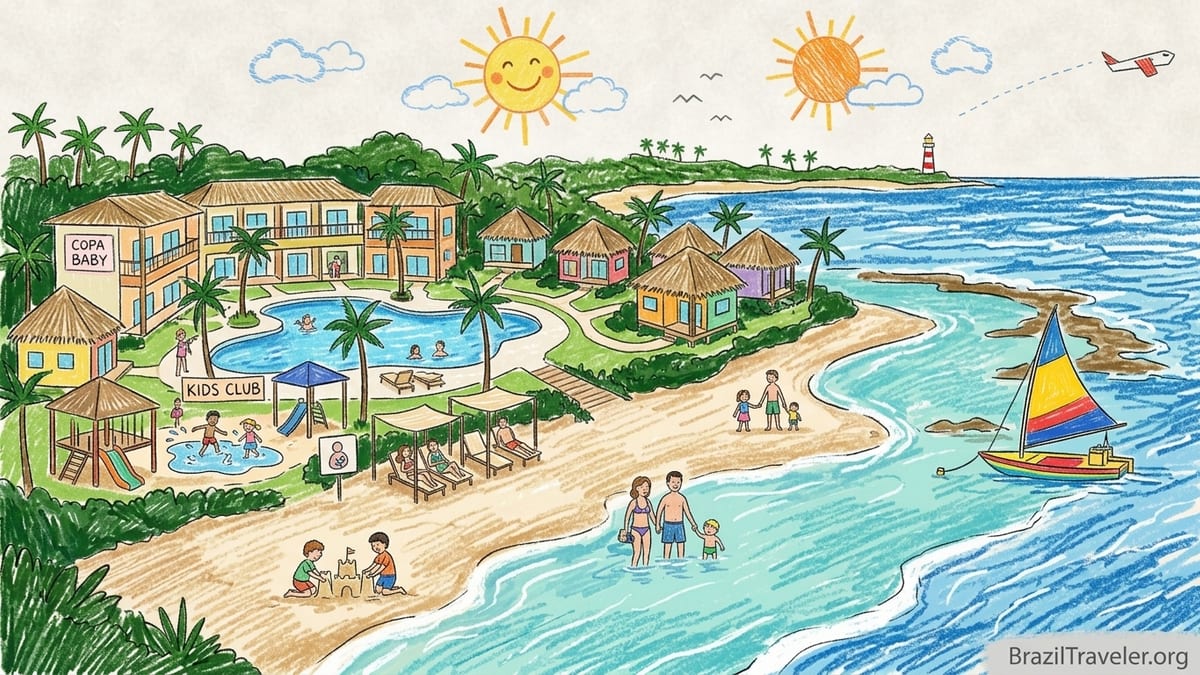
Why Northeast Brazil Works So Well For Families Right Now
When family travelers talk about Brazil, Rio and the Southeast usually dominate the conversation. Yet by late 2025 and through 2026, the Northeast coast from Pernambuco down to Alagoas and up to Rio Grande do Norte has become one of the country’s most reliable regions for resort-style family trips. A big reason is climate: even in Brazil’s winter months of June to August, the water temperatures on this stretch of coast are usually warm enough for long pool and sea sessions, which makes it far more forgiving with small children who refuse to get out of the water.
Another factor is the density of purpose-built resorts that now think seriously about families. Around Porto de Galinhas, Maragogi, Barra de Santo Antônio near Maceió, and the coastal strip north of Natal, newer or recently renovated properties have put kids’ clubs, baby kitchens and shaded splash zones front and center rather than as an afterthought. Resorts like Salinas Maragogi All Inclusive Resort and Grand Oca Maragogi were explicitly designed as family all-inclusive properties, with dedicated kids’ club buildings, baby pantries and shallow pools that see more action than some of the headline infinity pools.
For parents, the region’s geography also matters. Many of the main family resorts sit on relatively sheltered stretches of reef-protected coastline, where natural pools appear at low tide and waves are smaller than on the open Atlantic. Beaches in parts of Porto de Galinhas, Maragogi and Maceió’s city neighborhoods like Pajuçara often feel more like large, warm lagoons than rough ocean, which reduces the stress level when you have a fearless three-year-old charging toward the water.
Finally, there is the cost-to-convenience ratio. While prices in high season can be significant, the all-inclusive or full-board structure at many Northeast resorts, plus flight options from major Brazilian hubs and some international gateways, often ends up more economical than assembling a city apartment, restaurant meals and separate excursions. For families, having almost everything on one property is less about indulgence and more about controlling the chaos.
Porto de Galinhas: Walkable Layouts and Baby-Friendly Details
Porto de Galinhas, in Pernambuco, has one of the highest concentrations of family-focused resorts in the Northeast. On recent trips, what separated the better experiences from the frustrating ones was not star rating but layout. Properties where we could walk from our ground-floor room to the main pool or beach in under three minutes, even with a stroller, completely changed the rhythm of the day. Resorts that required a ten-minute walk under the mid-morning sun or waiting for internal carts felt disproportionately tiring with napping toddlers.
At Hotel Solar Porto de Galinhas, for example, the kids’ club and playground sit close to the central pool and many of the family rooms, so you can move between water play, supervised activities and your room without crossing the entire property. The resort runs a kids’ club program from morning through evening, with a games room and kids’ space operating roughly from 9 a.m. to 10 p.m., which in practice meant our older child could dip in and out between meals and swims rather than being locked into a single long session. Children under about six need to be accompanied by a parent in many of the structured activities, something to keep in mind if you are arriving hoping for long stretches of solo time.
Baby facilities in Porto de Galinhas are a noticeable strength. Several resorts, including Solar and Village Porto de Galinhas, provide a “copa baby” or baby pantry equipped with microwave, blender, small fridge and basic utensils so parents can prepare bottles or simple purees at any hour, without relying on room service. On a recent stay, having this room available made late bedtime snacks and early-morning milk much simpler than in standard hotel setups. Armação Resort has expanded this concept with a baby-friendly area that includes a breastfeeding room and changing facilities next to the kids’ club, so you are not improvising diaper changes on pool loungers.
Where Porto de Galinhas still requires careful selection is resort size. Some of the bigger all-inclusive properties market their extensive grounds as a selling point, but with small children it can translate into long walks to reach breakfast or the beach. On one stay at a large complex, we had a ten-minute stroller push from our block to the buffet, which made quick returns to the room for naps impractical. When booking, ask specifically how far standard and family rooms are from the main pool and restaurant, and whether you can request a unit near the central area. For younger families, compact resorts or those with most rooms in a U-shape around the pool tend to work better than sprawling campuses.
Maragogi & Japaratinga: All-Inclusive That Actually Helps Parents
Maragogi and neighboring Japaratinga in Alagoas have become shorthand for all-inclusive family resorts in Brazil, and with good reason. Salinas Maragogi All Inclusive Resort is often the flagship example. In practice, the all-inclusive model here really does reduce decision fatigue. With kids who snack constantly, having multiple points for drinks, fruit and simple hot options meant we were not watching the clock for restaurant opening times. Salinas runs several food outlets around the property, including poolside snack points and a main buffet with extended hours, so you can usually find something from mid-morning to late evening without crossing the entire resort.
For parents of babies and toddlers, one of the most useful facilities at Salinas is the distributed baby pantries. These are located in several accommodation blocks and are stocked with equipment like microwaves and blenders, plus basic pantry items suitable for preparing baby food, and are included in the room rate. On our visit, walking a short corridor instead of trekking to the main restaurant every time we needed warm water or a quick snack saved significant time. The resort also maintains a children’s buffet station with simpler, less seasoned items at lunch and dinner, which our picky eater relied on when the main buffet felt overwhelming.
Grand Oca Maragogi offers a slightly different atmosphere with large gardened grounds and bungalow-style accommodations. Rooms are distributed among coconut groves, and while this looks idyllic on brochures, families should be aware that it can mean longer walks from certain units to the main pool and restaurant. On an August 2025 stay, we timed seven to eight minutes from a garden bungalow to breakfast with a stroller. The resort’s kids’ club is designed for children from about four years old, with organized games, craft activities and pool time under staff supervision. Families with infants and younger toddlers generally use the baby area near the club but remain responsible for their children, since formal drop-off is not offered for under-fours.
The beach and sea conditions in Maragogi are one of the region’s big selling points, though they still demand attention to tide times. On calm days and at medium to low tide, the water in front of the main resorts can be shallow and clear for tens of meters, ideal for small children playing at the shoreline. However, when the tide rises or winds pick up, currents become more noticeable and waves can feel rougher than marketing photos suggest. We found that early mornings and the first half of the afternoon were best for younger kids; by late afternoon, the combination of tired children and slightly choppier seas increased the stress. Checking local tide charts a day ahead becomes a surprisingly valuable parenting tool here.
Maceió and Barra de Santo Antônio: Balancing City Beaches and Big Resorts
Maceió itself, especially neighborhoods like Pajuçara and Ponta Verde, offers a different, more urban take on family beach stays. Pajuçara beach, protected by offshore reefs, usually has calmer waters that function almost like a giant natural swimming pool at low tide, which can be reassuring with non-swimmers. Staying in a seafront hotel here with children means shorter transfer times from the airport and the ability to walk to restaurants and supermarkets, something that more isolated resorts lack. For families who like to mix beach time with small city conveniences, this can work well for three or four days.
For more of a resort experience near Maceió, many families now look to Barra de Santo Antônio, about 40 kilometers from the city, where large properties have been built on wide stretches of sand. Vila Galé Alagoas, for instance, has nearly 500 rooms, four pools and several restaurants, plus a dedicated Nep Club for children with its own water park. The family rooms and chalets here are designed with kids in mind, decorated with the brand’s children’s characters and offering space for parents and two or three children in the same unit. This configuration is important, as many standard Brazilian hotel rooms officially cap at two adults and one child; confirming occupancy rules before booking avoids awkward arrivals at reception.
The scale of a resort like Vila Galé Alagoas brings both benefits and inconveniences. On the positive side, there are many dining options, entertainment activities and pools, so older kids and teens rarely complain of boredom. The Nep Club water park tends to be the place children remember most, not the main beachfront pool. On the other hand, walking distances can be significant. On a March 2026 stay, our family room in a lateral wing was a five to seven-minute walk from the main buffet with a stroller, which meant one parent often went ahead with the older child while the other followed with the toddler. Returning to the room quickly for a nap in the middle of lunch was possible but not seamless.
Meal times here and in similar large resorts are another detail families should factor in. Breakfast typically runs from early morning until mid-morning, but dinner might only start at 6:30 or 7 p.m., which is late for very young children operating on North American or European schedules. In practice, we often used afternoon snack stations and fruit from breakfast to tide the kids over, and then aimed to be at the buffet within the first 30 minutes of opening, before queues for popular dishes formed. At peak holiday periods like late December and January, lines for made-to-order grill items can reach ten to fifteen minutes, which feels long if you are juggling plates and negotiating with a four-year-old.
Bahia: Choosing Calm Waters Over Brand Names
Bahia is a large and varied state, and its family resort scene is spread out, but several areas between Salvador and the northern coast offer strong options. From a practical family perspective, the key is less the branding of the resort and more the specific beach conditions and layout. Stretches of coast with reef protection and gentler waves are significantly more comfortable with small children than open Atlantic-facing beaches where flags frequently warn about currents.
In the region north of Salvador, including Praia do Forte and nearby beaches, many resorts occupy sheltered sections where natural pools form at low tide. Families we spoke to in early 2026 who stayed at large all-inclusive complexes here noted that even when the main pools were crowded, they spent much of their time either in shaded children’s splash zones or walking the reef-protected shallows with water up to their knees. In booking photos, adults-only infinity pools often get top billing, but on arrival with kids, the true stars turned out to be small shaded baby pools with knee-deep water, rubberized flooring and nearby bathrooms.
Room configuration in Bahia’s resorts follows a familiar pattern: standard rooms for two adults and one child, and a smaller inventory of family suites or interconnected rooms that work better for those with two or more kids. On a late 2025 stay at a north-coast Bahia resort, we found that the loft-style family room looked perfect in photos, but in reality the open staircase between levels made it less practical with a crawling baby. We ended up bringing a travel safety gate and rearranging furniture to create a makeshift barrier. Parents considering mezzanine or duplex rooms should ask for photos of staircases and railings or choose single-level family units when traveling with very young children.
Kids’ clubs in Bahia generally accept children from about four years old for drop-off activities, with younger kids welcome to participate if accompanied by a parent. Programming tends to include beach games, crafts, treasure hunts and mini discos in the evening. What impressed us less was the indoor space in some clubs, which could be fairly basic compared with the vibrant outdoor playgrounds. In practical terms, the children rarely complained, as they spent far more time in the shallow pools and on the beach than in structured indoor activities. The takeaway for parents is that while kids’ clubs are useful for an hour or two of supervised play, the outdoor areas and the proximity of your room to those spaces will likely matter more day to day.
Natal and Touros: Big-Scale Resorts and Atlantic Swell
The coast north of Natal, especially around areas like Via Costeira and further up near Touros, features several large-scale resorts that draw families from across Brazil. Properties such as SERHS Natal Grand Hotel & Resort stand out for combining city access with resort infrastructure. SERHS has multiple pools and a sizable kids’ club located near the main pool area, offering supervised activities such as crafts, pool games, dance classes and movie sessions. For older children, this mix keeps them entertained from mid-morning until early evening, with breaks for meals and rest.
However, families should be aware that the sea along parts of this coast is more exposed to Atlantic swell than the reef-protected sections further south. On several days during an August 2025 visit, red flags marked stronger waves and currents, and hotel staff often suggested that younger children stay in the pools rather than swimming in the sea. In practice, this meant that despite booking a beachfront resort, our children spent about 80 percent of their water time in the varied pool complex and only brief supervised paddles at the shoreline. Parents coming primarily for calm ocean swimming with toddlers may find Maragogi or sheltered sections of Bahia more appropriate.
Resorts in the Natal and Touros area often spread across bluff-top plots with staircases or elevators down to beach level. While scenic, this vertical layout can complicate quick returns to the room. In one Touros-area property we visited, moving from the main children’s pool back to a mid-level room required an elevator ride and several minutes of walking along open corridors. For nap times or sudden bathroom needs, this extra friction showed. If your children still nap during the day, and you plan to use the kids’ pools extensively, it is worth paying extra for rooms on the same level and as close as possible to those areas.
Meal plans vary here between half-board and all-inclusive. In half-board setups, families commonly take breakfast and dinner at the resort and handle lunch at pool bars or nearby beach kiosks. For picky eaters, half-board works if the breakfast buffet is generous and if the resort offers simple lunch items like grilled chicken, rice and fries at reasonable prices. Several parents we met at a Natal resort in early 2026 mentioned that the kids rarely used specialty restaurants that required reservations, even though they looked attractive on paper. After full days in the sun, most families defaulted to the main buffet for speed and flexibility, reinforcing the idea that in practice, convenient dining hours and layout beat fine-dining options.
What Our Kids Actually Used (and What Looked Better Online)
Across resorts in Porto de Galinhas, Maragogi, Bahia, Maceió and Natal, a few patterns emerged about which amenities genuinely improved our days with children. The clear winners were shaded children’s pools and splash areas located close to the main family rooms, baby pantries for preparing food at flexible times, and kids’ clubs that allowed partial participation rather than rigid schedules. Our children repeatedly gravitated to shallow pools with small slides, water mushrooms and nearby loungers where parents could watch easily. In multiple properties, the showcase adults-only or panoramic pools went almost unused by families, despite dominating promotional imagery.
Baby kitchens or “copas baby” turned out to be invaluable. Whether in Porto de Galinhas or Maragogi, being able to warm bottles at 5 a.m., sterilize items or prepare simple oatmeal without calling room service meant fewer meltdowns and less stress. Surprisingly, many parents we spoke with had not realized these spaces existed until after check-in, because they were buried in small-print amenities. When choosing between two similar resorts, we now give a clear advantage to those with baby pantries in or near accommodation blocks rather than only by the main restaurant.
On the other hand, several features that had influenced our booking decisions ended up underused. Evening entertainment shows, for example, looked lively in videos, but our young children were often too tired to stay awake past 9 p.m., so we rarely made it through a full performance. Likewise, some resorts highlight on-site spas, themed restaurants and large convention centers, none of which had any impact on our daily reality with children under eight. Even kids’ club indoor game rooms with video consoles saw limited use in our case; the children almost always preferred the pool or beach, and the electronics became only a brief novelty on rainy spells.
Room upgrades also deserve a realistic look. Swim-up suites can be helpful when one parent needs to stay with a napping child while the other supervises an older sibling in the water, but only if the pool outside is shallow enough and calm. In one Northeast resort, the swim-up pool in front of our room was deeper than expected and unshaded for much of the day, so we ended up using the central kids’ pool instead and the premium we paid brought little added value. Family suites with separate sleeping areas, by contrast, did prove worthwhile when dealing with early bedtimes and daytime naps, because adults could keep a light on or talk quietly without disturbing children.
The Takeaway
Planning a family resort stay in Northeast Brazil in 2026 means looking beyond generic “family-friendly” labels and focusing on the details that will shape each day of your trip. Porto de Galinhas stands out for compact, walkable resorts and strong baby facilities like copas baby and breastfeeding rooms close to kids’ areas. Maragogi and Japaratinga shine for all-inclusive properties such as Salinas Maragogi and Grand Oca Maragogi, where multiple snack stations, baby pantries and very shallow beachfronts can simplify life with small children, as long as you remain attentive to tides and currents.
Near Maceió, families can choose between urban beaches like Pajuçara, with calm, reef-protected waters and city conveniences, and large-scale resorts in Barra de Santo Antônio, where water parks and multiple pools delight children but longer walking distances require some planning. In Bahia, picking the right stretch of reef-sheltered coast and a room configuration that matches your children’s ages is more important than chasing a particular brand name. Around Natal and Touros, grand resorts provide abundant pools and activities, but the more exposed Atlantic can limit safe sea swimming for younger kids, meaning you may spend more time in the pool complex than on the sand.
Across the region, the most successful trips we and other families experienced shared a few traits. Rooms were within a short, mostly shaded walk of the main children’s pool and buffet. Resorts offered some form of baby pantry or at least guaranteed access to warm milk and simple food outside strict restaurant hours. Kids’ clubs had clear age limits and supervision rules but did not pressure parents into all-or-nothing participation. Beach conditions were understood in advance, with realistic expectations about when the sea would be calm enough for little swimmers.
If you keep these practical questions front and center when shortlisting resorts, Northeast Brazil can deliver exactly what many parents hope for but rarely get: days that feel easy rather than choreographed, where children are worn out from genuine play instead of boredom, and where adults can actually sit down with a coffee while watching their kids in the shallow end. In a region now recognized as one of the strongest in Brazil for family resorts, the difference between a good stay and a great one almost always comes down to how well the small details match your family’s real routines.
FAQ
Q1. What is the best time of year to visit Northeast Brazil with kids?
For most families, the period from September to early December and from March to June works best, with warm water, generally good weather and slightly lower prices than the peak Brazilian holiday season of late December and January.
Q2. Are all-inclusive resorts in Maragogi worth the extra cost for families?
For families with young children who snack frequently and spend most of the day on property, all-inclusive resorts like Salinas Maragogi often prove good value because meals, snacks and most drinks are covered and you avoid constant small expenses.
Q3. How old do children need to be to use kids’ clubs in these resorts?
Most kids’ clubs in Northeast Brazil accept children from about four years old for drop-off activities, while younger children can usually join in only if a parent stays with them; exact age rules should be confirmed with each resort before booking.
Q4. Are the beaches in Porto de Galinhas and Maragogi safe for small children?
Many sections are protected by reefs that create calmer, shallower water at lower tides, which is generally suitable for small children under supervision, but conditions can change with tides and wind so daily local advice and posted flags should always be followed.
Q5. Do family resorts in Northeast Brazil provide baby cots and extra beds?
Most larger resorts can supply baby cots at no extra cost and rollaway beds for older children, but numbers are limited, so it is important to request them at the time of reservation and reconfirm a few days before arrival.
Q6. Can I heat bottles and prepare simple meals for my baby in these resorts?
Many family-focused properties, especially around Porto de Galinhas and Maragogi, offer a dedicated baby pantry with microwave, blender and basic utensils where parents can heat bottles and prepare simple food at any hour, which is a major advantage with infants.
Q7. How far are typical family rooms from pools and restaurants?
Distances vary widely: in compact resorts you may be two or three minutes on foot from the main pool and buffet, while in large-scale properties some rooms can be a seven to ten-minute walk away, so it is worth asking about location when you book.
Q8. Are there food options for picky eaters and children with simple tastes?
Buffets at major family resorts usually include plain pasta, rice, grilled chicken, fries, fruit and a small children’s section, giving enough options for picky eaters; parents of children with allergies should inform the hotel in advance and speak directly with kitchen staff.
Q9. Is it easy to move around resorts with a stroller?
Most newer or recently renovated properties are reasonably stroller-friendly, but in very large resorts or those built on slopes you may encounter longer open-air walks, ramps and occasional stairs, so a lightweight, easily foldable stroller is recommended.
Q10. Should I rent a car or rely on transfers and taxis with kids?
For stays focused on a single resort, pre-booked airport transfers are usually enough; renting a car becomes useful if you plan day trips to other beaches or towns, but parking costs and driving on unfamiliar roads should be weighed against the extra flexibility.