


Manaus is the main international gateway to the Brazilian Amazon, and for many travelers it is the only chance to experience the rainforest. On arrival, you will find everything from quick half-day boat rides to multi-day jungle expeditions. This guide compares the most common tour lengths and styles, explains what you can realistically see in one, three or five days, and highlights the questions to ask before you book.
How Amazon Tours From Manaus Work
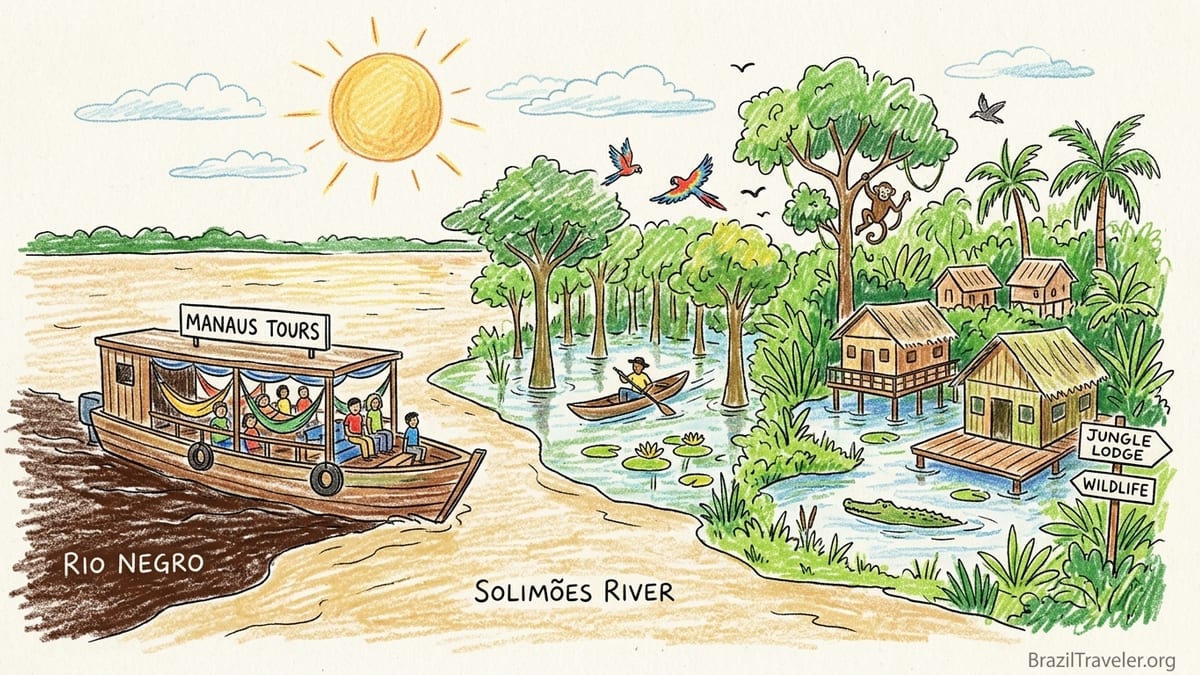
Manaus sits at the junction of the Rio Negro and the Solimões, the upper stretch of the Amazon River, and most tours start from the city’s marina area or from nearby road-and-river junctions southeast of town. Short excursions use speedboats departing from central piers such as the Marina do Davi area or the main port near the historic center, while longer lodge-based programs combine van or bus transfers with regional boats to reach more remote sections of river.
Many local operators sell similar “packages” built around a standard menu of activities. A typical program includes a visit to the Meeting of the Waters, canoeing through flooded forest channels in the wet season, daytime and nighttime wildlife observation by boat, jungle walks that focus on medicinal plants and survival techniques, and cultural visits to riverside communities that have opted to receive visitors. The difference often lies less in the advertised itinerary and more in the comfort level, safety standards, group size and how far you actually travel from Manaus.
Prices vary widely. Mass-market full-day river tours combining the Meeting of the Waters and a Rio Negro segment commonly start around 350 to 450 Brazilian reais per person for shared departures including lunch and hotel pickup, according to several Manaus-based booking services checked in October 2026. More immersive three-day lodge stays with activities included often begin near 1,500 reais per person in shared rooms, while five-day lodge-and-camping packages with bilingual guides can reach 3,000 to 4,000 reais or more, depending on the lodge category.
When comparing tours, it is important to look beyond the headline price. Reputable operators specify whether their rates include round-trip transfers from Manaus, all meals during the program, accommodation, guided activities, basic accident insurance and any applicable protected-area or community fees. Some jungle lodges near Manaus advertise “all-inclusive” packages that cover transportation, full board and at least two guided outings per day, while alcoholic drinks, soft drinks and optional extras such as stand-up paddleboarding or longer treks are charged separately.
Half-Day Meeting of the Waters Excursions
The Meeting of the Waters, where the dark Rio Negro runs side by side with the sandy-colored Solimões without mixing for several kilometers, is the single most popular short tour from Manaus. It lies roughly 15 to 20 kilometers downstream, and public and private boats reach the confluence in about 45 to 60 minutes, depending on the vessel. From Manaus, many half-day excursions last four to five hours including transfers, making them suitable for visitors with limited time or long layovers.
Several Manaus-based tour companies and local skippers offer half-day Meeting of the Waters trips by speedboat or covered regional boat. Shared departures marketed to international visitors often cost in the region of 250 to 350 reais per person and usually include pickup from central hotels, a bilingual guide and mineral water. Cheaper options may be available if you arrange a boat directly at the docks, but these typically operate in Portuguese only and may not include guiding beyond the boat captain.
On these short tours, the focus is the visual spectacle of the two rivers running side by side and the chance to feel the temperature difference by hand where the dark and brown waters meet. Some operators combine the confluence with a quick stop at a floating restaurant or platform, or a brief detour through nearby channels to view water lilies from the boat. Wildlife encounters on half-day trips tend to be limited to river birds such as herons and kingfishers and distant views of forested banks. You are unlikely to see larger mammals or reptiles on such a compressed schedule close to the city.
Because these tours remain relatively close to Manaus and follow busy river routes, they do not constitute a deep rainforest experience. Travelers sometimes arrive expecting to be surrounded by untouched jungle within minutes, but the riverscape around the city includes ports, floating fuel stations and riverside settlements. For a real sense of forest immersion, you will need at least a full day on the river or preferably an overnight away from Manaus.
Full-Day Rio Negro Sightseeing and Flooded Forest
Full-day river tours from Manaus usually build on the Meeting of the Waters by continuing upriver on the Rio Negro. These trips, often advertised as “full-day Amazon river tours,” normally last eight to ten hours door-to-door and include hotel pickup around 8:00 in the morning and return around 17:00 or 18:00. A widely sold itinerary combines the Meeting of the Waters with a stop at a floating restaurant for a buffet lunch, canoeing or motorized trips through igapó flooded forest or narrow igarapé channels, and visits to riverine communities or interpretation centers.
Example full-day programs sold by established local agencies in 2026 describe canoe rides through flooded forest during high-water months, with opportunities to look for monkeys and sloths resting in the canopy, as well as birdwatching for macaws and toucans along the river banks. Some itineraries include a piranha fishing demonstration and a stop at platforms where wild pink river dolphins sometimes surface in the surrounding waters. Prices for full-day shared tours featuring these elements commonly fall between 350 and 650 reais per person, depending on inclusions, vessel type and group size.
Most full-day tours use covered regional boats with space to move around and a shaded upper deck. These are slower than speedboats but more comfortable for a full day on the water. Expect simple plastic or wooden seating, basic onboard toilets and a communal lunch often served at a riverside restaurant built on stilts or floating platforms. Travelers who prefer smaller groups can pay more for speedboat-based or semi-private trips, which reduce travel time between stops and sometimes access narrower creeks.
Even on a full-day outing, you will remain in a relatively accessible section of the Amazon near Manaus. The experience is river-focused rather than a deep jungle immersion. You will probably spend time on short forest walks or boardwalks near restaurants or community visitor centers, but you will sleep back in the city. For visitors with only one free day, this format provides a good introduction to the region’s rivers, flooded forests and communities, yet those hoping for extended wildlife observation, night excursions and the soundscape of the forest after dark should consider at least one overnight.
Overnight Jungle Experiences Close to Manaus
Spending a night away from the city changes the feel of an Amazon visit, even if you remain within half a day’s travel from Manaus. Many jungle lodges and simple camps operate on tributaries such as the Rio Ariaú or in areas southeast of the city reached by a combination of road and boat. Typical transfer times range from two and a half to four hours each way, involving a van ride across the bridge to the opposite bank or down the highway to small ports like Careiro, followed by a motorized canoe or regional boat to the lodge.
One-night packages often include an afternoon arrival, a sunset or night wildlife-spotting trip by canoe looking for caimans and nocturnal birds, and a short jungle walk early the next morning before returning to Manaus after breakfast. Price examples in 2026 for no-frills overnight programs start around 700 to 900 reais per person, including shared accommodation, dinner, breakfast, basic guided activities and transfers, with more comfortable lodge stays costing upwards of 1,200 reais per person for air-conditioned rooms.
Accommodation standards vary considerably. Rustic camps may offer hammock sleeping under a covered shelter with mosquito nets, shared cold-water bathrooms and generator-powered lighting for a few evening hours. Lodge-based packages closer to Manaus tend to provide private rooms with fans or air conditioning, ensuite bathrooms with hot showers and mosquito screens on windows, along with buffet-style meals that feature regional dishes such as grilled fish, rice, beans and fresh fruit. When evaluating an overnight tour, ask specifically about bed types, bathroom facilities, whether electricity runs all night and how drinking water is provided.
Compared with day trips, a single night in the forest introduces you to the Amazon’s nocturnal side. You will hear frogs, insects and sometimes distant monkey calls, and you may join a night canoe ride where guides use torches to locate caimans by the reflection of their eyes. However, wildlife viewing is still opportunistic, and you remain within a relatively visited corridor near Manaus. Think of one-night tours as an atmospheric introduction to jungle life rather than a remote expedition.
Three-Day Rainforest Expeditions and Lodge Stays
Three-day, two-night tours from Manaus are among the most popular options for travelers who want more than a taste of the forest but have limited vacation time. On these programs, you usually depart Manaus in the morning and combine road and boat transfers to reach a jungle lodge or simple base camp by lunchtime. From there, you join a series of scheduled outings that may include sunrise birdwatching, daytime jungle treks, canoeing in flooded forests, piranha fishing and nocturnal caiman observation.
For example, a three-day lodge expedition offered by an Amazon-focused outfitter from Manaus in 2026 lists activities such as an ecological jungle trek focused on medicinal plants and basic survival techniques, early-morning birdwatching from the river, paddling through igapó channels when water levels permit and visiting nearby riverside communities that have developed tourism programs voluntarily. Prices for shared lodge accommodation on such three-day programs typically start around 1,500 reais per person, including transfers, all meals and guided activities, with higher rates for single occupancy or more upscale lodges.
The extra time gives you a better chance of meaningful wildlife sightings. Common observations on three-day tours include several monkey species, sloths high in the canopy, parrots and macaws, kingfishers, herons and occasional freshwater dolphins in the rivers. Caiman are frequently seen on night outings along still backwaters. That said, jaguars, giant anteaters and other larger mammals remain elusive throughout most of the Amazon basin, and even experienced naturalist guides can spend weeks without a sighting. A well-run three-day tour emphasizes understanding of ecosystems and local culture rather than promising close contact with specific animals.
Three-day itineraries suit travelers who enjoy moderate physical activity. Jungle walks in the humid heat can feel demanding, especially in the dry season when trails are exposed and temperatures rise. Canoe outings may involve paddling against gentle currents or maneuvering through narrow, partially submerged tree trunks. It is wise to ask the operator about the approximate duration and difficulty of hikes and whether they can adapt the pace for different fitness levels. If you want longer or more challenging treks, consider asking about programs that include a night in a simple forest camp away from the main lodge.
Four and Five-Day Wildlife-Focused Programs
Four or five-day tours from Manaus are designed for travelers who want to immerse themselves more deeply in the Amazon’s ecosystems and maximize their chances of wildlife encounters without venturing into the most remote corners of the basin. These programs often combine stays at a lodge with one or two nights of camping in the forest or along smaller creeks, or they travel farther along the Rio Negro or toward protected areas reachable in a day or two by boat.
Several Manaus-based operators describe five-day “adventure packages” that include two days of trekking in the jungle, overnight camping in hammocks suspended under a simple rain shelter, piranha fishing to supplement meals prepared over campfires and night outings focused on caiman and nocturnal sounds. One such package, marketed in 2026 for around 670 US dollars per person, includes lodge accommodation for part of the stay, camping equipment, all meals and boat transfers from Manaus. Another five-day “Amazon Explorers” program targeting nature enthusiasts combines dawn birdwatching excursions, canopy observation-tower visits near Manaus, extended canoe trips and repeated night outings in search of amphibians, caiman and forest mammals.
With four or five days, guides can adjust plans in response to river conditions and wildlife reports. For instance, if heavy rains swell the igapó forests, they may devote extra time to paddling under the flooded canopy and watching monkeys feed in the treetops. In drier months, efforts may shift to walking upland trails where animal tracks and signs are easier to see. Longer tours also make it more plausible to reach less-visited stretches of river where boat traffic is lighter and sound carries farther, which increases your chances of hearing and potentially seeing shy species.
Even on wildlife-focused itineraries, no reputable operator will guarantee sightings of jaguars or other flagship animals. The Amazon basin supports rich biodiversity, including jaguars, river dolphins and hundreds of bird species, but dense vegetation, vast territories and the animals’ mostly nocturnal, secretive habits make encounters unpredictable. Companies that advertise “guaranteed” jaguar or sloth sightings near Manaus, especially on very short tours, may be relying on habituated animals, captive individuals presented as wild or practices that disturb wildlife. It is sensible to ask direct questions about how wildlife is observed, whether food is used to attract animals and whether “animal encounters” occur in natural settings or semi-captive environments.
Four and five-day programs are a strong choice for photographers, birdwatchers and travelers who want to slow down and experience daily rhythm in the forest. You will repeat some activities, such as sunset canoe outings or dawn birdwatching, but repetition in different light and weather conditions often leads to more satisfying sightings and images. The extra time also allows relationships with local guides to develop, which can enrich your understanding of the forest and its communities.
Boats, Camps, Lodges and Private Riverboat Charters
From Manaus, you can experience the Amazon using several types of transport and accommodation, each with its own comfort level and style of travel. The most basic day tours use aluminum speedboats with outboard motors, which cover distance quickly but can be noisy and exposed to sun and rain. Regional wooden riverboats with shaded decks and plastic seating are more common on full-day trips. These have basic toilets and may permit passengers to rest in hammocks during longer segments.
For multi-day programs, many travelers stay in fixed jungle lodges accessible within half a day of Manaus. Mid-range properties typically offer private bungalows or rooms with fans or air conditioning, ensuite bathrooms with hot showers, mosquito-screened windows and generator electricity for part or all of the night. Meals are usually buffet-style, emphasizing grilled fish, chicken, rice, beans, salads and fruit. Some lodges feature small swimming pools fed by river water and offer optional activities such as stand-up paddleboarding or kayaking at additional cost.
More adventurous expeditions rely on rustic overnight camps. In these, guests sleep in hammocks equipped with mosquito nets and rain covers, strung under a simple thatched or tarp shelter deep in the forest. Bathroom facilities are minimal, often consisting of a latrine dug away from the sleeping area. Bathing takes place in the river or using simple bucket showers. Food is basic but filling, usually prepared over open fires with ingredients carried from the lodge or bought from local communities. Guides on such trips need robust field experience, first-aid training and knowledge of emergency procedures, as evacuation times to Manaus can be several hours.
Private riverboat charters from Manaus appeal to families and groups who prefer to travel at their own pace. Traditional regional boats can be outfitted with cabins or hammock decks, a kitchen and crew, with itineraries tailored to include extended stops for fishing, birdwatching, community visits or simply anchoring overnight in quiet backwaters. Charter prices vary widely depending on boat size, comfort level and duration, but groups often find that per-person costs become comparable to mid-range lodge packages once six or more travelers share the charter. When arranging a private boat, verify safety equipment, presence of lifejackets, radios or satellite communication devices, and whether an English-speaking guide is included or must be hired separately.
Across all tour types, it is important to ask about safety and emergency provisions. A responsible operator should explain how guides are trained, describe the first-aid kit carried on outings, confirm whether staff know basic resuscitation techniques and outline how they would handle medical issues, from minor injuries to serious allergic reactions. On multi-day expeditions, especially those involving camping, you should expect guides to carry communication devices and have clear plans for reaching the nearest clinic or returning to Manaus if needed.
Costs, Inclusions, Community Visits and Practical Details
Price comparisons in Manaus can be confusing, because some tours appear much cheaper until you discover that transfers, meals or entry fees are not included. When evaluating a program, request a clear list of inclusions in writing. For example, several jungle lodges near Manaus quote three-day, two-night packages from roughly 1,500 to 2,500 reais per person that include round-trip transport from Manaus, lodging, three meals per day and two guided activities daily. In contrast, budget-friendly boat tours to the Meeting of the Waters may cover only the boat ride and guiding, leaving meals, hotel pickup and community fees to be paid on the spot.
Many itineraries feature visits to riverside or Indigenous communities that have chosen to participate in tourism. In these cases, visitors may pay a modest community fee, purchase handicrafts or contribute through set entrance charges collected by local associations. Ethical operators seek prior, informed consent from communities, coordinate schedules to avoid overwhelming small villages and brief travelers on appropriate behavior, including asking permission before taking photographs and respecting restricted areas. You can ask your operator how communities are involved in planning tourism and how income is shared.
Departures for most organized tours begin with pickup from hotels in central Manaus neighborhoods such as the historic center, Adrianópolis or Ponta Negra. From there, vans head to river ports or road crossings, where passengers transfer to boats. It is common to spend 60 to 90 minutes in transit before you feel fully surrounded by forest. For longer lodge or camping trips, plan to carry a small duffel or backpack with essentials and leave bulky luggage in Manaus at your hotel or the tour office. Boats and small vans have limited storage, and soft-sided bags are easier to stow than hard suitcases.
Conditions in the Amazon vary significantly between the high-water season, roughly from March to June near Manaus, and the drier months later in the year. High water enables canoeing through flooded forests and brings wildlife closer to the canopy-level boats, but it can also mean more insects and occasional restrictions on trails. Lower water exposes beaches and riverbanks used by birds and turtles, while some narrow channels may become temporarily inaccessible. Responsible operators adjust itineraries according to river levels and weather, and sometimes cancel or modify excursions during strong storms or extreme conditions for safety reasons.
Packing lightweight, breathable clothing, a wide-brimmed hat, polarized sunglasses and good insect protection is essential. Long-sleeved shirts and long trousers in light colors help reduce mosquito bites during dawn and dusk activities. Most guides recommend bringing a high-percentage DEET or other effective repellent, plus a compact rain jacket, quick-drying socks, and closed shoes suitable for muddy trails. A small dry bag or waterproof pouch for electronics is useful during canoe trips and sudden tropical downpours.
Choosing the Right Tour: Duration, Comfort, Wildlife and Activity Level
When deciding between half-day, one-day, three-day and five-day options from Manaus, start with how much time you can realistically devote to the Amazon and what you hope to experience. A half-day Meeting of the Waters excursion works for transit passengers and conference attendees who want one iconic view and a river breeze but do not expect to see much wildlife or walk in primary forest. A full-day Rio Negro and flooded-forest tour offers a fuller picture of the river environment and limited short walks, yet remains relatively gentle and suitable for families with children who can cope with a long day on a boat.
Three-day tours strike a balance between immersion and vacation schedules. With two nights in the forest, you can join sunrise and night excursions, walk in the jungle, try piranha fishing and visit at least one community. Wildlife potential is clearly higher than on day trips, and the pace allows for some downtime in hammocks or on lodge verandas during the hottest hours. Comfort ranges from simple hammock houses to air-conditioned bungalows, so you can match your style and budget. For many visitors, this length feels like a complete introduction to the Amazon without requiring expedition-level commitment.
Four and five-day programs suit travelers who prioritize wildlife and can accept repetitive early mornings, humidity and the occasional discomfort of camping or longer boat rides. The extra days increase your odds of meaningful animal encounters, varied photography conditions and deeper conversations with guides and community hosts. However, expectations still need to be realistic. Even on extended stays, sightings of charismatic megafauna such as jaguars remain rare near Manaus, and tours should focus on overall biodiversity, from tiny poison frogs and leafcutter ants to towering ceiba trees and complex river systems.
Comfort and activity intensity often trade off against each other. Private riverboat charters and high-end lodges offer more comfortable beds, stable electricity, sophisticated cuisine and perhaps air conditioning, but itineraries may involve shorter, more curated excursions. Rustic camping expeditions deliver stronger sensations of being “in the wild,” at the cost of basic sleeping arrangements, bucket showers and exposure to insects and weather. Before booking, discuss your tolerance for heat, insects and basic facilities honestly with the operator, and ask whether they can tailor activities for different ages or fitness levels within the same group.
The Takeaway
Manaus gives travelers a rare opportunity to experience the Amazon rainforest on timeframes ranging from a single afternoon to nearly a week. Half-day and full-day tours provide memorable impressions of the great rivers and the famous Meeting of the Waters, while overnight stays introduce the forest’s powerful night sounds and open the door to canoe rides and jungle walks. Three-day expeditions are often the best compromise for visitors who want genuine immersion without sacrificing too much of their broader Brazil itinerary.
For those able to commit four or five days, wildlife-focused programs and combination lodge-and-camping trips deepen your understanding of the forest and its communities. Yet no matter how long you stay, responsible operators will not promise close contact with specific animals, and you should approach any heavily marketed “guaranteed” encounters near Manaus with caution. The richness of an Amazon journey lies as much in its atmosphere, human connections and subtle observations as in rare sightings.
Choosing the right tour means balancing time, budget, comfort preferences and appetite for adventure. Ask detailed questions about what is included, how communities participate, guide qualifications and safety procedures. Pack light, accept some unpredictability and remember that even brief moments on the river at sunrise or under brilliant stars can offer lasting memories of the world’s largest rainforest.
FAQ
Q1. Can I experience the Amazon properly on a one-day tour from Manaus?
You can gain a good first impression of the rivers and flooded forests on a full-day tour, especially if it includes both the Meeting of the Waters and a Rio Negro segment. However, you will return to the city at night and miss the forest’s nocturnal soundscape, sunrise outings and longer jungle walks. For a deeper “in the forest” feeling and better wildlife potential, at least one or two nights away from Manaus are recommended.
Q2. How much does a typical three-day Amazon tour from Manaus cost?
As of late 2026, many three-day, two-night lodge-based programs from Manaus start around 1,500 Brazilian reais per person in shared accommodation, including round-trip transport, meals and guided activities. More upscale lodges with air-conditioned rooms, smaller groups and additional amenities can cost significantly more, while very basic hammock-house or camping options may be slightly cheaper. Always confirm what is included before comparing prices.
Q3. Are jaguar or sloth sightings guaranteed on multi-day tours?
No. Wild jaguars, sloths and other mammals live in the wider Amazon region, but they move freely, have large territories and often avoid humans, so sightings are never guaranteed. Ethical operators will not promise specific animals on a set schedule, and you should treat bold claims of guaranteed encounters near Manaus with skepticism. A good tour focuses on overall biodiversity, from birds and monkeys to plants and insects.
Q4. What is the difference between a jungle lodge stay and a camping expedition?
Jungle lodges near Manaus provide fixed accommodation with beds, mosquito screens, regular meals and at least basic bathroom facilities, sometimes including hot showers and air conditioning. Camping expeditions typically involve sleeping in hammocks with mosquito nets under simple shelters, bucket or river bathing and very simple toilets, if any. Lodges offer more comfort and are suitable for most travelers, while camping appeals to those who want a more rugged, immersive experience and are comfortable with basic conditions.
Q5. When is the best time of year to visit the Amazon from Manaus?
The region can be visited year-round, but experiences differ between high-water and lower-water months. From roughly March to June, higher river levels allow canoeing through flooded forests and bring wildlife closer to the canopy-level boats, though there may be more insects and occasional trail closures. Later in the year, lower water exposes beaches and riverbanks important for birds and turtles, and some narrow channels may be harder to access. Your choice depends on whether you prioritize flooded-forest canoeing or easier walking and more exposed riverbanks.
Q6. What should I pack for a three to five-day Amazon tour?
Bring lightweight long-sleeved shirts and trousers in light colors, a wide-brimmed hat, breathable socks and closed shoes suitable for muddy trails. Effective insect repellent, a compact rain jacket, sunscreen and a reusable water bottle are important. Many travelers appreciate a small dry bag for electronics, a headlamp or flashlight for night outings and earplugs if sleeping in hammock houses. Pack in a soft-sided duffel or backpack and leave heavy luggage in Manaus.
Q7. Are Amazon tours from Manaus suitable for children and older travelers?
Yes, many lodge-based tours near Manaus welcome families and older visitors, especially on one to three-day programs that rely on boat-based activities and short, relatively flat forest walks. When booking, explain the ages and fitness levels in your group so the operator can recommend appropriate itineraries, boats and room configurations. Camping expeditions and very long hikes in hot, humid conditions may be better suited to travelers with good mobility and no serious health issues.
Q8. How can I tell if a tour company works responsibly with local communities?
Responsible operators clearly explain which communities you will visit, how those communities have chosen to participate and what fees or income they receive. They brief guests on respectful behavior, encourage asking permission before photos, limit group sizes and avoid unannounced visits. You can ask whether community representatives were involved in designing the tours, whether agreements are renewed regularly and whether local people are employed as guides, boat crew or lodge staff.
Q9. Do I need travel insurance for an Amazon tour from Manaus?
Comprehensive travel insurance is strongly recommended for any Amazon trip, especially multi-day tours involving boats, jungle walks and remote areas. Some operators include basic accident coverage, but this may be limited, so it is wise to carry your own policy covering medical treatment, evacuation and trip interruptions. Check your insurer’s conditions carefully and bring copies of your policy details in case of emergencies.
Q10. Is it better to book in advance or wait until I arrive in Manaus?
If you are traveling in busy periods or have specific needs, such as an English-speaking guide, private bathroom or particular dates, booking in advance provides more choice and time to research operators. However, because Manaus is a major gateway, it is often possible to arrange day trips and some lodge stays after arrival through hotel desks or local agencies, especially in shoulder seasons. Either way, take time to review inclusions, safety standards and community relationships before committing.