


From the air, Manaus appears as a dense green carpet cut open by broad ribbons of brown and black water. On the ground, those colors become the city’s defining experience. The Meeting of the Waters, where the dark Rio Negro runs side by side with the pale, sediment rich Solimões, is the Manaus river outing everyone talks about. To understand whether it deserves that reputation, I joined a legitimate full day boat tour in September 2026 and documented everything from departure to return.
Departure From Manaus: Where the Tour Really Begins
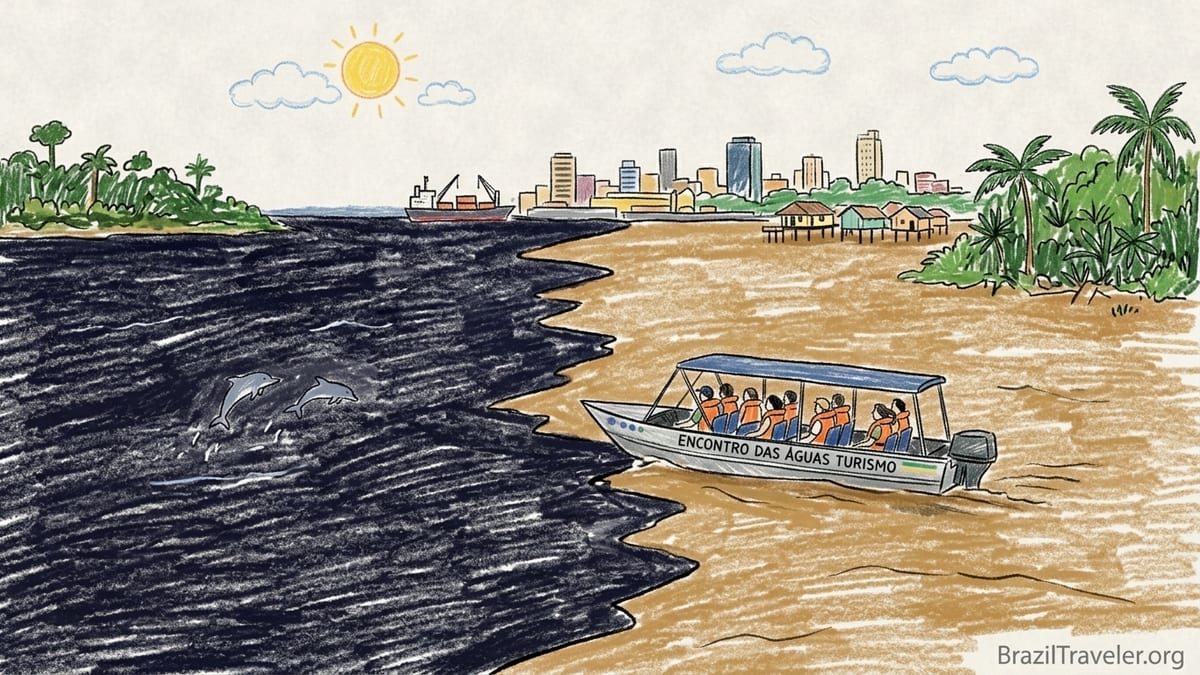
My Meeting of the Waters experience began at the Porto do São Raimundo, a riverside neighborhood terminal west of downtown Manaus. The operator was Encontro das Águas Turismo, a local company that runs daily excursions focused on the river confluence, Janauari Ecological Park and a circuit of floating attractions. Their speedboat tour currently sells online for about 95 to 120 Brazilian reais per person, depending on promotion and season, which in September 2026 worked out to roughly 18 to 23 US dollars for Brazilians paying in local currency and a little more once foreign card fees were counted.
Check in started around 8:00 a.m. at a simple riverside office under a metal awning. By 8:45 a.m., everyone had signed the passenger list and collected bright orange life jackets. The boat departed close to 9:05 a.m., which was impressively punctual for a shared excursion. In total, there were 18 passengers, a bilingual guide, the captain and one deckhand. The group was mostly Brazilian families, with a handful of international travelers from Europe and North America.
The vessel was a covered aluminum speedboat with four rows of padded benches, plastic windows that could be rolled down in rain, and a small enclosed bathroom at the back. It was not luxury by any stretch, but it felt solid and seaworthy. Everyone was asked to keep life jackets within reach, and children were required to wear them throughout. Adults could remove them while seated, though the guide encouraged wearing them when the boat was moving at full speed on the Rio Negro.
The weather at departure was clear and already hot. At 9:00 a.m., the air temperature on the dock hovered just above 30 degrees Celsius, with humidity that made even small movements feel heavy. This mattered because there is no air conditioning on these boats. Shade helps, but anyone sensitive to heat should be prepared to sweat from the moment the engines start.
First Glimpse of the Meeting of the Waters
From São Raimundo, the boat traced the shoreline, offering a fast moving panorama of central Manaus. We passed the floating port, container ships, fruit laden riverboats heading upriver toward the interior and stilt houses that seemed to rise directly from the water. After about 40 minutes, the dark mirror of the Rio Negro widened and the captain pointed the bow toward the open flow, heading southeast toward the confluence.
The transition appeared gradually at first. Ahead, the water surface looked mottled, like oil laid over caramel. As we approached, the guide asked everyone to stand, one side at a time, to see the contrast. On the port side, the Rio Negro remained an inky, almost tea colored black that reflected the sun. On the starboard side, the Solimões appeared an earthy, café-with-milk brown, clouded by suspended sediments brought from the Andes.
The visual boundary was more dramatic than any photo I had seen. A clear line, sometimes straight and sometimes scalloped, separated the two rivers. Our captain cut the engine to idle and allowed the current to nudge the boat along the interface. With the boat stalled, the contrast became even clearer. The black water seemed almost still beside the churning, faster moving brown current. Yet even in calm September weather, there was a subtle turbulence where the flows met, like two competing muscles under the same skin.
Everyone’s first instinct was to lean over the side with cameras, but the guide insisted we take a moment without lenses. That turned out to be wise. Watching the colors slide past without framing them felt oddly hypnotic and highlighted the scale of the phenomenon far better than the screen on an action camera.
Why the Waters Resist Mixing: What the Guide Said and What Science Confirms
The guide’s explanation focused on three factors: sediment load, temperature and flow speed. According to his summary, the Solimões water was cooler, denser and about twice as fast as the Rio Negro. The Rio Negro, he said, was warmer, slower and less dense, with almost no sediment but a significant amount of organic acids from decomposing forest matter, which create the dark “blackwater” appearance.
Hydrological studies broadly support this picture. Field measurements around the confluence show that the Solimões typically carries a much higher concentration of suspended sediments, along with dissolved minerals like calcium and magnesium from the Andean foothills. Those sediments increase the river’s density. The Solimões also tends to be cooler and flows in the range of roughly 4 to 6 kilometers per hour, while the Rio Negro usually moves closer to about 2 kilometers per hour. The temperature difference is often a few degrees, enough that visitors who trail a hand in each river sometimes notice a distinct change.
That difference in density means the sediment rich Solimões water tends to slide beneath the lighter Rio Negro as they meet, creating layers in depth as well as color on the surface. Research on mixing processes at this confluence describes complex vortices, underflows and shear zones between the two flows, rather than a simple side by side picture. These hydrodynamic structures slow vertical mixing, so the surface color contrast persists for several kilometers before the waters gradually blend.
Tour marketing sometimes exaggerates how long the rivers remain “perfectly separate,” with claims that they run untouched for dozens of kilometers. Scientific observations are more modest. The most dramatic surface contrast is concentrated in the first several kilometers downstream of the confluence, especially within the stretch tourist boats patrol repeatedly. Further along the river, the color difference softens as turbulence and currents homogenize temperature and sediment. From the passenger bench, though, the few kilometers you actually see already feel immense, particularly when a passing freight ship appears dwarfed by the width of the combined flow.
Lighting, Weather and the Challenge of Photographing the Confluence
The visual spectacle of the Meeting of the Waters depends heavily on light. On the September morning of my visit, the sky was mostly clear with high, thin clouds that softened the overhead glare without dulling the colors. Under these conditions, the contrast between black and brown was sharp and easy to capture on a smartphone camera. Had the sky been fully overcast, or the water surface ruffled by strong wind, the edge between the rivers would have looked less crisp.
Our captain circled the area three times from different angles so people on both sides of the boat could photograph. On the first pass, he approached with the bow pointing almost directly into the line of contact. This produced dramatic shots of the boat splitting the colors but made it harder to see how far the separation extended laterally. On the second and third loops, he paralleled the color boundary at slow speed. From this perspective, the contrast was outstanding. Passengers could frame photos where half the frame was glossy black and the other half light brown, with the skyline of Manaus or a passing barge in the distance.
Reflections can be a problem when shooting from a covered boat. The plastic side screens threw bright streaks across many images when the sun hit just right. The solution was simple: step toward the bow, where there is usually open air, or ask the crew to roll up a section of the plastic for a few minutes. They did this willingly once the boat was at a safe idle speed. Polarizing filters would have helped, but almost nobody on board had them.
The guide built a short practical photography briefing into the visit. He pointed out that the most striking images happen when the boat is just off the color line, not straddling it, and that people should take a mix of wide shots to show scale and close ups where hands curl into the dark Rio Negro on one side and the cloudy Solimões on the other. While everyone was snapping away, the crew also offered to take pictures of couples and families at the bow, which made the experience feel polished without tipping into hard sell territory.
From River Phenomenon to Full Day Excursion: Janauari and Beyond
Although the confluence is the headline, most commercial tours from Manaus combine it with other stops to justify a full day price. After about 35 minutes spent near the Meeting of the Waters, our boat turned toward the Janauari Ecological Park, entering a narrower channel framed by forest. The transition from open river to flooded forest lake took around 20 minutes at moderate speed.
The Janauari stop on this itinerary included three parts that we actually completed: a 30 minute stroll along a raised wooden walkway through varzea forest, a glide in small wooden canoes to see giant water lilies and a buffet lunch at a floating restaurant. During the forest walk, the guide identified common trees, vines and epiphytes and explained how the flooded ecosystem changes with the annual flood pulse. He pointed out water marks on tree trunks to show dry season versus high water levels and described how communities adjust their planting and fishing accordingly.
The water lily visit was timed for mid day. We transferred into smaller, paddle driven canoes, four passengers per boat, and glided into a calm corner of the lake where giant Victoria amazonica pads formed tight clusters. The lilies were impressive, though those expecting meter wide, storybook sized discs should temper expectations outside peak flood periods. In September, the pads were substantial but not enormous, and some showed signs of insect nibbling. The canoe paddler quietly positioned each boat for photos rather than chattering, which lent the stop a more contemplative feel than the bustling confluence.
Lunch took place on a large floating restaurant moored at the edge of the park. The meal was included in the tour price, with drinks paid separately. The buffet featured grilled tambaqui, fried pirarucu, chicken, rice, beans, spaghetti, farinha and several simple salads. Soft drinks and bottled water were around 6 to 8 reais per can or bottle, and a cold beer cost about 10 reais. The restaurant had multiple fans but no air conditioning, so the heat remained intense around midday. Still, it was clean, with a basic but tidy bathroom block and sinks for hand washing.
Wildlife, Animal Interactions and How Ethical the Stops Felt
After lunch, we continued to a floating pirarucu observation platform and a site where people could choose to swim with pink river dolphins. Both stops are heavily marketed around Manaus and often bundled with Meeting of the Waters tours. They are also the most controversial for travelers concerned about animal welfare.
At the pirarucu platform, visitors paid an optional fee of 10 reais for three bait fish to entice the giant arapaima to the surface. The fish are kept in a large enclosed net pen, not free roaming in the river. The experience essentially amounts to recreational feeding of semi captive animals. It was undeniably thrilling to feel the power of a two meter long fish snapping at the bait just below your hands, but the educational value was limited. The guide offered a short explanation about the species’ need to surface for air and its importance in local fishing culture, then mostly stepped back to let people take photos.
The dolphin stop offered two options: paying 20 reais to enter the water and interact with pink river dolphins around a floating platform, or paying 10 reais to stay on deck and observe. The dolphins are free swimming in the river but conditioned to approach for fish from staff in the water. From an ethical standpoint, this is not untouched wildlife observation. It is a managed interaction that encourages wild animals to associate people with food. Some travelers on board declined on this basis and watched from the boat instead.
Compared with those interaction heavy stops, the quieter moments of wildlife observation during transit felt more natural. On the way back toward Manaus, we saw several herons, a pair of kingfishers and distant splashes that the guide identified as river dolphins surfacing in the main channel away from platforms. These unscripted glimpses were brief but arguably more meaningful for travelers who prioritize seeing animals behaving independently.
Overall, the tour balanced its time between ecological explanation and orchestrated encounters. The guide was knowledgeable about forest ecology and hydrology and comfortable discussing how climate and river level changes affect local communities. However, at the animal platforms he mostly accepted the activities as part of the package rather than prompting discussion about their impacts. Travelers who want a strictly non interactive wildlife experience may prefer to book specialized birding or research oriented excursions instead.
Comfort, Heat and What to Bring Aboard
On paper, the boat infrastructure for this tour covered the basics: shade, padded bench seating and a small bathroom. In practice, comfort depended heavily on the heat and your preparedness. By late morning, the temperature over the river approached the mid 30s Celsius, with very high humidity. Even with airflow created by the boat’s speed, the interior felt sticky. The bathroom, although useful, was a tight plastic compartment that heated quickly and required good balance to use while the boat was moving.
What made the day manageable was packing strategically. A wide brimmed hat, light long sleeved shirt and high SPF sunscreen were non negotiable. The Amazonian sun, reflected off wide expanses of water, can burn unprotected skin in under an hour. A reusable water bottle saved money, as bottled drinks at the floating restaurant and stops ranged from 6 to 10 reais and the boat did not sell beverages. Most tours do not include coffee or snacks, so bringing a small supply of nuts or fruit is wise.
Footwear also matters. The forest walkway at Janauari sometimes has damp patches and, after rain, can be slippery. Closed shoes or sturdy sandals with good grip are safer than flip flops, especially when stepping in and out of canoes. Insect presence varied by microhabitat. On open water, mosquitoes were almost absent, thanks to the breeze. Inside shaded forest sections and around still backwaters, repellent was essential.
Life jacket availability was good on this particular tour. Each passenger had a correctly sized jacket, and the crew insisted that small children keep them on between all stops. Adults were reminded to wear them during longer high speed crossings. This level of enforcement is worth asking about when booking, particularly for families, as enforcement standards can vary between operators.
Costs, Duration and Comparing to a Shorter Confluence Only Tour
The full day package with Encontro das Águas Turismo, purchased online a week before departure, cost 95 reais per person on promotion in September 2026, with lunch included but drinks and optional animal interaction fees paid separately. By the time we returned to Porto do São Raimundo around 4:30 p.m., the actual journey had lasted about seven and a half hours from departure to return, including roughly four and a half hours of pure boat travel and three hours distributed among stops.
Out of pocket extras included 24 reais for three soft drinks and one bottled water, 20 reais for the dolphin interaction, 10 reais for pirarucu feeding and a modest tip for the crew. In total, the day’s cost came to around 150 reais per person. For that amount, we had seen the Meeting of the Waters from multiple angles, explored a slice of flooded forest, observed giant water lilies, eaten a satisfying lunch and sampled two of Manaus’ most popular animal attractions. The value felt fair for a first visit, particularly considering the logistical complexity of covering several sites in one itinerary.
In Manaus, there are also shorter, river confluence only excursions that depart from the Ceasa port south of the city. These rides often last two to three hours and focus exclusively on the Meeting of the Waters, with some skirting through nearby channels. Recent traveler reports from 2026 mention prices around 250 reais for a private small boat for three people at Ceasa, arranged directly with local skippers at the dock. Split between a group, this can work out to a similar or lower per person cost than an organized full day package, but it usually excludes lunch and any additional stops.
Having now experienced the full day circuit, I can see the attraction of both formats. Travelers with very limited time or those primarily interested in the hydrological phenomenon itself may find a shorter confluence only ride entirely sufficient. You see the color contrast, feel the temperature difference at the water’s edge and return to the city in time for lunch. Those who want a broader introduction to Amazonian floodplain ecosystems, or who are unlikely to take separate forest or wildlife outings, will get more context and variety from a full day that includes Janauari and related stops.
The Takeaway
What surprised me most about the Meeting of the Waters was not the sharpness of the color divide, which I expected from photographs, but the sense of movement and layering that no still image fully conveys. The line between black and brown is not static. It undulates, curls and breaks into tongues and eddies, hinting at the complex mixing happening below the surface. Feeling the boat rock gently in those converging currents, with the skyline of Manaus shrinking behind us, gave the phenomenon a physicality I had not anticipated.
At the same time, parts of the full day tour felt undeniably commercial. The pirarucu feeding and dolphin interaction stops were smoothly run but designed primarily for photographs and social media rather than deeper understanding of river ecology. The floating restaurant was pleasant, yet clearly configured for high volume tour groups, with little sense of place beyond the panoramic view of water and forest. None of this ruined the day, but it did occasionally pull focus away from the quieter magic of simply being on the river.
Was a full day package necessary to appreciate the confluence itself? Strictly speaking, no. The core Meeting of the Waters experience fit comfortably into the hour and a half we spent navigating to, circling and returning from the confluence area. A shorter, confluence focused tour from Manaus or Ceasa would deliver the essential spectacle at lower cost and with less time pressure. However, the combination of Janauari’s forest walkway and lily filled lake, along with the chance to observe riverside life, made the long outing worthwhile for a first timer eager to collect multiple Amazon impressions in a single day.
If I were to book again for my own enjoyment, I would choose a mid length option emphasizing the Meeting of the Waters, Janauari Ecological Park and lunch at a quieter floating restaurant, while skipping the animal feeding and in water interactions. I would schedule it for a clear morning outside the peak rainy season, pack for intense heat and bring extra water. The confluence of the Rio Negro and Solimões deserves its status as Manaus’ signature river experience, but it shines brightest when allowed to stand as a natural marvel rather than one more backdrop among curated attractions.
FAQ
Q1. Where do most Meeting of the Waters tours in Manaus depart from?
Many full day tours depart from neighborhood ports such as Porto do São Raimundo or the main floating port near downtown, while shorter boat hires to the confluence often leave from Ceasa port south of the city.
Q2. How long does a typical Meeting of the Waters tour last?
Full day packages that include Janauari Ecological Park and other stops usually run seven to eight hours door to door, while confluence only excursions can be completed in two to three hours.
Q3. How much should I expect to pay for a Meeting of the Waters tour?
Shared full day tours with lunch included commonly cost around 90 to 150 Brazilian reais per person, with extra fees for drinks and optional animal interactions. Privately hired small boats from Ceasa may charge around 250 reais for a short confluence only ride for a small group.
Q4. Is the color contrast between the Rio Negro and Solimões really as dramatic as photos suggest?
Under clear skies and calm conditions the contrast is striking in person, with glossy black water on one side of the boat and light brown, sediment rich water on the other. In overcast or windy weather the visual boundary can look softer but remains visible.
Q5. Why do the waters of the two rivers not mix immediately?
The Solimões is cooler, faster and heavier because of its high sediment load, while the Rio Negro is warmer, slower and less dense. Differences in temperature, speed and density create layered flows and turbulence that delay mixing for several kilometers downstream of the confluence.
Q6. Do Meeting of the Waters tours always include Janauari Ecological Park and giant water lilies?
Many full day itineraries add Janauari Ecological Park for a forest walkway and water lily visit, but not all tours do. Some shorter options focus only on the confluence. It is important to confirm the exact stops when booking.
Q7. Are the animal interaction stops, like dolphin swimming and pirarucu feeding, ethical?
The pirarucu are usually kept in net pens and the dolphins are conditioned to approach platforms for food, so these are managed encounters rather than wild observation. Travelers concerned about animal welfare may prefer tours that skip these stops or emphasize non intrusive wildlife viewing.
Q8. What should I wear and bring for a day on the river?
Light, breathable clothing, a hat, sunglasses, strong sunscreen, insect repellent and sturdy sandals or shoes are essential. A reusable water bottle and small snacks help with comfort, as drinks at floating restaurants and stops cost extra and the heat is intense.
Q9. Is the tour suitable for children and less mobile travelers?
Most boat tours welcome families and provide life jackets, but movement on and off vessels, narrow gangways and occasional slippery walkways can be challenging for those with limited mobility. It is important to discuss specific needs with the operator in advance.
Q10. If I have only one day in Manaus, is the Meeting of the Waters the river experience I should prioritize?
For many first time visitors, the Meeting of the Waters is the most distinctive and accessible Manaus river outing, combining striking scenery with insights into Amazon hydrology. If your time is limited to a single day, a well chosen tour to the confluence, with or without extra stops, is usually the best use of your hours on the water.