

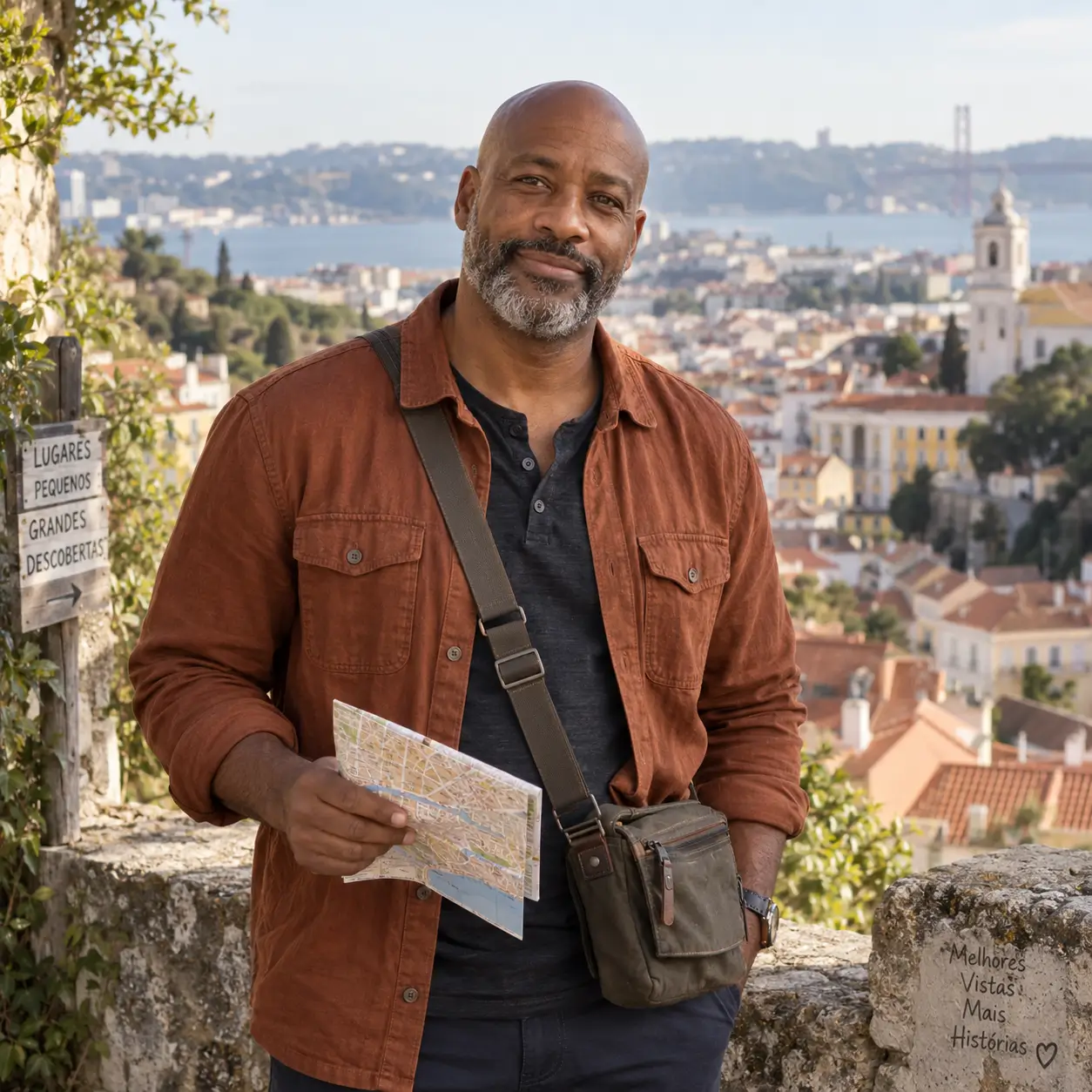
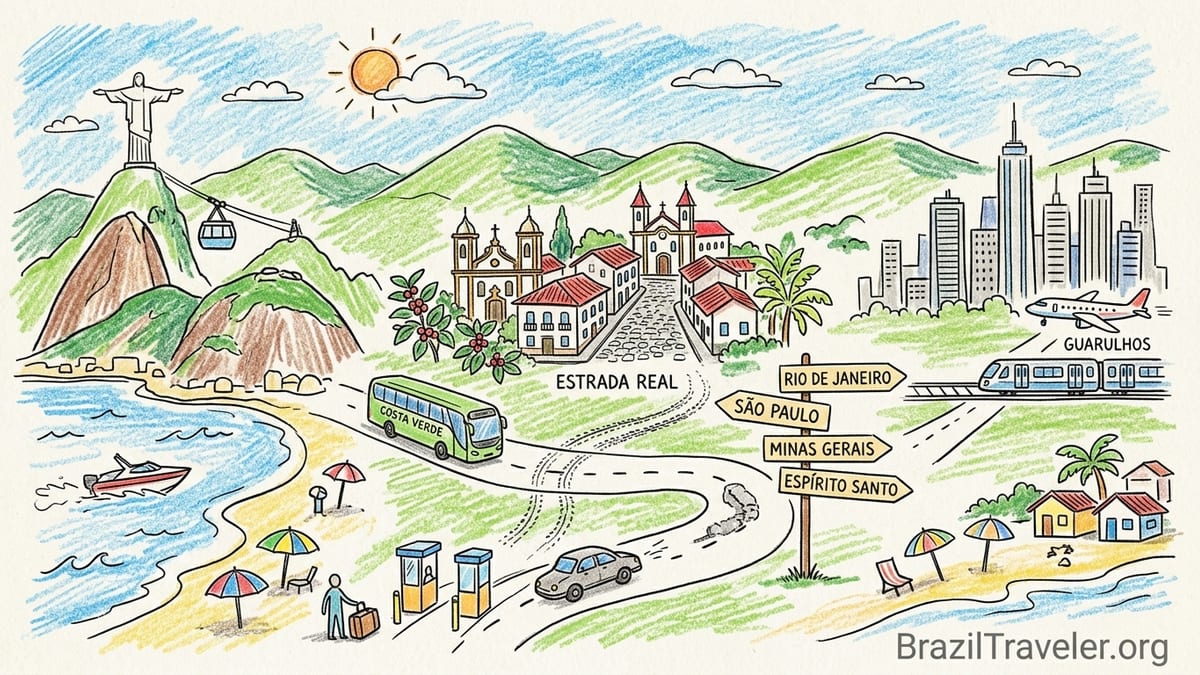
Crossing Southeast Brazil changed the way I think about distance, climate and scale inside one region. Over several long trips spent between Rio de Janeiro, São Paulo, Minas Gerais and Espírito Santo, I bounced between subways and colonial alleys, toll roads and fishing villages, tropical beaches and chilly mountain fog. What surprised me most was how different these four states feel from each other on the ground, even though they officially form one tight region on the Brazilian map.
Understanding Southeast Brazil Before You Plan
On my first planning session for this trip, I mistakenly lumped Curitiba and Foz do Iguaçu into “Southeast Brazil” simply because they looked close on the map. On the ground you quickly learn that Brazil is divided into five big regions, and the Southeast is just four states: Rio de Janeiro, São Paulo, Minas Gerais and Espírito Santo. Everything else that feels nearby, such as Paraná and Santa Catarina to the south or Goiás and the Federal District to the west, technically belongs to other regions with different weather patterns and logistics. Getting that mental map right helped me focus my route and stop trying to squeeze in destinations that actually belong to the South or Central-West.
Within this official Southeast block, Rio and São Paulo concentrate the giant coastal cities and airports, Minas Gerais stretches inland with serrated mountain ranges and historic gold towns connected by the old Estrada Real routes, and Espírito Santo hugs a quieter coast with a compact capital and resort beaches like Guarapari. That diversity made the region feel less like a single trip and more like three or four overlapping itineraries that happened to be connected by buses, toll roads and a lot of coffee.
The other early surprise was scale. Distances only look modest on the map. A Rio to São Paulo hop may be a 1‑hour flight, but my first Rio to Belo Horizonte bus took almost 8 hours including a late arrival and groggy taxi queue. A supposedly easy mountain side trip to an inland colonial town added two hours of slow curves and another hour of wrestling luggage over cobblestones. In Southeast Brazil, how you move matters as much as where you go.
Landing in Rio de Janeiro: Two Airports, Many Contrasts
My first entry point to the region was Rio de Janeiro’s Galeão, officially called Tom Jobim International Airport. I had read warnings about expensive taxis and confusing transfers, so I followed the newer route into town. I rolled my carry‑on past the arrivals area to the BRT station, then joined commuters heading for the Terminal Gentileza connection. From there I boarded the airport bus line back to Galeão on a later trip, but on that first arrival I switched to the VLT tram, tapped my Rio transit card and trundled past warehouses toward the historic center. By the time I emerged near Cinelândia station to catch the metro toward Ipanema, I had touched three different systems after a red‑eye flight. It was affordable and safe in daylight, but physically tiring and not something I would repeat with heavy luggage or after dark. For later flights, I paid for a licensed taxi or app car directly from the terminal, usually around an hour to Ipanema in moderate traffic.
On another trip I flew into Santos Dumont, Rio’s domestic airport wedged between the bay and downtown. Landing there felt almost theatrical. The plane skimmed low over Guanabara Bay, past ferries and the curve of Flamengo Beach, and we rolled to a stop essentially in the middle of the city. From Santos Dumont, I simply walked outside and caught the VLT tram toward Cinelândia to change to the metro. That transfer, even with a backpack and small suitcase, felt like the smoothest urban airport arrival of my life. It drove home an early distinction in Rio: Galeão is for long‑haul and many international flights, with more complex ground transfers, while Santos Dumont is a little city airstrip that drops you straight into the postcard.
I based myself first in Ipanema, on a street a few blocks from the beach and near General Osório metro. From there it was easy to ride the metro to downtown on business days and grab buses or app cars to the main sights. Afternoons on Ipanema Beach surprised me with strong sun even in the Brazilian winter, but the water felt brisk. On a June visit I was comfortable in swim trunks for a quick dip, yet by late afternoon a cool breeze had me pulling on a light jacket over my wet T‑shirt. The mix of beach culture, dense traffic along Avenida Vieira Souto and metro access made Rio feel like a tight, vertical coastal city pressed between ocean and mountain.
From Rio to the Costa Verde: Buses, Ferries and Slow Days
Leaving Rio for the Costa Verde coast, I underestimated both time and fatigue. I booked a mid‑morning bus with Costa Verde Transporte from Rio’s Novo Rio bus terminal to Paraty, a preserved colonial town at the edge of the state. The ride is usually advertised as around 4 and a half hours, but with city traffic, a congestion pocket near Itaguaí and a rest stop, my bus pulled into Paraty closer to 5 and a half hours after departure. By the time I stepped off, the sun had shifted, my legs were stiff and my enthusiasm for exploring cobblestone streets with a backpack had dipped sharply.
Those Paraty cobblestones deserve a warning of their own. The historic center is pedestrian only and the stones are large, smooth and irregular, often shiny with water from the tides or rain. My wheeled suitcase rattled, bounced and occasionally jammed between rocks. Each block with luggage felt like two blocks on a normal sidewalk. I ended up hugging the edges of houses where narrower stones made for slightly smoother pulling. Next time, I would book a pousada close to the drop‑off point at the edge of the historic center or carry a backpack instead of a rolling bag.
From Paraty, I linked to Ilha Grande by taking a van south to Conceição de Jacareí and then a flexboat across to Vila do Abraão. The van picked me up near Paraty’s bus station in the early morning; the road wound along the BR‑101, alternating between ocean views and dense Atlantic Forest. At Conceição de Jacareí the van dropped us at a small pier lined with kiosks selling boat tickets and snacks. I paid for a fast boat that covered the crossing in about 25 minutes. The sea was choppy and the bench seats bounced; a waterproof layer would have been smart. When we docked in Abraão, I stepped onto sand, not a formal pier, and realized again that luggage with tiny wheels had been a poor choice. On the island there are no cars and most pousadas sit along sandy lanes or short trails, so everything you bring, you carry.
Beach time in this part of Rio state comes with micro‑climates. On a September stay on Ilha Grande, I woke to light drizzle and low clouds over forested hills. By late morning the sky had cleared enough to hike to a nearby beach, and by 1 p.m. the sun felt strong enough that I reapplied sunscreen every hour. The water was warm enough for long swims, but one afternoon I watched strong lateral currents form near a rocky outcrop, and the local boatman advised us to stay closer to the middle of the bay. On open Atlantic beaches in the region, especially near exposed points, I took seriously the lifeguard flags and warnings about rip currents and stayed where locals were swimming.
Into the Mountains of Minas Gerais: Historic Towns and Chilly Nights
From the coast of Rio I traveled inland to Minas Gerais, and everything about the trip felt different. I flew from Rio to Belo Horizonte’s Confins airport on a late afternoon flight, then rode an airport bus toward the city center. That ride alone took over 45 minutes in normal traffic. When I finally reached my hotel in the Savassi neighborhood, the altitude and inland setting were obvious. The night air felt drier, and in the Brazilian winter months I needed a sweater to walk to dinner, something I had not expected after a week on the beach.
I rented a compact car in Belo Horizonte to explore the historic towns along the Estrada Real routes. Leaving the capital on the BR‑040 toward Ouro Preto, I quickly learned about toll roads in Minas Gerais. The first toll plaza appeared not long after the city limits, and over a few days of driving I fed a slow but steady stream of reais into booths. Each stretch felt reasonably well paved, but construction zones and heavy truck traffic reduced my speed. The driving itself was not complicated, but the combination of paying attention to signs, keeping an eye on trucks and navigating exits meant I arrived more mentally tired than the distance on the map suggested.
Ouro Preto greeted me with steep hills and cobblestone streets that made Paraty feel tame. I parked in a paid lot just outside the historic core rather than risk driving through narrow lanes with parked cars on both sides. Walking up to my pousada with a suitcase, I felt the slope immediately. The stones here are smaller and more tightly set than in Paraty, but the grade is brutal. I stopped twice to catch my breath and let my calves relax. I would not recommend heavy hard‑sided luggage in these towns. Once I settled in, the reward was walking between baroque churches with wide views across terracotta roofs, wrapped in a crisp mountain breeze that had me pulling on a fleece most evenings.
From Ouro Preto I took a day trip to Mariana and another to the smaller town of Tiradentes on a separate journey. The road sections between these historic towns are full of curves and occasional potholes, which slowed my average speed to around 50 or 60 kilometers per hour even on stretches that looked straightforward on the map. Afternoon thunderstorms in the rainy season made driving more intense, with fog patches near higher ridges. In Tiradentes, I again parked outside the core and walked in, thankful for sneakers with some grip because steeper lanes turned slick after a shower. Nights in the Serra do Espinhaço foothills felt closer to a cool European autumn than the tropical Brazil I had imagined when booking flights.
São Paulo: The Megacity That Eats Time
Arriving in São Paulo after quiet Minas towns felt like landing in a different country. My first arrival was at Guarulhos International Airport, which sits well outside the city center. I landed in the late afternoon, cleared immigration and then joined a long taxi queue. The ride to Vila Madalena, my base that trip, took nearly 1 hour and 30 minutes with rush‑hour traffic clogging the Marginal Tietê and Pinheiros expressways. Watching the meter tick upward as we crawled along concrete channels, I realized I had underestimated both the cost and the mental drain of ground transfers in this city.
On my next visit, I planned more carefully and used the Airport Bus Service to connect from Guarulhos to the main bus terminal and sometimes to Paulista Avenue. The buses were clean and air‑conditioned, but loading luggage, navigating terminals and then catching the metro with a backpack in rush hour left me sweaty and alert. São Paulo’s metro and suburban train network is extensive and efficient by Latin American standards, but it is also crowded. On Line 4 one morning, I rode shoulder to shoulder with commuters, my daypack hugged to my chest. It felt safe yet intense, and after thirty minutes underground I arrived already tired before any sightseeing had begun.
Within the city, neighborhoods changed the texture of my days. In Vila Madalena, I walked quiet, hilly residential streets to reach clusters of bars and cafes. Sidewalks were often cracked or sloped, and occasional missing tiles demanded constant attention. In the dense center around República, wide avenues, tall buildings and a more visible homeless population reminded me I was in a giant metropolis. Crossing Avenida Paulista on a Sunday when it was closed to cars felt almost festive, with cyclists and street performers filling the asphalt. Food in São Paulo surprised me with scale and variety more than specific dishes: buffets heavy on salads at lunchtime, Japanese restaurants in Liberdade, and late‑night pizza slices near Consolação station. After a week, the combination of heavy traffic, concrete and endless choice left me more mentally worn out than physically tired.
One logistical lesson came with the city’s multiple airports. I once booked a flight into Congonhas, the city airport surrounded by dense neighborhoods, and a separate onward ticket from Guarulhos, assuming I could hop across town easily. The connection required a ride on local trains and the new link between Congonhas and the rail network, followed by another transfer out toward Guarulhos. On paper, it looked manageable in two hours. In practice, with minor delays and the time to walk through terminals, I arrived at my check‑in counter flustered and just within the deadline. Now I try hard to keep all São Paulo flights in or out of the same airport on a given day, even if that means paying slightly more.
Espírito Santo: A Quieter Coast With Surprises
My first glimpse of Espírito Santo came from the window of a small plane dropping toward Vitória. After the tangled sprawl of São Paulo and the heights of Minas, the coast here looked compact and calm, with islands, a working port and low‑rise neighborhoods. Vitória’s airport sits close to the city, and within twenty minutes of landing I was in a taxi crossing a bridge into the capital’s central areas. Traffic felt busy at peak times but not overwhelming, especially compared with Rio or São Paulo.
I based myself first in Praia do Canto, a neighborhood that blends residential towers with bars and seafood restaurants. From there I used app cars to hop over to the Curva da Jurema beach area, where locals set up chairs under umbrellas and food vendors walked by with coolers. The sea here was calmer than on Rio’s main beaches, and the skyline felt more intimate. In the late afternoon a sea breeze picked up and the light softened behind distant hills. It was the first time on the trip that I felt I was in a coastal capital defined more by local routine than by national tourism marketing.
To see more of the state, I rented a car and drove south along the coast to Guarapari, one of Espírito Santo’s main beach resorts. The highway section linking Vitória to Guarapari was in decent shape when I drove it, with a toll plaza on the way and occasional truck traffic. As I approached Guarapari, signboards began pointing to different beaches. I stayed near Praia das Castanheiras, a central urban beach shaded by trees, and walked to neighboring Praia dos Namorados and Praia do Meio. The water was clear and inviting, and in the Brazilian summer months the sand grew crowded with umbrella rentals and families. One morning I detoured to Praia da Areia Preta, known locally for its dark, mineral‑rich sands. Watching older locals sit partially buried in the warm sand for long stretches was a reminder of how local traditions layer onto beach culture here.
Driving and parking in Guarapari was more relaxed than in Rio’s South Zone, but I still found parallel parking along busy beachfront avenues mildly stressful at peak times. Spaces filled quickly close to popular stretches, and I became comfortable walking several blocks from side‑street parking to the water. Compared with the imposing mountains of Minas or the supercharged scale of São Paulo, Espírito Santo’s coast felt human in size. Yet the variety of beaches within a short radius of Vitória made me wish I had allocated more than a few days to this state.
Choosing Transport: Planes, Buses, Cars and Ferries
Planning transport across these four states turned into a game of trade‑offs between time, money and energy. For long jumps like Rio to São Paulo or Belo Horizonte to Vitória, I usually flew. The flight itself was rarely more than an hour, but checking in early, crossing the city to the airport and then leaving the airport at the other end often stretched each “short” flight day into a four or five hour door‑to‑door transfer. Early morning departures meant forty‑minute taxi rides through sleepy streets; late night arrivals meant weighing the cost of an app car against waiting for an airport bus.
Buses dominated many of my medium‑distance moves. In Rio and São Paulo, major bus companies run coaches with reclining seats, air‑conditioning and onboard bathrooms on routes between the big cities and inland capitals. I took a night bus from São Paulo’s Tietê terminal to Belo Horizonte once, thinking I would save a night of accommodation. Instead I arrived just after dawn with a stiff neck, bleary eyes and the sensation that I had dozed more than slept. Afternoon and morning buses felt kinder to my body, though daytime rides across Minas often came with strong sun heating the window side of the coach.
Renting cars gave me flexibility along the Estrada Real and on the Espírito Santo coast, but they introduced new kinds of fatigue. On the highway between Belo Horizonte and Ouro Preto, toll plazas interrupted the flow every so often. I kept a stash of small bills and coins in the center console, yet still fumbled with change behind trucks more than once. Driving in small historic towns required constant gear changes on steep grades and tight turns. At the end of those days, my shoulders felt as worked as my legs. On the flip side, pulling into a roadside restaurant at will, or stopping at a viewpoint over forested mountains in Minas, was a freedom that buses simply could not match.
Ferries and boats added their own rhythm. The crossing from Conceição de Jacareí to Ilha Grande depended on sea conditions. On one trip, morning crossings ran smoothly but afternoon departures were delayed due to wind and choppier water, which meant I arrived on the island just before dark and walked to my pousada by headlamp along sandy alleys. In Paraty, short boat trips to nearby islands and beaches left from the main pier whenever enough passengers gathered. I learned not to fix afternoon commitments tightly on boat days; delays were common, and low tides sometimes changed boarding spots by a few meters, adding unexpected wades through shallow water with bags held high.
Weather, Seasons and How It Felt Day by Day
One of the biggest surprises on this trip was how sharply the weather changed between coast and mountains, and between the four states, even in the same month. In Rio and along the Costa Verde, humidity wrapped around me like a warm blanket. On an October visit, midday temperatures pushed toward the high twenties Celsius, and stepping from an air‑conditioned bus into the bus terminal felt like walking into a steam room. Evening breezes on the beach took the edge off, but hotel rooms without air‑conditioning grew stuffy.
In Minas Gerais, especially around Ouro Preto and Tiradentes, the same October afternoon brought warm sun that made a T‑shirt comfortable, but as soon as the sun dipped behind the hills the air turned cool enough for a jacket. On a June night in Ouro Preto I could see my breath faintly outside a restaurant, and walking back up a steep cobbled lane had me breathing hard, partly from exertion and partly from the chill. Inside thicker‑walled colonial houses, temperatures felt stable but on the cool side, which made hot showers and thick blankets essential comforts.
São Paulo’s weather sat somewhere in between, but the urban heat island added its own twist. On a summer day, the concrete canyons of Avenida Paulista held heat well into the evening. I sweated through my shirt walking between metro stations during an afternoon errand, but by nightfall a light drizzle and wind made me grateful for a compact umbrella and thin sweater. In Vitória and Guarapari, sea breezes often tempered the heat, especially later in the day, although walking on dark sand at midday around Praia da Areia Preta felt like crossing a hot plate.
Rain mattered for more than comfort. In the mountains of Minas and the Serra do Mar, heavy showers triggered low cloud and fog patches that cut visibility dramatically on winding roads. On one drive near the Mantiqueira region between São Paulo and Minas, a bright morning turned to thick mist in less than an hour as the road climbed. I slowed to a cautious crawl, hazard lights on, as trucks and cars ahead faded into the grey. That afternoon I arrived at my pousada later than planned, tired in a way that had nothing to do with distance and everything to do with concentration.
What I Would Do Differently Next Time
Looking back, the biggest mistake I made was underestimating transfer days. I kept stacking itineraries like Rio to Paraty to Ilha Grande in quick succession, or Belo Horizonte to Ouro Preto directly after a late flight. On paper, each segment looked modest. In practice, the combination of airport procedures, city traffic, toll stops, curves and cobblestones left me more drained than expected. Next time I would build more true “buffer days” where I stay in a big hub like Rio, São Paulo or Belo Horizonte for a full day before plunging into boats or mountain roads.
I would also pack differently for each sub‑region. For Rio and Espírito Santo’s beaches, I would keep luggage minimal and soft‑sided, with sandals that can handle sand and wet boat decks. For Minas Gerais, I would bring sturdier sneakers or light hiking shoes with grip for steep cobbled lanes, plus layers for cooler evenings. In São Paulo, I would prioritize comfort for long walks on hard pavement and standing on crowded metro trains. One all‑purpose bag and shoe strategy worked poorly across all four states at once.
Routing wise, I would resist the temptation to bounce back and forth between coast and mountains. A smoother order for a similar trip might be to fly into Rio, explore the city and Costa Verde, then head inland by bus or plane to Minas Gerais, travel gradually south or west toward São Paulo through the Mantiqueira mountains, and finally finish with a quieter coastal stretch in Espírito Santo before flying out of Vitória or back through Rio or São Paulo. That pattern would reduce repeated long transfers and make better sense of how the landscapes and climates shift across the Southeast.
Most of all, I would give Espírito Santo more time. It is easy to treat it as an afterthought beside Rio’s showpiece beaches and Minas’s historic towns. Yet the combination of Vitória’s manageable scale and Guarapari’s string of beaches within a short drive convinced me that this state deserves its own week, not just a quick add‑on at the end of a long itinerary.
The Takeaway
Traveling through Southeast Brazil as a connected whole reshaped my sense of what a “region” means. On the map, Rio de Janeiro, São Paulo, Minas Gerais and Espírito Santo share a tight corner of Brazil. On the road and in the air, they are four distinct experiences stitched together by a network of airports, buses, toll roads and coastal boats. Rio greeted me with dramatic cliffs and beaches framed by dense urban life. São Paulo delivered scale, traffic and endless cultural options inside a megacity that quietly eats time. Minas Gerais surprised me most, with baroque church towers, serrated mountain ridges and chilly nights that felt worlds away from the tropical coast. Espírito Santo then offered a softer landing, with compact urban beaches, road‑trip friendly distances and a more local rhythm by the sea.
If you are planning your own trip, understanding that official four‑state definition of Southeast Brazil can help you focus. The South and Central‑West may look close on a map, but folding in cities like Curitiba or Brasília will stretch your schedule and your energy. Instead, choose a thread that connects the region’s varied pieces in a logical order. Combine Rio’s postcards, Minas’s history, São Paulo’s culture and Espírito Santo’s calmer coast in a way that respects distance and your own tolerance for transfers. You will still make mistakes, underestimate traffic and curse cobblestones once or twice. That is part of the story you will bring home from Southeast Brazil.
FAQ
Q1. What exactly counts as Southeast Brazil for trip planning?
It officially includes four states: Rio de Janeiro, São Paulo, Minas Gerais and Espírito Santo. Nearby states like Paraná or Goiás belong to other regions, even if they look close on the map.
Q2. Is it better to fly or take buses between Rio, São Paulo and Belo Horizonte?
For long distances between major cities, flying saves time overall, but you should still budget several hours door to door for airport transfers. Buses are cheaper and comfortable on many routes, but they take significantly longer, especially overnight.
Q3. Do I need a rental car to explore Minas Gerais and the historic towns?
You can reach main towns like Ouro Preto and Tiradentes by bus, but a rental car gives more freedom along the Estrada Real routes. Just be prepared for toll roads, winding mountain sections and stressful parking in steep historic centers.
Q4. How difficult are the cobblestone streets in Paraty and Ouro Preto with luggage?
They are more challenging than they look. Stones are uneven and streets can be steep, so rolling suitcases are awkward. A backpack or lighter soft‑sided bag is much easier to handle.
Q5. What is the easiest way to reach Ilha Grande from Rio de Janeiro?
Commonly, travelers take a bus or shuttle from Rio to Conceição de Jacareí or Angra dos Reis, then a fast boat to Vila do Abraão. The full trip often takes several hours, so avoid tight same‑day connections.
Q6. How does the weather differ between the coast and the mountains?
The coast around Rio, São Paulo and Espírito Santo is warm and humid, with strong sun and milder nights. Mountain areas in Minas and the Mantiqueira range can be much cooler, especially at night, so layers are important even in the Brazilian winter.
Q7. Is driving in São Paulo and Rio worth it for visitors?
Inside the largest cities, heavy traffic, complex roads and expensive parking make driving stressful. For most travelers, public transport and app cars work better in Rio and São Paulo, while rental cars are more useful in Minas Gerais and on quieter coastal stretches.
Q8. How many days should I plan for Espírito Santo?
With a week you can enjoy Vitória, nearby urban beaches and resort towns like Guarapari at a relaxed pace. With less time, it is still worth at least a long weekend to experience the state’s calmer coastal vibe.
Q9. Are beach and sea conditions very different along the Southeast coast?
Yes. Some urban beaches are relatively sheltered, while open ocean spots can have stronger waves and currents. Always pay attention to flags, lifeguards and where locals choose to swim.
Q10. What would you change about your itinerary through Southeast Brazil?
I would group destinations by coast or mountains instead of bouncing back and forth, add more buffer days between long transfers, bring more versatile luggage, and dedicate a full week to Espírito Santo rather than treating it as an afterthought.