


Travel in northern Brazil is rarely straightforward. Boat timetables depend on the river, dirt roads turn to sand and federal borders slice through some of the wildest landscapes on the continent. On my last long trip through the region, I stitched together a series of guided tours and independent stretches, then compared them with the main options available today. The result was a mix of Manaus rainforest lodges, Tapajós and Arapiuns community trips out of Alter do Chão, water buffalo country on Ilha de Marajó, a 4x4 expedition in Jalapão and, by far the most demanding, a guided trek to Mount Roraima. Below is what actually worked, where paying for a guide solved real problems rather than just adding commentary, and which experiences I would repeat or do differently now that I have seen how current operators run these routes.
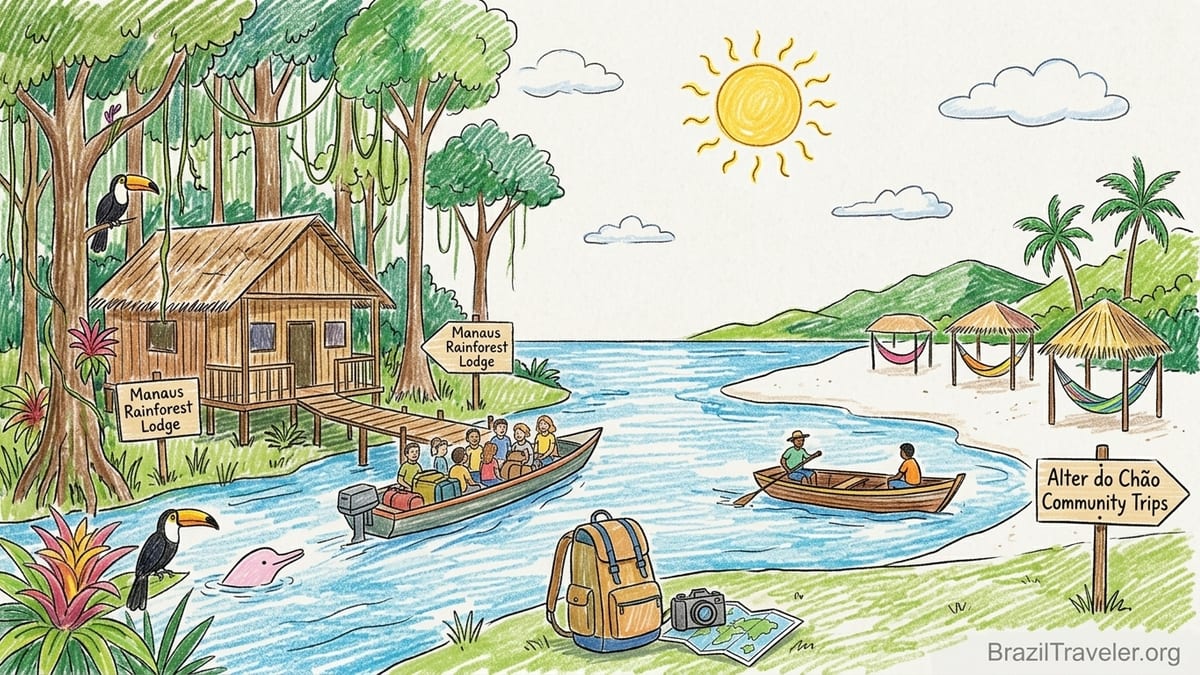
Manaus Rainforest Excursions: When a Lodge Stay Beats Going It Alone
In Manaus I split my time between a basic city day tour and a multi day rainforest lodge stay. The city tour itself was simple to arrange independently, but for the forest I joined a lodge based program that, in hindsight, justified the package price. The transfer from Manaus followed the same pattern many reputable operators still use in 2025 and 2026: van from the hotel to the river, fast boat across the Rio Negro or Solimões, then another van and small motorized canoe into a blackwater tributary. One recent Amazon module sold internationally lists a half day Meeting of the Waters river excursion from Manaus for around 65 to 85 US dollars depending on group size, while multi day lodge packages cost substantially more but include accommodation, meals and guided activities across several days.([brazilsensations.com](https://brazilsensations.com/wp-content/uploads/2025/03/MODULO-MANAUS-AMAZONIA-EN.pdf?utm_source=openai))
My group was eight people in total, mostly Europeans and Brazilians, which matched the typical capacity of the wooden motor canoe. The journey from hotel pickup to the lodge pier took close to four hours with the changes of vehicle and a short stop at a roadside shop. Meals at the lodge were served buffet style: rice, beans, grilled river fish, chicken, salad and fresh fruit. Rooms were built on stilts, with mosquito screens, cold showers and fans instead of air conditioning. A traveler I later met had stayed at a simple lodge outside Manaus that was described as “a bunch of shacks in the woods,” reached by a combination of boat, van and motorized canoe. The comfort level at my lodge fell in the same category, which is realistic for this environment rather than a sign of poor management.([reddit.com](https://www.reddit.com/r/travel/comments/1l7fk2m?utm_source=openai))
Guided activities filled most of the daylight hours. On my second day we left at dawn in the canoe for wildlife spotting along flooded forest channels. We saw pink river dolphins in the distance, three species of kingfisher, howler monkeys high in the canopy and a caiman at night during a spotlight ride. Hiking on dry land was shorter than the brochures suggest: about two to three hours including explanations about medicinal plants and rubber trees, limited by heat and humidity. The real value of the guide became obvious during a night walk when he identified fresh tracks, explained which areas were safe to walk and kept us clear of a patch of ground bees I would never have noticed.
Could I have done Manaus independently without a package? I could have booked a day boat to the Meeting of the Waters directly at the port, arranged an overnight in a riverside guesthouse and improvised the rest. The difference with the lodge program was not just translation or convenience. In this part of the Amazon, the operator handled safety, access to private forest areas and food logistics, and absorbed the risk of changing river levels. With current prices for basic day tours out of Manaus already in the 70 to 90 US dollar range, paying several hundred dollars for a multi day lodge that includes all meals, transfers and guided excursions feels proportionate if your goal is to maximize time in the forest rather than in the city.([brazilsensations.com](https://brazilsensations.com/wp-content/uploads/2025/03/MODULO-MANAUS-AMAZONIA-EN.pdf?utm_source=openai))
Tapajós and Arapiuns: Community Trips from Alter do Chão
From Manaus I flew to Santarém and based myself in Alter do Chão, a place that feels like a river beach town but functions as a gateway to some of the most interesting community tourism in northern Brazil. On this stretch I experimented more with independent travel. Within the village, local boatmen known as catraieiros offer short crossings in their small boats, and it is easy enough to negotiate a half day to nearby beaches.([pt.wikipedia.org](https://pt.wikipedia.org/wiki/Catraieiros_de_Alter_do_Ch%C3%A3o?utm_source=openai)) For deeper trips into the Tapajós National Forest or the Tapajós–Arapiuns Extractive Reserve, though, I chose to join organized community programs and later cross checked my experience with the official tourist safety guide for Alter do Chão, which lists certified guides and agencies registered in the national Cadastur system.([alterturismo.com](https://alterturismo.com/?utm_source=openai))
My first guided trip was a full day by regional boat into the Tapajós–Arapiuns area. Pickup was from the pier in Alter do Chão at around 8:00 in the morning. The boat was a covered two deck wooden vessel with hammocks available inside, carrying about 20 passengers when full, although our group that day had 12. The itinerary combined stops at a riverside community, a short walk through secondary forest to a lookout, swimming stops at white sand beaches and a communal lunch cooked by local families. Official material from Santarém’s tourist guide now describes this reserve as 1.5 hours from Alter do Chão by boat, with access only via river transport, which matches the duration I experienced.([santarem.pa.gov.br](https://santarem.pa.gov.br/storage/documents/February2026/i7g14UbltPG9JL3gmZS10GWhblkPnwmsFETJK70T.pdf?utm_source=openai))
Lunch on my trip was a simple but memorable spread: grilled tambaqui fish, chicken, manioc flour, rice, beans, salad and cupuaçu juice. The boat company paid the host community directly, and the guide made a point of explaining how the tourism income was divided between the families involved. Wildlife here was quieter than around Manaus. We saw river dolphins near Santarém, macaws flying at a distance and plenty of shorebirds, but the real highlight was the water itself: the Tapajós and Arapiuns rivers run a clear, almost Caribbean green in the dry season. An organized multi day trip I later reviewed followed a similar pattern, with days spent moving between communities along the Tapajós and Arapiuns, swimming, learning about forest products and ending with a Carimbó dance night on board.([globalnetwork.io](https://globalnetwork.io/sites/default/files/2025-11/GNAM_Week_Sustainable_Leadership_TRIP_GUIDE_June2025.pdf?utm_source=openai))
In this region the official guidance in 2026 clearly pushes visitors toward certified providers that work inside the protected areas and with local associations.([alterturismo.com](https://alterturismo.com/?utm_source=openai)) After seeing how complex the approvals and community schedules were for our own visit, I understand why. It would have been theoretically possible to show up at the pier in Alter do Chão and try to hire a private boat for a cheaper, custom route. In practice I would have risked entering a reserve without proper authorization or underpaying local hosts. Here, paying for a structured community trip solved access, ensured that money reached the right people and made the experience less extractive. For short beach days on the Tapajós, independent hiring of catraias makes sense. For deeper Tapajós and Arapiuns itineraries, I would book again through a certified operator rather than improvise.
Ilha de Marajó: Buffalo Country and River Beaches from Belém
My next stop was Ilha de Marajó, reached by boat from Belém at the mouth of the Amazon. Here I deliberately blended self planning with one local agency. The crossing itself is straightforward: regional ferries connect Belém to the towns of Soure and Salvaterra, which have paved streets, small pousadas and access to beaches and buffalo farms. Several Brazilian operators now sell ready made combinations of Belém and Marajó that include hotel nights in the city, ferry tickets, transfers and day tours by car around the island. One current program offers four nights in Belém and two on Marajó, with breakfast, transfers and a full day city tour in Belém that covers the Ver o Peso market, the historical core, basilica, theater and zoo botanical park.([ambiental.tur.br](https://ambiental.tur.br/roteiro/belem-e-ilha-do-marajo-pousada-canto-do-frances/?utm_source=openai))
I arrived independently on a regular ferry and checked into a mid range pousada in Soure, then joined a local “Marajó Essencial” style program for two days, which is similar to one still sold today that combines iconic beaches, a buffalo ranch visit, a city tour and a Carimbó music night, with breakfasts included.([edgarturismomarajo.com.br](https://www.edgarturismomarajo.com.br/roteiros/marajo-essencial?utm_source=openai)) Pickup each morning was from the pousada’s doorway in an air conditioned van, usually with 8 to 10 people aboard. Our guide handled entry fees at a marajoara farm where we rode buffalo, walked on floodplain trails and watched scarlet ibis feeding in the late afternoon. Another day focused on Pesqueiro beach and nearby mangroves. The days were long but unhurried, with actual activity time of about six to seven hours between 9:00 and 16:00 including lunch stops.
The island today is promoted not only for its beaches but also for buffalo culture and marajoara ceramics.([createtravel.tur.br](https://createtravel.tur.br/en/brazil-guides/ilha-de-marajo?utm_source=openai)) One afternoon we visited a ceramics workshop in Soure where artisans continue graphic patterns inherited from the pre Columbian Marajoara culture. Even without a guide, it would have been easy to walk to some of these studios or flag a moto taxi, and current online guides emphasize that travelers with their own car can base themselves at beach pousadas such as those near Salvaterra and roam fairly freely.([lipetravelshow.com.br](https://lipetravelshow.com.br/ilha-de-marajo-en?utm_source=openai))
Where did a tour actually add value here? Transport and time efficiency more than pure access. Public buses on Marajó exist but run infrequently, and trying to combine a morning at a ranch, an afternoon at a distant beach and a sunset at an ibis roost would have been nearly impossible on local transport in only two days. With a guide and van we could reach remote mangroves, coordinate tides and still be back in town for a Carimbó night. On the other hand, extra costs did creep in: horse or buffalo rides at the fazenda, optional boat trips into side channels, and higher priced seaside lunches not included in the package. If you have four or five days on the island, independent travel and a rented car or moto taxi network can work well. If you only have two or three, a local agency in Belém or Soure can help compress the highlights into a realistic window.
Jalapão 4x4 Expeditions: Why I Did Not Drive Myself
Jalapão, in Tocantins state, was where I was most grateful to have someone else at the wheel. This region mixes long stretches of dirt and sand roads, crystal clear fervedouros (pressure springs), waterfalls and a dune field that glows at sunset. Getting there on public transport is complicated, and many of the most photogenic spots lie along unsigned backroads. Agencies based in Palmas specialize in multi day expeditions using high clearance 4x4 vehicles, and current offerings show just how standardized this model has become. One operator advertises a four day, three night expedition from Palmas for around 2400 Brazilian reais per person, including all 4x4 transport, fuel, local guide registered with the park, simple pousada accommodation, full board, entry fees and transfers back to Palmas.([jalapao4x4.com.br](https://jalapao4x4.com.br/?utm_source=openai))
My own expedition followed the classic loop: pickup in Palmas at 7:00 in the morning in a Toyota Hilux with three other travelers plus our driver guide, a seven seat configuration that felt full once luggage was loaded. The first day was a long haul on asphalt and gravel toward Ponte Alta with stops at river beaches and viewpoints. The next days were more intense: predawn departures to beat the heat at waterfalls, midday visits to shaded fervedouros with timed entries, and a late afternoon climb to the dunes for sunset. Actual activity time out of the vehicle averaged six to eight hours a day, with perhaps five hours of mixed road driving between points. Meals were often in community run restaurants serving buffet style regional food, included in the package price, while evenings were spent in small family pousadas with air conditioning where available.
Jalapão itineraries constantly combine sensitive springs, waterfalls, dunes and quilombola community experiences that now depend heavily on visitor management. Many fervedouros operate on fixed time slots and maximum group sizes to avoid overcrowding. Guides coordinate their arrival times via messaging apps and pay access fees on behalf of the group.([jalapao4x4.com.br](https://jalapao4x4.com.br/?utm_source=openai)) From the passenger seat, I could see why self driving would be stressful: stretches of deep sand, forked tracks without signposts, and long distances without fuel or repair services. It would be technically possible to rent a 4x4 in Palmas and navigate with offline maps, but a single missed turning could mean arriving at a fervedouro outside your slot or driving after dark among roaming cattle.
On cost, four days at roughly 2400 reais including food, accommodation, fuel and park fees is not cheap, but when I compared that with renting a similar 4x4, paying for accommodation separately and risking roadside problems, the margin was narrower than expected. My only unexpected expenses were drinks outside meals and tips for guides at community stops. This was the one region in northern Brazil where I would unambiguously recommend a guided expedition over independent travel unless you are already an experienced off road driver with strong Portuguese and backup plans.
Mount Roraima Trekking: Guided Ascent to a Lost World
The most demanding leg of my trip was the trek to Mount Roraima, the table top mountain that straddles the borders of Brazil, Guyana and Venezuela.([en.wikipedia.org](https://en.wikipedia.org/wiki/Mount_Roraima?utm_source=openai)) Although the classic route approaches from the Venezuelan side, most international travelers book with Brazilian agencies based in Boa Vista, which organize overland transport to the border, overnight stays and liaison with indigenous porters and guides across the frontier. Multi day packages have become noticeably more expensive in recent years. One Brazilian operator currently lists an eight day Mount Roraima trek in 2025 at around 7900 reais per person, while travelers on hiking forums report paying between roughly 6000 and 8000 reais depending on itinerary length and agency.([anawanke.com](https://anawanke.com/roteiro/monte-roraima-2025/?utm_source=openai))
My group met in Boa Vista on a Friday evening for an initial briefing at the agency office, where our main guide checked gear, weighed backpacks and confirmed food restrictions. Early the next morning we boarded a minibus, driving several hours across the savanna plains of northern Roraima toward the Venezuelan border. After formalities and a vehicle change, we continued in local 4x4s to the indigenous village that serves as the trailhead. From there, the trek was on foot with local porters carrying shared camp gear and most food. Group size was capped at 10 trekkers plus two Brazilian guides and a team of six indigenous porters and cooks.
Trail days were long but not technical: six to eight hours of hiking with river crossings, humid weather and a steady gradient as we approached the towering cliffs of the tepui. On summit day we climbed the steep ramp route, sometimes using hands on wet rock. Nights were spent in tents at established camps below and on top of the plateau. A recent hiker described needing an entire day just to reach the base of Mount Roraima on foot across the Gran Sabana, then several more days to explore the summit, which matches my experience of the distances involved.([reddit.com](https://www.reddit.com/r/geography/comments/1mtlts9/roraima_mountain_venezuela/?utm_source=openai))
This is a route where independent travel is technically possible only for highly experienced hikers with strong local connections. You could, in theory, travel to Santa Elena de Uairén in Venezuela, negotiate directly with indigenous guides and carry all of your own food and gear, but recent reports highlight the challenges: organizing safe passage, dealing with fluctuating conditions and sourcing equipment in a country with limited supplies.([reddit.com](https://www.reddit.com/r/vzla/comments/gmnh5j?utm_source=openai)) Agencies operating from Boa Vista provide not just logistical convenience but also a buffer against sudden changes in the security or access situation. They coordinate permits, ensure that porters are fairly paid and keep emergency contacts on both sides of the border. For me, paying for a guided expedition here was non negotiable. The unexpected costs were mostly small: extra snacks in Boa Vista, optional gear rental and tips at the end. Compared with the scale of the experience, the premium felt justified.
I should stress that unlike Manaus, Alter do Chão, Marajó and Jalapão, my understanding of the very latest Mount Roraima departures and rules relies on recent operator brochures and traveler reports rather than a repeat visit in 2026. Conditions on the Venezuelan side can change quickly. If I were planning this trek now I would double check dates, inclusions and safety advice directly with a reputable Brazilian agency before committing.
Choosing Between Guided and Independent Travel in North Brazil
After several months moving around the northern states, some patterns emerged on when joining a tour genuinely improved the trip and when it simply packaged what I could do alone. In Manaus, Alter do Chão and Marajó, the main question was not access but depth and time. I could reach the river, the beaches and even some forest trails on my own. What the guides added were safety in more remote sections, translation for community meetings, boat and van logistics and a framework that ensured my spending supported local hosts rather than random middlemen. In Jalapão and on Mount Roraima, the question shifted entirely to feasibility. Without 4x4 expertise, inside knowledge of road conditions or established relationships with indigenous communities, independent travel there would have been unrealistic at best and unsafe at worst.
Costs also behave differently from what many travelers expect. A short day tour from Manaus to the Meeting of the Waters, for example, may cost around 70 or 80 US dollars and feel expensive on a per hour basis.([brazilsensations.com](https://brazilsensations.com/wp-content/uploads/2025/03/MODULO-MANAUS-AMAZONIA-EN.pdf?utm_source=openai)) A four day Jalapão trip at roughly 2400 reais or a Mount Roraima trek above 6000 reais looks dramatic on paper but bundles transport over hundreds of kilometers, multiple nights of accommodation, all meals and park or community fees.([jalapao4x4.com.br](https://jalapao4x4.com.br/?utm_source=openai)) When I compared these packages with the cost of renting a vehicle, booking each pousada separately, paying individual entry fees and building in extra time for wrong turns or delays, the gap narrowed. Independent travel still offers more flexibility and can be cheaper, but only if you have enough days to absorb the inefficiencies.
The other consistent theme was the importance of certified providers, especially for ecotourism in fragile areas. Alter do Chão’s official tourist safety guide makes this explicit by listing operators registered with the national tourism authority and stressing river and community safety.([alterturismo.com](https://alterturismo.com/?utm_source=openai)) In Jalapão and around Mount Roraima, using agencies that clearly detail their arrangements with local guides and communities matters just as much as the vehicle or tent quality. On my own trip I made a point of asking how guides were hired and paid, and this often sparked useful conversations about how tourism was reshaping these landscapes. The result was not just a smoother itinerary but a clearer sense of how my presence fitted into the region.
The Takeaway
If you are planning a first journey through northern Brazil, I would think in terms of layers rather than a rigid division between “tour” days and “independent” days. Use Manaus, Belém, Santarém and Palmas as city bases that you can explore largely on your own, then plug in targeted guided experiences where transport and access justify the extra cost. In my own case that meant a multi day lodge stay outside Manaus, certified community trips on the Tapajós and Arapiuns, a compressed two to three day package on Ilha de Marajó, a fully guided 4x4 expedition in Jalapão and a serious trekking program for Mount Roraima.
What tied these otherwise very different adventures together was not a single operator or brand but a simple rule: I paid for guides when they solved a real problem. That problem might be access to a protected river reserve near Alter do Chão, coordination of time slots at a fragile spring in Jalapão, or border logistics and safety on a remote plateau that straddles three countries. Where I could realistically walk, boat or bus my way to an experience in a day or two without undermining local communities, I did. Where every reliable source and my own instincts said that trying to improvise would waste time or create risk, I joined a group.
As of late 2026, operators across the Brazilian Amazon, Jalapão and Roraima are still adjusting to changing regulations, road conditions and demand. Before committing to any booking, use the current examples and price ranges here as a starting point, then confirm the latest details directly with providers. With that groundwork in place, northern Brazil rewards the effort more than almost any region I know. The logistics can be demanding, but the payoff is waking up to dolphins on a blackwater river, floating in a turquoise fervedouro, watching scarlet ibis flare red against a Marajó sunset or standing on the weathered stone of Mount Roraima knowing there is no road, cable car or shortcut to where you are.
FAQ
Q1. Do I really need a guide for the Amazon near Manaus?
For short city based activities, such as a Meeting of the Waters boat trip, you can book directly at the port. For multi day rainforest stays involving complex river transfers, night hikes and visits to private forest areas, a lodge package with guides is strongly recommended for safety and logistics.
Q2. How many days should I spend on the Tapajós and Arapiuns rivers?
If you only want to visit nearby beaches from Alter do Chão, one or two independent days are enough. To reach communities inside the Tapajós National Forest or the Tapajós–Arapiuns Extractive Reserve, plan at least one full guided day, and ideally two or three days on a community based boat program.
Q3. Is independent travel on Ilha de Marajó realistic without a tour?
Yes. If you are comfortable using ferries, moto taxis and basic local buses, you can explore Soure, Salvaterra and nearby beaches on your own. A local agency becomes useful when you have only two or three days and want to combine buffalo ranches, remote beaches and wildlife spots that are hard to link on public transport.
Q4. How expensive are Jalapão 4x4 expeditions from Palmas?
Recent itineraries from established operators advertise four day, three night expeditions starting around 2400 Brazilian reais per person, including 4x4 transport, accommodation, most meals and attraction entry fees. Prices can vary by season, group size and comfort level, so verify current rates before booking.
Q5. Can I self drive Jalapão with a rented car?
It is technically possible to rent a 4x4 in Palmas and drive yourself, but roads combine deep sand, long isolated stretches and unsigned junctions. Unless you have strong off road experience, speak Portuguese and accept the risk of breakdowns or route mistakes, joining a guided expedition is usually safer and more efficient.
Q6. How difficult is the Mount Roraima trek?
The trek is physically demanding but not technical, with several days of six to eight hours of hiking, river crossings, steep sections on summit day and changeable weather. Good cardiovascular fitness, proper gear and acclimatization to humidity are essential, and most travelers join guided groups that include porters and cooks.
Q7. Is it safe to book Mount Roraima through Venezuelan operators directly?
Some experienced travelers arrange the trek directly with indigenous guides or agencies based in Venezuela, but access conditions can change and equipment availability is limited. Many international visitors prefer booking through Brazilian agencies in Boa Vista that coordinate permits, transport and local partners across the border.
Q8. What is the best season to visit northern Brazil for these trips?
Dry periods, roughly corresponding to the middle of the year in much of the region, generally offer better road conditions in Jalapão and more accessible hiking around Mount Roraima. River levels near Manaus, Alter do Chão and Marajó affect beach size and some activities, so it is important to check current seasonal advice when planning.
Q9. How do I verify that a tour operator is certified or reputable?
In places like Alter do Chão, local authorities publish up to date lists of guides and agencies registered with Brazil’s national tourism system. Elsewhere, look for clear information on licensing, insurance, use of local guides and environmental practices, and consider asking accommodation staff or experienced travelers for recent recommendations.
Q10. Can I combine all these destinations in a single trip?
It is possible, but ambitious. A more realistic plan is to pair Manaus with Alter do Chão, or Belém and Marajó with Jalapão, then reserve Mount Roraima for a dedicated trip, since the trek alone often requires more than a week door to door including travel to and from Boa Vista.