


I went to Porto de Galinhas, Maragogi and Maceió on the same Northeast Brazil trip, over two different years, using Recife and Maceió as my gateways. That gave me the rare chance to compare the three not just by sea color, but as complete trips: airport transfers, resorts, towns, restaurants, tours, tides, snorkeling, nightlife and how easy each place felt on the ground. Where I talk about exact current prices or operators, I rely on recent research to update what I paid a couple of seasons ago, but the overall feel is very much from being there in person.
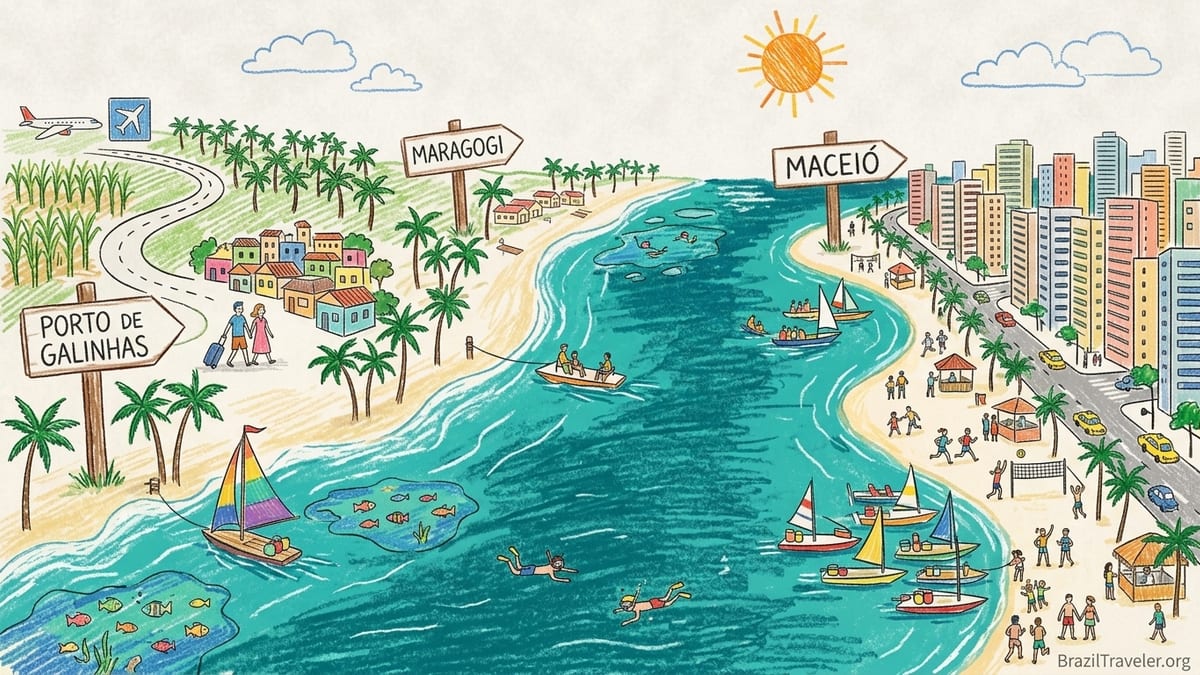
Getting There and First Impressions
All three beach bases sit on the same stretch of Northeast coast, but they slot into an itinerary in different ways. Porto de Galinhas is the classic extension from Recife. On my last trip I landed at Recife/Guararapes airport and took a prebooked shared transfer straight from the arrivals hall to Porto. The drive took a bit over an hour in light traffic along the PE-060, just long enough for the jet lag to fade as sugarcane fields gave way to coconut groves. Recent package quotes I checked for 2025 list shared transfers from Recife airport to Porto starting in the low hundreds of reais per person round trip, with private cars more expensive, which matches what I saw on the ground.
Reaching Maragogi felt more like a commitment. The first time I went, I came by road from Recife, in a private transfer that took around two and a half hours with a quick roadside stop. On a later trip I came from Maceió, a similar two- to three-hour run depending on traffic. Either way you are looking at a proper road trip. That distance is part of why many people tie Maragogi to an all-inclusive stay or a single focused beach break rather than bouncing in and out for just a night or two.
Maceió, by contrast, greeted me as a capital city before it revealed its beaches. Flying into Maceió/Zumbi dos Palmares felt more like arriving in a small-scale Rio than a resort enclave. A regular airport taxi took about 30 to 40 minutes to Ponta Verde, the stretch of urban waterfront where I stayed, and ride-hail prices were slightly lower when I checked from the arrivals curb. Compared with Porto and Maragogi, it was the easiest in-and-out transfer and immediately felt more urban, with apartment towers, busier avenues and a proper skyline rising behind the sea.
My first impressions matched that pattern. Porto de Galinhas felt like a self-contained beach bubble, compact enough that I wheeled my suitcase from the pousada to the village streets in five minutes. Maragogi felt stretched out along the road, quieter and more diffuse, with the sea as the star but less of a sense of “town center.” Maceió felt like a city that happens to have an exceptionally pretty seafront, rather than a resort built only for tourists.
Where I Stayed and How Each Base Worked
Porto de Galinhas gave me the widest choice of how to stay. On my first visit I picked a mid-range pousada a few minutes’ walk from the main village streets, with a simple pool, breakfast buffet and hammocks in the garden. I could walk everywhere and never needed a car. On a later trip I spent a couple of nights in a resort along the Muro Alto stretch, a few kilometers up the coast. That area is lined with large condominium-resort complexes and true all-inclusive properties fronting a calm, reef-protected lagoon. It felt almost like a separate destination, better for families who want to stay put by the pool and beach than for wandering into town at night.
Maragogi, when I visited, was much more about picking your “beach bubble” than about the town itself. I stayed south of the main village, in a small beachfront pousada with its own strip of sand and a row of jangadas parked out front. The biggest properties, including some of the best-known all-inclusives in the Northeast, sit a bit removed from the simple center and run as self-sufficient beach clubs with buffets, kids’ areas and scheduled entertainment. That works beautifully if you are traveling with children or a group that wants predictability, but it does mean that once you are inside, most of your meals and evenings will be on property unless you organise transfers out.
In Maceió I chose to stay in Ponta Verde, wedged between Pajuçara and Jatiúca along the main urban beachfront. My hotel was a mid-rise business-style place with a rooftop pool facing the sea. It felt more like a city hotel than a resort: strong Wi-Fi, taxis and ride-hails always at the door, and convenience stores and bakeries on the corner. Later I moved one night to a smaller hotel in Pajuçara, right by the craft fair and jangada pier. The trade-off here is clear. You get less of the palm-fringed seclusion that Porto and Maragogi can offer, but you gain a huge amount of flexibility to eat in different places, join tours or simply walk the long promenades without thinking about transfers.
If I had to summarise the bases in one line, Porto offered my favorite balance between beach town and resort, Maragogi felt like a string of self-contained seaside clusters, and Maceió worked best as a lively city base for exploring a whole coastline.
Beaches, Natural Pools and My Time with the Tides
In Porto de Galinhas, the tide chart became my daily schedule. One morning I woke before sunrise, walked down the cobbled lane past the “Porto de Galinhas” chicken sculptures, and met a jangadeiro at the village beach. The wooden sailboat slid out in shallow water, and within minutes we were gliding above an underwater mosaic of corals and sandbars. When the boat stopped in the natural pools, I stepped into waist-deep, warm, almost still water. Small colorful fish came close, used to being fed, and I could see the village buildings in miniature behind the transparent surface. Recent references I checked show official jangada trips to the Porto natural pools priced in the few dozens of reais per person, depending on season and tide, which is close to what I paid, and each trip stays around an hour in the pools.
Maragogi took that idea and amplified it. The famous “galés” and other offshore pools sit farther from shore, reached only at very low tide. On my visit, I rode out in a larger boat rather than a small jangada, and the ride felt more like a mini crossing than a hop. Once we anchored at the main reef, the water turned an even more intense shade of blue-green. Here the pools were wider, the coral formations more dramatic, and the feeling more like being out at sea with a floating bar and snorkelers all around. Local operators now sell these trips with time slots tied tightly to the tide table, and current research suggests prices run noticeably higher than in Porto, reflecting the longer distance and bigger boats.
Maceió surprised me with how “urban” natural pools can feel. In Pajuçara, I walked across the avenue from my hotel to the sand and found a forest of painted jangadas lining up along the waterline. At low tide, these rafts head out just a short way to the recife, where shallow pools form in front of the skyline. The ride is brief, and the scenery is city-on-one-side, sea-on-the-other, quite different from the more secluded vibe of Porto and Maragogi. Recent guides mention jangada trips in Pajuçara ranging roughly around a few tens of reais per person for the short return crossing, and the advice remains the same as when I went: go on a day when the tide drops below about 0.5 meter in the morning to get clearer, calmer water.
From a tide-lover’s point of view, Maragogi delivered the most spectacular natural pool experience, Porto offered the most charming and intimate, and Maceió provided the most accessible version, literally a walk across the street if you stay in Pajuçara or Ponta Verde. For travelers willing to plan strictly around the lunar calendar, I would time Maragogi for the best low tides of the month and fit Porto or Maceió on either side.
Town Atmosphere, Restaurants and Nightlife
Walking through Porto de Galinhas village at the end of the day became one of my favorite little rituals in Brazil. The main streets are pedestrian-friendly, paved with decorative stones and lined with ice cream parlors, small bars, beachwear shops and tour agencies. In the evenings, tables spill into the alleys and there is always music somewhere, but it rarely felt overwhelming. I ate grilled fish with tapioca side dishes at casual restaurants just a block from the beach and paid what felt like mid-range resort-town prices for Brazil: not cheap by local standards, but acceptable for fresh seafood in a tourist village.
Maragogi’s center felt far smaller and more low-key. There are a few streets with basic restaurants, snack bars and a simple seafront promenade, but I did not feel the same pressure to “go out” at night. Most people in my pousada ate on site or at neighboring properties. When I did wander into town, it was mostly for an early seafood lunch, a stroll past local shops and then back along the sand before dark. For nightlife in the conventional sense, Porto and especially Maceió were better equipped.
Maceió offered the most varied restaurant and bar scene by far. In Ponta Verde and Jatiúca I could walk to beach kiosks serving fried peixe and caldo de cana, sit at more polished seaside restaurants with live music, or head a few blocks inland for burger joints, pizza and small bars that would not feel out of place in any Brazilian capital. Nightlife in Maceió is not concentrated only on the sand. In the evenings, the waterfront near Ponta Verde filled with joggers, cyclists and families, while certain streets and neighborhoods like Jaraguá had bars and clubs with local bands and forró nights when I visited. For someone who wants real choice of where to eat and drink every night, Maceió stood well above Porto and especially above Maragogi.
If I were choosing only for restaurants and nightlife, I would pick Maceió without hesitation, with Porto as a pleasant compromise for people who want a village buzz but not a full-blown city evening. Maragogi, in contrast, is for early nights, stars over the sea and maybe a drink at your pousada bar.
Tours, Day Trips and How Easy It Was to Explore
In Porto de Galinhas, exploring was simple and very oriented to the sea. From the village beach I joined the classic jangada trip to the natural pools, and from the same shoreline I could book buggy rides along the coast that stopped at nearby beaches like Pontal de Maracaípe or Cupe. One buggy tour I took spent a full morning cruising the sand at low tide, stopping at viewpoints and small barracas for coconut water. Tour sellers were everywhere in town, but I never felt locked into a single operator. Walking a couple of blocks usually produced similar offers at similar prices, and joining a group departure helped keep costs reasonable.
Maragogi’s excursions were almost entirely beach and reef focused for me. Besides the flagship galés tour, I booked a catamaran trip that stopped at a sandbank where the sea turned milky turquoise and shallow enough to wade well away from the boat. There are also buggy tours along the coast that connect Maragogi with beaches in both Alagoas and southern Pernambuco, but because the area is more spread out, I found myself relying more on organised transport and less on just wandering. Without a car, you tend to move in the same patterns as other visitors: boat trips timed to tides, a few photo stops, then back to your chosen stretch of sand.
Maceió, used as a base, opened up a whole coastline of day trips. From Pajuçara and Ponta Verde the streets were full of tour agencies selling full-day excursions by bus or van to Praia do Gunga, Barra de São Miguel, Paripueira, Ipioca and even all the way to Maragogi for those willing to do a very long day. On my visit I took a van south to Gunga and Barra de São Miguel one day, riding past lagoons and coconut plantations, and another day I simply stayed in the city and walked the promenade from Ponta Verde to Jatiúca, watching locals play beach volleyball at dusk. Because Maceió is a functioning city, I also had the option to use ride-hail apps for shorter hops, something less common in the smaller villages.
For independent-minded travelers, Porto and Maceió tied for ease in different ways. Porto’s compact size and clear focus on the beach made it intuitive to navigate on foot, while Maceió’s urban grid and taxi availability made it easy to improvise beyond fixed excursions. Maragogi, for all its beauty, required more planning around tides and transport, which I did not mind but would flag for those who like to just step out the door and see what happens.
Costs, Comfort and Who I Would Send Where
When I look back at my receipts and compare with updated price checks, the three destinations fall into slightly different bands. Porto de Galinhas sat squarely in the middle on my trips. Pousadas a few blocks from the village center gave decent value, restaurant prices were typical for a popular resort town, and activities like buggy tours and jangada rides felt accessible if you chose group options. Moving up to Muro Alto resorts clearly raised the budget, but you also gained structured kids’ clubs, big pools and in some cases all-inclusive plans that turned food spending into a known quantity.
Maragogi, especially in the big all-inclusives, leaned pricier overall, but that came with the comfort of knowing that most of your costs were prepaid. Once I factored in the longer transfers and higher price of natural pool excursions, the total spend per day in Maragogi edged above what I had paid in Porto for a similar standard of comfort. Smaller beachfront pousadas there can still feel reasonable, especially outside peak Brazilian holiday periods, but travelers lured by the “Caribbean of Brazil” nickname should be prepared for resort-level pricing at the most popular properties.
Maceió gave me the widest range of budgets. Along Pajuçara, Ponta Verde and Jatiúca, I saw everything from simple hotels aimed at domestic travelers to polished properties with rooftop pools and sea views. Because you can choose to eat in simple kilo restaurants, order a plate at a beach kiosk or splurge at a higher-end seaside spot, it was easier to keep daily costs under control by mixing styles. Day trips by van to beaches south and north of the city often worked out cheaper per person than hiring private transfers from smaller villages, especially when I joined group tours sold along the promenade.
If I were advising different types of travelers based on comfort and cost, I would send families who want a true resort holiday with kids’ activities and a contained environment first to the larger resorts in Porto de Galinhas or Maragogi, with Muro Alto in Porto being my personal favorite blend of calm water and relative proximity to a real village. Couples looking for a mix of pretty beach and enough restaurants to choose a different one every night would be well served by staying near Porto’s village or in Maceió’s Ponta Verde area. For a quieter beach break with little nightlife and maximum focus on the sea itself, Maragogi still stands out, provided you are comfortable with the longer transfers and planning your days around the tide chart.
My Personal Verdicts by Travel Style
After spending time in all three, I would not call any of them “the best” in absolute terms, because each one shines for a different kind of trip. For a classic resort holiday, especially if children are involved, I would personally choose Porto de Galinhas, especially the Muro Alto area, over the others. The water there is calm enough for small children, and the presence of a real village a short taxi or shuttle ride away means you can escape the resort bubble when cabin fever hits. The scale of Porto’s resort inventory also means there are many options, from simpler seafront hotels to full all-inclusives.
For natural pools and snorkeling, I would give Maragogi the edge. The galés and other reef areas I visited offered the most extensive coral landscapes and the most open-sea feeling, though that also meant more focus on scheduled boat trips and less on spontaneous swims. Snorkelers looking for the best combination of visibility and variety will appreciate Maragogi the most, especially if they time their stay to the best tides of the month and secure spots on the earlier departures that typically see fewer crowds.
For restaurants, nightlife and the sense of staying in a real Brazilian city with beaches attached, Maceió is my personal favorite. Waking up in Ponta Verde, grabbing a coffee at a corner bakery, walking the shaded promenade past Pajuçara’s jangadas and then deciding at dinner whether to eat at a beach shack or a lively bar inland felt very different from the more self-contained rhythms of Porto and Maragogi. If you like to mix beach days with urban culture, people-watching and a bit of city energy, Maceió makes the most sense as a base.
For couples or solo travelers seeking something quieter, my heart leans slightly toward Maragogi, with its long, less-developed stretches of sand and slower nights, provided you are happy to trade some restaurant choice for that peace. For a first-timer to Northeast Brazil who wants a little of everything and does not want to worry too much about logistics, Porto de Galinhas remains the destination I would choose to repeat first, because it threads the needle between village charm, resort comfort and relatively easy access from a major airport.
FAQ
Q1. Which airport should I fly into for Porto de Galinhas, Maragogi and Maceió?
For Porto de Galinhas, Recife/Guararapes is the usual gateway, with transfers of roughly one to one and a half hours by road. Maragogi sits between Recife and Maceió, and travelers typically arrive through either of those airports then take a road transfer of about two to three hours. For Maceió itself, you fly into Maceió/Zumbi dos Palmares and then take a 30 to 40 minute taxi or transfer to the main beachfront areas of Pajuçara, Ponta Verde or Jatiúca.
Q2. How important are the tides when visiting these destinations?
The tides are crucial if natural pools and calm water are priorities. In Porto de Galinhas and Maragogi, the classic boat trips to the reefs only happen at low tide, and the clearest, shallowest conditions tend to occur when the tide drops below about half a meter on the local table. In Maceió, especially in Pajuçara, tides also affect the quality of the pools and the availability of jangada trips, but you still have long urban beaches to enjoy at any tide level.
Q3. Are Porto de Galinhas, Maragogi and Maceió suitable for families with children?
All three can work for families, but in different ways. Porto de Galinhas, especially the Muro Alto area, offers very calm, reef-protected water and a high concentration of resorts with pools and kids’ facilities. Maragogi’s big all-inclusives are popular with families who want a self-contained stay and do not mind scheduling around tides and transfers. Maceió suits families who prefer an urban base with playgrounds, promenades, varied restaurants and day trips to different beaches rather than staying inside a single resort.
Q4. Where will I find the best nightlife and restaurant variety?
Maceió has the strongest nightlife and dining scene, particularly in Ponta Verde and Jatiúca, where you will find a mix of beach kiosks, bars, music venues and more formal restaurants. Porto de Galinhas offers a pleasant village atmosphere with plenty of casual dining and some live music, but on a smaller scale. Maragogi is much quieter at night, with more limited stand-alone restaurants and an emphasis on eating and drinking inside your pousada or resort.
Q5. Which destination is best for snorkeling and natural pools?
For sheer scale and variety of reefs, Maragogi generally offers the most impressive snorkeling and natural pool experiences, especially around the galés. Porto de Galinhas has very charming, accessible pools right in front of the village, ideal for first-timers and families. Maceió’s Pajuçara pools deliver a softer, more urban version of the same idea, with shorter jangada rides and views back to the city skyline.
Q6. Do I need a car to get around in these places?
In Porto de Galinhas village and in Maceió’s main beachfront neighborhoods, you can comfortably explore on foot and by taxi, ride-hail or organised tours, without renting a car. Maragogi is more spread out along the coast, so while you can still rely on tours and transfers sold by pousadas, having a car or committing to organised excursions becomes more important if you want to hop between multiple beaches independently.
Q7. How do prices compare between the three destinations?
Based on my stays and recent research, Porto de Galinhas sits in the mid-range for a popular resort town, with prices rising in the more upscale resorts. Maragogi can work out more expensive per day once you factor in longer transfers, higher-priced reef excursions and the cost of all-inclusive resorts. Maceió offers the broadest spectrum, from budget-friendly city hotels to more comfortable seafront properties, and you have more control over spending because you can choose between simple local eateries and pricier restaurants.
Q8. Which place is best if I want a quiet beach break?
For a genuinely quieter break with less nightlife and more focus on the sea, Maragogi stands out, especially if you pick a smaller pousada away from the center. Certain stretches north and south of the main village are especially peaceful in the evenings. Porto de Galinhas can also feel calm if you stay outside the central village area, particularly along Muro Alto, while Maceió’s urban nature means there is almost always some level of movement along the waterfront.
Q9. Is it realistic to combine all three in one trip?
It is possible to combine them if you have time and are comfortable with road travel. A common pattern is to fly into Recife, stay in Porto de Galinhas, then continue by road to Maragogi for a few days focused on natural pools, and finally end in Maceió for an urban-beach mix before flying out. Each jump between bases takes roughly two to three hours by car, so it works best on trips of at least ten to twelve days.
Q10. If I can only choose one, which would you personally pick?
If I had to choose just one for a first visit, I would personally pick Porto de Galinhas, because it combines a walkable village, attractive beaches, excellent natural pools and relatively straightforward access from Recife. If my priority were nightlife and restaurant choice, I would choose Maceió, and if my main goal were the most impressive natural pools and quiet, I would accept the longer transfer and pick Maragogi.