

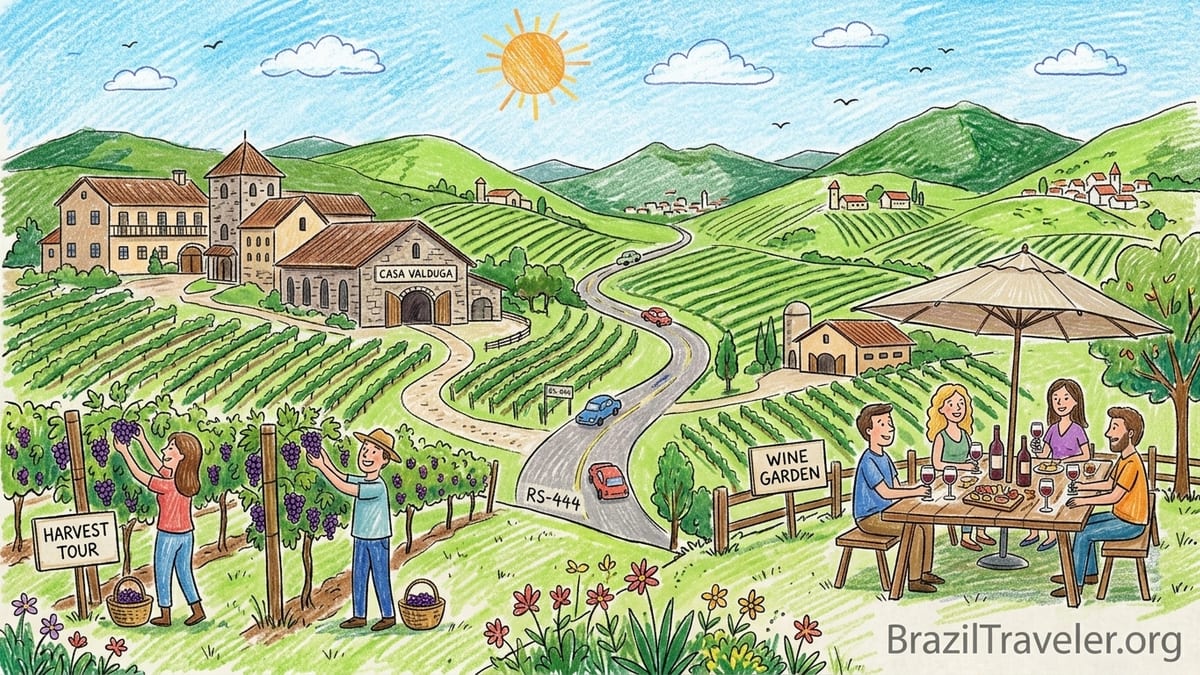
Vale dos Vinhedos, in the Serra Gaúcha of Rio Grande do Sul, is Brazil’s most complete wine country experience. Within a compact valley near Bento Gonçalves you can visit pioneering estates such as Casa Valduga and Miolo, family-run cantinas like Lidio Carraro and Pizzato, sparkling specialists, vineyard hotels and serious restaurants, all connected by the scenic RS-444 “wine road.” For travelers who want a focused, high-quality wine trip with tastings, fine dining, private drivers and boutique stays in one well-defined region, this is the place to start.
Understanding Vale dos Vinhedos Wine Experiences
Vale dos Vinhedos is the only Denominação de Origem (DO) wine region in Brazil and the country’s best-developed hub for wine tourism, receiving hundreds of thousands of visitors each year. The valley spreads between Bento Gonçalves, Garibaldi and Monte Belo do Sul, but most visitors base themselves in or around Bento, then follow the RS-444 road through the vineyards. This compact geography is one of the main reasons the region works so well for first-time wine travelers to Brazil.
Before choosing tours, it helps to understand the types of experiences on offer. The most common product is the basic guided cellar visit, which takes around 60 to 90 minutes and usually includes a walk through the production areas and underground cellars, concluding with a small tasting of 3 to 5 wines or sparkling wines. At major producers like Miolo and Casa Valduga, these visits are structured, run by trained guides or sommeliers, and often depart at fixed times in Portuguese, sometimes with English or Spanish on request.
Comparative tastings move away from the production line and focus on tasting technique and style. At wineries such as Pizzato, tastings may highlight one grape variety or compare different terroirs of the valley, while at Casa Valduga and Lidio Carraro there are seated tastings guided by a specialist, sometimes paired with cheeses or chocolates. These sessions usually last one to one and a half hours, feature more wines than a basic tour, and may require reservations, especially on weekends and holidays.
Vineyard experiences and premium private tours go a step further. Some wineries offer visits that include walks through the vines, seasonal activities like grape picking during harvest, or food-and-wine pairings in dedicated rooms. Private tours, often booked via local agencies or directly with the winery, might include a dedicated guide, access to reserve labels, longer cellar time, and sometimes a paired lunch on site. These are priced higher but are the most relaxed and educational options, especially for serious wine enthusiasts and couples seeking a romantic day in the valley.
Casa Valduga: Pioneering Wine Tourism in the Valley
Casa Valduga is the historic pioneer of structured wine tourism in Vale dos Vinhedos, with a full campus that combines winery, restaurants and on-site pousadas among the vines. For many visitors it is the essential first stop, not only because of its sparkling wines but because it offers one of the clearest gradations from basic to premium experiences.
The Traditional Tour at Casa Valduga typically lasts about 90 minutes and includes a guided walk through emblematic spaces of the winery and its underground sparkling wine cellars, plus tasting of selected labels. Tickets are sold per person with scheduled times throughout the day, and the estate makes clear that advance purchase is highly recommended, particularly on Saturdays, holiday periods and during the grape harvest between January and March. Children are usually allowed on the tour with restrictions on tasting, and pets are not admitted except for registered guide dogs.
For travelers focused on wine and food, Casa Valduga offers more specialized programs like themed tastings and pairing experiences, where visitors taste a sequence of white, red and sparkling wines matched with cheeses and chocolates produced in the region. These experiences are guided by specialists and emphasize how acidity, tannin and sweetness interact with different foods. Prices are higher than the basic tour, but the value is strong for those who want to understand Brazilian sparkling wine and the local gastronomy in depth within a single session.
Casa Valduga is also a leader in slow, immersive stays. Its on-site lodgings range from rustic-chic rooms near the vineyards to more classic suites close to the main house. Staying here means you can walk to breakfast, cellar tours, the wine shop and the restaurant without using a car, which is a major advantage for couples planning a romantic weekend. For a two-night stay with one full day of winery visits, many travelers choose to spend at least half a day inside the Casa Valduga complex, combining a tour with a long lunch and an afternoon tasting before exploring other producers on the following day.
Miolo, Lidio Carraro and Pizzato: Flagship and Boutique Experiences
Miolo Wine Group operates one of the valley’s most recognisable estates, a flagship property that combines large-scale production with a strong tourism focus. The standard visitation at Miolo generally lasts around one hour and is led by an in-house sommelier or oenologist, who explains the group’s history, vineyards and sparkling wine production. Visits tend to end with a tasting of several wines or sparkling labels and often include access to an observation area or outdoor spaces overlooking the vines.
Miolo has also invested in informal, open-air concepts. Its Wine Garden, installed among the vineyards, offers a more relaxed experience where visitors can buy wines by the bottle or glass, order simple snacks and enjoy picnic-style seating under trees and umbrellas. There is usually no guided explanation here, making it an excellent break in a day of structured tours or a casual afternoon for groups of friends who prefer a social setting to a technical tasting.
Lidio Carraro occupies a different niche, combining strong branding with a notably personal approach to hospitality. The estate emphasises minimal-intervention winemaking and family roots, and its enotourism program is designed to be immersive and small-scale. Tasting experiences are often conducted in smaller groups, with close contact with staff who can talk in depth about the philosophy that led the winery to be chosen as an official supplier for major international events. Seasonal events, such as harmonized dinners with multi-course menus, are sold as special experiences and regularly require advance reservations due to limited seating.
Pizzato Vinhas e Vinhos is another Must-Stop for visitors looking for a blend of technical rigor and warmth. The winery is known for its work with Merlot under the Vale dos Vinhedos DO and for carefully structured tastings that might focus on a single variety or include wines at different stages of evolution. Its official tourism information highlights guided tastings, harmonized sessions with regional products and occasional themed dinners. Booking is strongly recommended for comparative tastings and pairing experiences, especially on high-season weekends and during harvest, when same-day walk-in slots can fill up quickly.
Smaller Wineries, Sparkling Tastings and Vineyard Lunches
Beyond the best-known names, Vale dos Vinhedos is dotted with smaller boutique wineries and traditional family-run cantinas that give the region much of its charm. Many line the main RS-444 highway, while others sit along side roads named after families or localities. These producers may not offer large visitor centers, but they often provide intimate tastings with the owner or winemaker, homemade snacks and the chance to discuss vintages and grape varieties without crowds.
Boutique estates in the valley tend to focus on expressive reds, high-acid whites and especially sparkling wine, which has become a major strength of Serra Gaúcha. Sparkling tastings are commonly offered in dedicated rooms or terraces, with flights built to showcase different methods and aging times in the bottle. At some properties, visitors can order sparkling by the glass along with small plates, turning a mid-morning stop into a leisurely brunch with vineyard views. This style of visit appeals strongly to couples and travelers who enjoy slowing down rather than racing through multiple large tours in one day.
Vineyard lunches and wine-and-food pairing menus are increasingly popular. Several wineries and countryside inns collaborate with local chefs to create set menus where each course is matched to a specific label from the estate. These lunches often require reservations and fixed arrival times, in part because the kitchen must coordinate with the tasting room and tour schedule. On a typical full-day visit, travelers might book one structured morning tour, then sit down to a multi-course lunch with pairings from another winery, followed by a relaxed sparkling tasting at a smaller estate in the afternoon.
Traditional cantinas and agriturismo-style restaurants, often run by Italian-descendant families, are another highlight. These venues serve hearty regional dishes such as homemade pastas, polenta and grilled meats, sometimes in all-you-can-eat sequences, with house wines and simple sparkling labels included or priced modestly. The atmosphere is convivial and informal, and many travelers remember these meals as the most authentic cultural experiences of their time in the valley.
Types of Tours: From Basic Cellar Visits to Premium Private Days
Choosing the right format is key to a satisfying Vale dos Vinhedos itinerary. A basic guided cellar visit is usually the entry point: around 60 minutes visiting production areas and cellars, followed by a standing or bar-style tasting of a few wines. This is often offered several times per day at the larger producers and can be booked on the same day outside peak dates. The cost is relatively modest and usually includes a glass or small set of pours.
Comparative tastings are designed for learning rather than sightseeing. They frequently take place in tasting rooms or lounges, where guests are seated and guided through a flight of wines that might compare grape varieties, vintages or vinification styles. At properties like Pizzato and Lidio Carraro, these tastings are structured to highlight the valley’s identity and are popular with visitors who already have some interest in wine. The fee reflects the higher number of wines and the dedicated staff time, but for serious enthusiasts it is often the most rewarding format per hour spent.
Vineyard experiences add a landscape dimension. Depending on the time of year, visitors may walk through the vines, taste grapes in the field or participate in limited harvest activities. During the main harvest period, which generally runs from January through March but varies according to the vintage and weather conditions of each year, some wineries host special programs such as grape stomping, sunset tastings among the rows and outdoor picnics. These are highly atmospheric experiences that connect wine to its agricultural roots, especially for travelers more accustomed to urban tasting rooms.
Premium private tours combine several elements into a tailored day. With these, travelers hire a private driver or dedicated guide and secure advance reservations at three or four wineries, often mixing one flagship estate, one or two boutique producers, and a lunch stop. The cost includes transport, but tastings and meals are usually paid separately, either at the time of booking or on site. The main advantage is flexibility: the guide can adjust timing, recommend label selections and avoid overcrowded time slots, which is particularly valuable on Saturdays and during harvest weekends when popular wineries can be busy.
Departures from Bento Gonçalves, Gramado and Porto Alegre
The most efficient base for Vale dos Vinhedos tours is Bento Gonçalves itself, a small city that sits a short drive from the valley. From central Bento to the heart of the DO area, driving time can be as little as 15 to 25 minutes, depending on traffic and the position of the winery. This proximity means that a private driver or taxi can be hired for half-day or full-day service at a lower transport cost than from more distant bases, and visitors staying in Bento can also use ride-hailing apps for short transfers between hotel, restaurants and wineries.
Gramado and Canela, the main mountain resort towns of Serra Gaúcha, lie roughly 110 kilometers from Vale dos Vinhedos, with travel times of a little over 2 hours by road each way under normal conditions. Several local agencies in Gramado sell full-day excursions that depart early in the morning, visit a selection of wineries in Vale dos Vinhedos and nearby Garibaldi, include a stop for lunch and return in the evening. A typical group excursion might advertise visits to two or three wineries plus a sparkling house, but travelers should read inclusions carefully, as some stops may be only for photo opportunities or quick tastings, while more complete cellar tours and premium tastings often require an extra fee on site.
Porto Alegre, the state capital, is around 120 kilometers from Bento Gonçalves, and road trips usually take close to two hours each way without major delays. There are private agencies based in Porto Alegre that offer door-to-door full-day tours with a driver-guide, departing the city in the morning, visiting two or three major wineries plus a lunch stop and returning at night. Because of the distance, these itineraries tend to be more compressed and may prioritize large estates like Miolo and Casa Valduga that can accommodate scheduled visit slots. Travelers should confirm whether tasting fees are included in the tour price or paid separately at each winery, as this can significantly change the total cost of the day.
When comparing departures from these three bases, Bento Gonçalves provides the greatest flexibility and the lowest cumulative travel time, ideal for multi-day stays and travelers who want to combine big names with small producers. Gramado and Porto Alegre tours are best suited for those who have little time, do not want to change hotels and are content with a curated introduction to the region rather than deep exploration. In all cases it is important to verify whether lunch is included or only the transport and guidance, and whether every announced stop entails a real tasting or just a brief visit to the wine shop.
Getting Around: Rental Car, Private Driver or Group Tour
Because Vale dos Vinhedos is relatively compact but spread along a rural road, transport choices have a big impact on both safety and enjoyment. Renting a car is attractive for flexibility, especially for travelers staying two or three nights in the region, but only if at least one person in the group is prepared to be a strict non-drinking driver. Even modest tastings at three wineries can easily surpass safe driving limits, and Brazilian enforcement of drink-driving laws has become stricter over time, particularly on popular tourist routes.
Hiring a private driver or chauffeur service is the most comfortable and safest solution for many visitors. Local agencies and independent drivers offer full-day services that include hotel pickup in Bento Gonçalves, flexible routing among prebooked wineries, waiting time during tastings and drop-off at restaurants in the evening. Prices vary according to vehicle type and duration, but travelers can expect to pay a flat fee for the car and driver, then pay tastings and meals directly at each winery. For couples and small groups who value personalized timing, this option often represents strong value, as the cost is shared and the day can be paced around long lunches and sunset tastings rather than fixed group schedules.
Joining a group tour remains the most economical way to experience the valley in a single day, especially from Gramado or Porto Alegre. Group excursions typically use minibuses or large coaches and follow set itineraries that might include three or four stops, of which only one or two offer full cellar tours. Because they must cater to a broad audience, these tours usually favor major wineries with established visitor centers and predictable capacities. They are ideal for beginners who want an overview and do not mind moving at a group pace, but less suited to serious enthusiasts who want to explore specific labels or spend an extended time at a single estate.
Whichever option you choose, planning is essential. In high season and during harvest from January to March, winery schedules fill up quickly, especially for comparative tastings and pairing lunches. It is wise to confirm tour times and availability before reserving a driver or buying a seat on a group excursion, and to leave enough time between appointments to enjoy the scenery and avoid feeling rushed. A realistic pattern is two winery visits and a long lunch for those coming from Gramado or Porto Alegre, and three visits plus lunch for those staying in or near Bento Gonçalves.
When to Visit and How Long to Stay
The wine tourism season in Vale dos Vinhedos runs year-round, with different charms in each period. The grape harvest is the atmospheric highlight, usually occurring from January through March. In some years, especially when spring is warmer, early ripening varieties may be harvested in January, while in cooler or wetter seasons the bulk of the harvest can extend into March. Wineries sometimes organise special activities at this time, such as grape picking experiences, grape stomping, outdoor tastings and harvest festivals, but exact dates depend on the climate of each vintage and are confirmed closer to the season.
Outside harvest, autumn and winter bring crisp days, colored vineyard leaves and a strong focus on hearty food and red wines. Spring is lush and green, with fewer crowds outside holiday weekends, which can be an advantage for travelers who prefer quieter tastings and more last-minute flexibility. Official holidays and long weekends in Brazil, especially around Carnival and regional dates, tend to attract domestic visitors in large numbers, so reservations for accommodation, tours and restaurant tables become essential.
Regarding length of stay, it is technically possible to visit Vale dos Vinhedos in one day from Gramado or Porto Alegre, but this format involves four to six hours of driving round trip. In practice, a one-day excursion from either city allows time for two winery visits and lunch, plus perhaps a short sparkling tasting or shop stop, but not much more. Travelers who are serious about wine, or who want to combine large and small wineries, are better served by at least a two-night stay in or near Bento Gonçalves.
With two nights in the valley, you can plan one fully structured day with three winery appointments and a leisurely lunch, and another more flexible day focused on small producers, countryside restaurants or a repeat visit to a favorite estate. Allow at least 90 minutes for each full cellar tour or comparative tasting and two hours for a relaxed lunch, plus travel time between locations. This rhythm avoids rushing and leaves space to enjoy vineyard views, photograph the landscape and browse wine shops without feeling like you are in constant transit.
Where to Stay: Vineyard Hotels, Countryside Inns and Bento Gonçalves
Accommodation is a key part of the Vale dos Vinhedos experience, and travelers can choose between staying directly among the vines or basing themselves in town. Vineyard hotels and winery-run pousadas deliver the most romantic setting. Properties such as those integrated into large estates allow you to wake up facing the vineyards, walk to your first tasting of the day and enjoy quiet evenings without needing to drive. These are prime choices for couples and honeymooners who consider the winery itself a destination.
Countryside inns scattered along the RS-444 and nearby roads offer another appealing option. Often family-run, they combine rustic architecture with modern comfort, generous breakfasts featuring local products and close relationships with nearby wineries and restaurants. Many can arrange transfers to specific wine tastings or help guests book drivers and guided tours. The rural setting typically guarantees silence at night and big-sky views during sunrise and sunset.
Staying in central Bento Gonçalves, by contrast, provides better access to a broader range of restaurants, bars and services. The city offers everything from business-style hotels to boutique properties housed in restored buildings, and it is easier to find options at different price points. From downtown Bento, you can reach the closest wineries of Vale dos Vinhedos by car in under half an hour, and evening meals do not require shuttling back along dark rural roads. For travelers who want to combine wine tourism with visits to other local attractions, such as the Caminhos de Pedra route or the steam train between Bento and Carlos Barbosa, a city base can be particularly efficient.
A practical strategy for longer trips is to split your stay: one or two nights in a vineyard hotel for immersion and romance, followed by nights in Bento Gonçalves for greater flexibility with dining and transport. Whichever base you choose, always verify how far it is from the main RS-444 corridor and whether taxis or ride-hailing apps easily reach the property, especially if you plan to return from dinners after dark.
Which Experiences Offer the Best Value for Different Travelers
Beginners looking for a first introduction to Brazilian wine will find the strongest value in mixed itineraries that combine one large, structured tour with one or two more relaxed tastings. A typical day might start with the Traditional Tour at a flagship winery like Casa Valduga or a guided visit at Miolo, giving a clear overview of sparkling production and the region’s history, followed by a casual tasting in a wine garden or at a small winery where questions can be answered informally. Group excursions from Gramado or Porto Alegre work well in this context, provided travelers understand that some tastings may be basic and not all stops include full cellar tours.
Serious wine enthusiasts should concentrate on comparative tastings and vineyard experiences at estates known for technical depth, such as Pizzato, Lidio Carraro and other producers focused on DO wines. Booking seated tastings that highlight specific grape varieties, terroirs or vintages offers far more insight than multiple quick stops, and premium private tours with a driver allow enthusiasts to purchase bottles, take detailed notes and spend more time at each winery without worrying about transport. Visiting during shoulder seasons outside peak holiday weekends can also improve the quality of interaction with staff and access to limited labels.
Couples planning a romantic escape will get the best value from vineyard hotels, long pairing lunches and sunset sparkling tastings. A two-night stay at a winery property, combined with one full day using a private driver to visit two additional estates and a countryside restaurant, allows for slow mornings, spa time where available and evenings over wine without any need to drive. Harvest season adds atmospheric value, with grapes hanging heavy on the vines and special events, but quieter months can be equally intimate and less crowded.
Travelers who prefer small producers to large commercial wineries should base themselves in or near Bento Gonçalves and work with local agencies or drivers familiar with boutique estates across Vale dos Vinhedos and neighboring routes. By prebooking tastings at three or four small properties over two days, they can support family-run businesses, taste limited-production labels and learn about traditional methods that might be overshadowed in larger visitor centers. Combining these intimate visits with at least one stop at a major sparkling specialist provides context for how small producers fit into the wider landscape of Brazilian wine.
FAQ
Q1. How many wineries can I realistically visit in one day in Vale dos Vinhedos?
For a relaxed day centered on tastings and a leisurely lunch, plan on two to three winery visits. Each full tour or comparative tasting typically takes 60 to 90 minutes, and a proper lunch can last two hours, especially if paired with wines. Adding more stops often results in rushed experiences and limited time to appreciate the wines and landscapes.
Q2. Do I need to book winery visits in advance or can I just show up?
Advance reservations are strongly recommended, particularly on weekends, holidays and during the harvest months from January to March. Larger wineries sometimes accept walk-ins for basic tastings on quiet weekdays, but scheduled tours, comparative tastings and food pairings at estates such as Casa Valduga, Miolo, Pizzato and Lidio Carraro are subject to limited capacity and can sell out.
Q3. When is the best time of year to visit Vale dos Vinhedos for harvest activities?
The grape harvest usually takes place between January and March, though exact dates vary each year depending on weather and the ripening of different varieties. Many wineries announce special harvest programs closer to the season, including vineyard walks, grape picking experiences and themed tastings. If harvest participation is important to you, check directly with wineries a few months in advance.
Q4. Is it safe to drive myself between wineries if I only taste a little?
Brazilian drink-driving laws are strict, and tastings at multiple wineries can easily exceed safe limits, even if you feel fine. For safety and peace of mind, it is better to appoint a completely sober driver in your group or hire a private driver. This is especially important on rural roads after dark and during busy weekends when traffic increases.
Q5. Are English-language tours available at Vale dos Vinhedos wineries?
Some major wineries, such as Casa Valduga and Miolo, may offer tours or private tastings in English or Spanish, particularly if requested in advance. However, most scheduled group tours are conducted in Portuguese. If you require English explanations, mention this when booking or consider hiring a bilingual private guide to accompany you throughout the day.
Q6. How do tasting fees work, and are they usually included in tour prices?
Basic cellar tours at large wineries often include a small tasting in the ticket price. Comparative tastings, premium labels and pairing menus are usually charged separately. For group excursions departing from Gramado or Porto Alegre, some tastings may be included while others are optional extras. Always confirm which tastings and how many pours are part of the price before booking to avoid surprises.
Q7. Is it better to stay in Bento Gonçalves or at a vineyard hotel?
Staying in Bento Gonçalves offers easier access to a wide range of restaurants, bars and services, along with shorter and cheaper transfers to multiple winery areas. Vineyard hotels provide a more romantic and immersive experience, often with views directly over the vines and tastings within walking distance. Many travelers combine both, spending part of their trip at a winery property and part in town.
Q8. Can I visit Vale dos Vinhedos on a day trip from Porto Alegre or Gramado?
Yes, but expect a long day. From both Porto Alegre and Gramado, the drive to the valley is around two hours each way in normal conditions. Full-day tours from these cities typically allow time for two winery visits and lunch, plus brief stops at other estates. If you want a deeper experience, including visits to smaller producers, consider spending at least one or two nights in the region.
Q9. Are children welcome at the wineries in Vale dos Vinhedos?
Many wineries do accept children on premises and even on some guided tours, but alcohol consumption is strictly limited to adults, and specific rules vary by property. Certain premium tastings and pairing dinners are adults-only. When traveling with children, confirm policies in advance and look for wineries with outdoor spaces or informal tasting setups where younger visitors can move around more freely.
Q10. What is the dress code for winery visits and tasting rooms?
Dress in smart casual clothing suitable for walking on uneven ground and spending time outdoors. Comfortable closed shoes are recommended, especially for cellar tours and vineyard walks, where floors can be damp or irregular. In cooler months, bring layers, since temperatures inside cellars and on hilltops can be significantly lower than in town, particularly in the early morning and evening.